

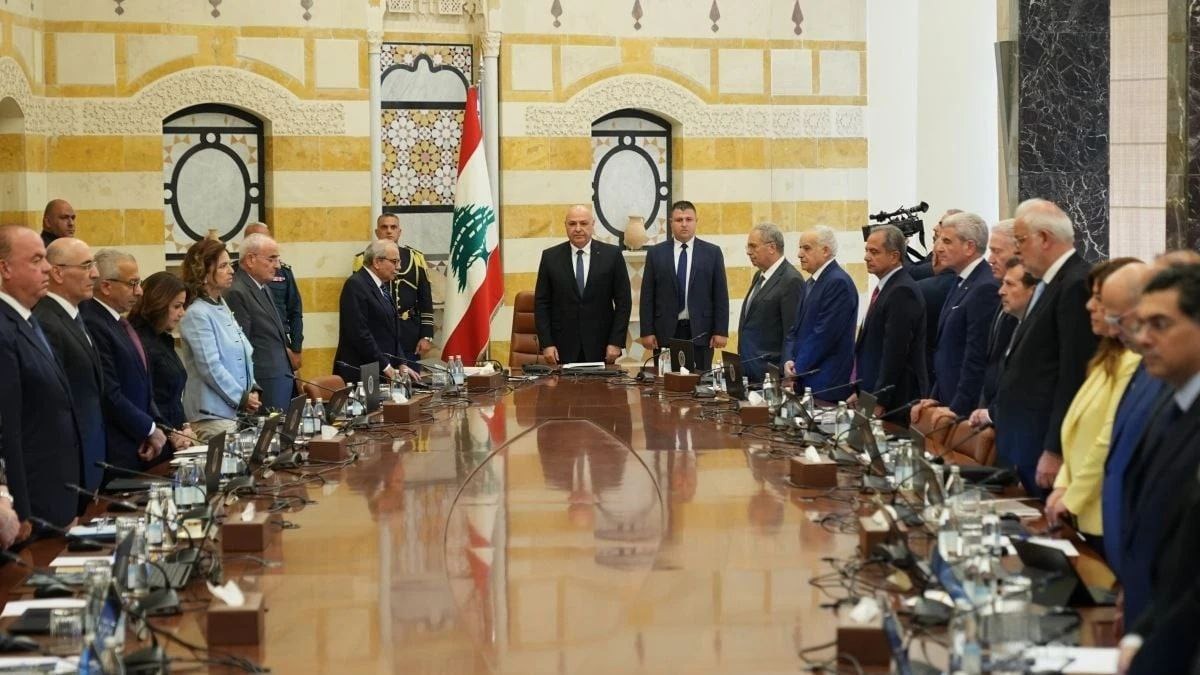
Beirut | August 8, 2025 — In a move that could reshape the regional balance of power, the Lebanese government has formally approved the framework proposed in a policy paper authored by U.S. businessman and Trump ally Tom Barrack. The comprehensive 11-point plan outlines a roadmap for Lebanon’s political stabilization, military restructuring, border resolution, and eventual economic recovery, but it comes at a politically explosive cost — the disarmament of Hezbollah.
The government’s endorsement of the plan, which aligns with UN Resolution 1701 and the Taif Agreement, underscores a renewed push by Western and Gulf allies to reassert Lebanese sovereignty, limit Iranian influence, and integrate the Lebanese state into a pro-Western regional axis. However, the decision has deepened internal divisions and triggered sharp resistance from Hezbollah and its political allies.
Key Provisions of the Plan
- Sovereignty and Disarmament: Lebanon commits to extending state authority across its entire territory, ending the armed presence of all non-governmental entities — an unmistakable reference to Hezbollah.
- Military Centralization: All weapons are to be under the control of the Lebanese Army, which will be tasked with deploying along borders and strategic internal zones.
- Border Demarcation: The plan includes diplomatic negotiations for Israeli withdrawal from contested points and full demarcation of Lebanon’s borders with both Israel and Syria.
- Economic Recovery: A high-level economic conference is proposed, with participation from the U.S., France, Saudi Arabia, and Qatar to chart Lebanon’s financial reconstruction and align with “Trump’s vision” of a sovereign, economically viable Lebanese state.
Hezbollah and Amal Ministers Walk Out
The approval has already fractured the Lebanese cabinet. Ministers from Hezbollah and Amal withdrew from the session in protest, calling the disarmament clause a “trap disguised as a vote.” A senior Hezbollah official warned that attempting to impose disarmament would be a red line, branding the move an externally-driven “fait accompli” aimed at neutralizing the resistance under the guise of national reform.
“The Council of Ministers did not task the army with defending Lebanon against Israeli aggression, but instead with drafting a plan to disarm Hezbollah — to be implemented before the end of the year,” said one source close to the resistance movement. “This is not defense. This is submission.”
International Backing, Regional Consequences
Washington, Paris, and Riyadh are reportedly pushing for swift implementation of the plan, viewing it as a critical lever to weaken Iranian-backed paramilitary influence in Lebanon and restore regional deterrence. The Israeli government has welcomed the disarmament clause, calling it “long overdue.”
Yet observers warn that sidelining Hezbollah without a broader national consensus could risk internal conflict. “This is not just a political shift — it’s a gamble on Lebanon’s internal stability,” said a regional analyst based in Istanbul. “Any move to unilaterally disarm Hezbollah without a national security guarantee or regional understanding could reignite violence.”
Looking Ahead
The Lebanese Army has been tasked with drafting an operational plan for disarmament and centralization of arms by the end of August. The implementation deadline is set for the close of the year — an ambitious and contentious timeline.
Meanwhile, negotiations are expected to begin in the coming weeks on border demarcation and international donor support. Whether Lebanon can walk this tightrope between international pressure and internal resistance will determine not only its domestic future but also the broader security dynamics of the eastern Mediterranean.













Leave a comment