

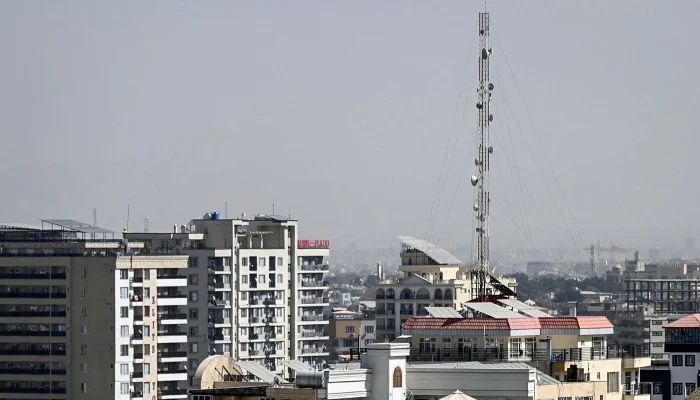
KABUL — Mobile networks and internet access were restored across Afghanistan on Wednesday, two days after the Taliban abruptly cut off telecommunications nationwide, leaving millions of Afghans isolated from the outside world.
The blackout began on Monday evening without warning, shutting down mobile phone services and internet connections across the country. Businesses, airports, banks, and markets were forced to close, while Afghans were left unable to contact family members at home or abroad. Some in Kandahar and Herat even traveled to border towns to connect to signals from neighboring Iran and Pakistan.
The sudden outage came weeks after Taliban authorities began restricting high-speed internet in certain provinces on the orders of supreme leader Hibatullah Akhundzada, who had called for measures to curb “immorality.” Watchdog group NetBlocks said the scale of the latest shutdown “appears consistent with the intentional disconnection of service,” with connectivity dropping to just one percent of normal levels.
By Wednesday, AFP journalists confirmed that signals and Wi-Fi had returned in major cities, including Kabul, Kandahar, Khost, Ghazni, and Herat. The Taliban government has not commented publicly on why the blackout was imposed or why services were restored.
The return of mobile and internet access sparked celebrations in the capital. Residents poured into the streets of Kabul, honking car horns, buying sweets, and sharing balloons in scenes reminiscent of a holiday. “It’s like Eid al-Adha; it’s like preparing to go for prayer,” said Sohrab Ahmadi, a 26-year-old delivery driver. “We are very happy from the bottom of our hearts.”
Restaurant manager Mohammad Tawab Farooqi said the city felt revived: “The city is alive again.”
It was the first time since the Taliban seized power in 2021 that communications had been cut nationwide. A government official, speaking shortly before the blackout on Monday, had warned that the country’s fiber optic network would be shut down “until further notice.”
The United Nations condemned the move, saying on Tuesday that the blackout “left Afghanistan almost completely cut off from the outside world.” It urged the Taliban to restore access immediately, warning that communications are vital for humanitarian work in the country.
While connectivity has now been restored, the episode has heightened fears among Afghans that the Taliban may resort again to large-scale blackouts as a tool of control, deepening the uncertainty that has defined daily life under the group’s rule.














Leave a comment