

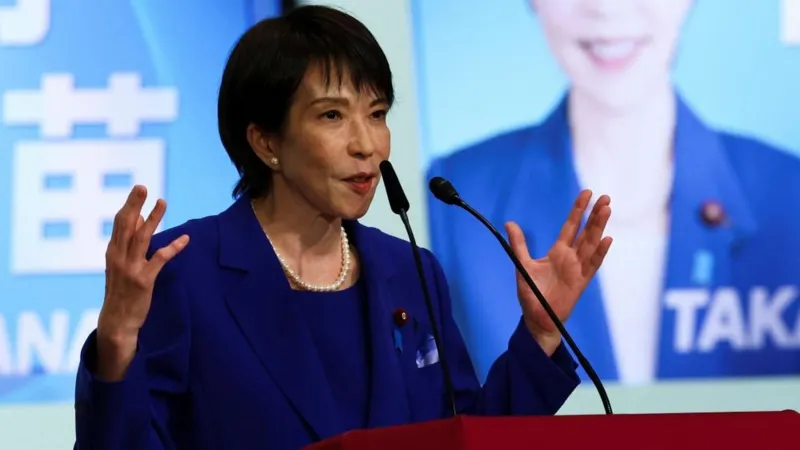
Japan’s ruling Liberal Democratic Party (LDP) has elected Sanae Takaichi as its new leader, positioning the 64-year-old veteran politician to become the country’s first female prime minister. Takaichi, known for her conservative views and alignment with the party’s right wing, now faces a series of domestic and international challenges as she prepares to take office.
Takaichi’s ascension comes after a turbulent period for the LDP. Her predecessor, Prime Minister Shigeru Ishiba, stepped down following a series of election defeats that left the party’s coalition weakened and without a majority in both chambers of parliament. The LDP has also been rocked by internal conflicts and public scandals over the past few years, leaving Takaichi with the immediate task of uniting the party.
Economically, Takaichi inherits a sluggish growth environment, with Japanese households struggling with persistent inflation and stagnant wages. She has pledged to revive “Abenomics,” the economic strategy of her late mentor Shinzo Abe, which emphasizes high fiscal spending, monetary easing, and structural reforms to stimulate growth.
On the foreign policy front, Takaichi will need to navigate a complex US-Japan relationship, including ongoing discussions related to tariffs and trade agreements established under the previous administration. Her hawkish stance on security also suggests she may seek to revise Japan’s pacifist constitution, a move that could have significant regional implications.
Takaichi’s conservative positions are likely to generate debate domestically. She has opposed legislation allowing women to retain their maiden names after marriage, is against same-sex marriage, and regularly visits the controversial Yasukuni Shrine, where Japan’s war dead, including convicted war criminals, are memorialized. While she admires Margaret Thatcher and has cultivated an “Iron Lady” image, her conservative record has drawn criticism from many women voters who question her commitment to gender equality and progressive reforms.
If confirmed by parliament, Takaichi will face the dual challenge of governing in a weakened political environment while addressing economic pressures and maintaining Japan’s strategic alliances. Her leadership marks a historic moment in Japanese politics, but her ability to deliver results amid domestic skepticism and global scrutiny will determine her legacy.
















Leave a comment