

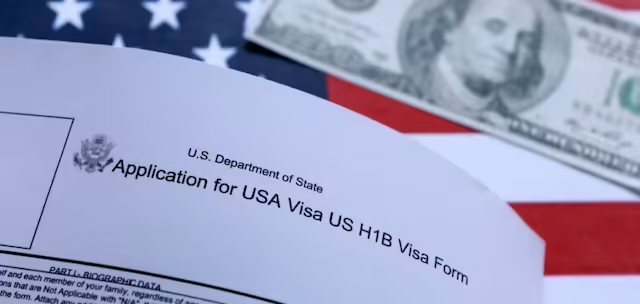
A coalition of professionals from diverse sectors has filed a federal lawsuit challenging the Trump administration’s newly introduced $100,000 H-1B visa fee, arguing that the policy is unlawful and threatens to undermine vital areas of the U.S. economy.
The lawsuit, filed Friday in San Francisco, represents a broad range of workers including health care professionals, university professors, religious leaders, and technology experts. In their filing, the group claimed that the steep fee would create devastating consequences across multiple industries.
“Without relief, hospitals will lose medical staff, churches will lose pastors, classrooms will lose teachers, and industries across the country risk losing key innovators,” the plaintiffs said in a statement, warning that the policy could trigger a nationwide talent drain.
The coalition is asking the court for an immediate injunction to block the Trump order, restoring stability for both employers and foreign workers.
The controversial fee, announced just last month, took effect with only 36 hours’ notice. Critics argue this abrupt rollout caused chaos, leaving companies scrambling to understand its scope and impact. Immigration lawyers say the lack of clarity has added to the uncertainty for thousands of workers who already face a complex and highly competitive visa process.
The H-1B program, capped at 85,000 visas annually, is awarded through a lottery system and has long served as a lifeline for Silicon Valley, universities, and hospitals seeking skilled talent. Roughly three-quarters of recipients are Indian nationals.
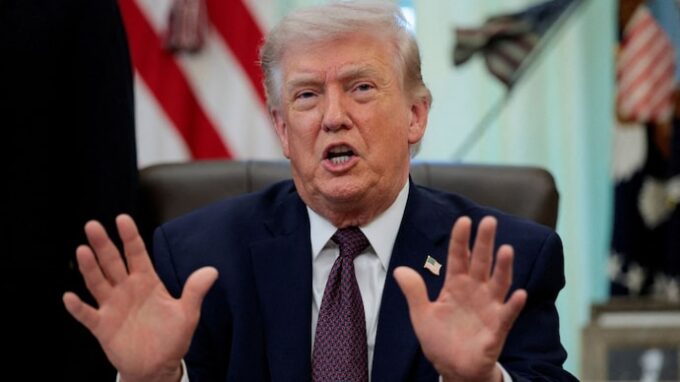
President Donald Trump, who has intensified his immigration crackdown since returning to office, defended the policy by claiming that the H-1B system is abused by companies that replace American workers with cheaper foreign labor. The administration says the fee will discourage misuse and ensure that companies relying on foreign talent are paying their fair share.
However, critics across the political spectrum—including tech executives—warn that the measure risks backfiring. Figures like Elon Musk, once a Trump ally, have voiced concern that targeting H-1B visas could harm innovation and competitiveness in the U.S. “The U.S. simply does not have enough local talent to fill key roles,” Musk said previously, underscoring the tech sector’s reliance on global expertise.
For now, the lawsuit marks the first major legal challenge to the visa fee, setting the stage for a potentially consequential courtroom battle that could decide the future of America’s skilled immigration pipeline.










Leave a comment