

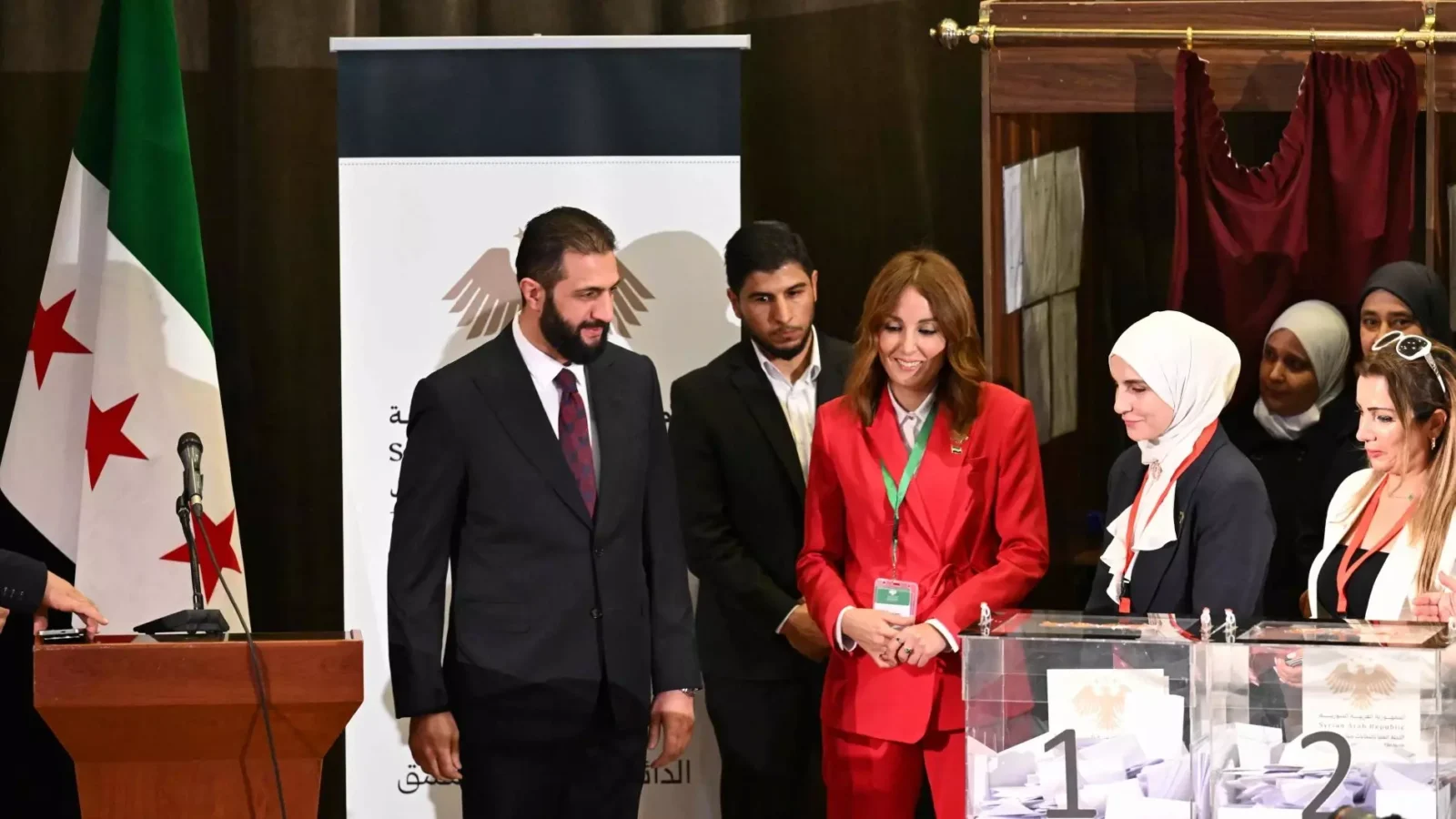
DAMASCUS: Syria has begun the process of selecting members for its first transitional parliament since the fall of Bashar al-Assad. The move, overseen by interim leader Ahmed Al Sharaa, has already drawn criticism from rights groups who say the system is undemocratic and concentrates power in Sharaa’s hands.
At the National Library in Damascus — formerly the Assad National Library — local committees lined up to cast their votes on Sunday. More than 1,500 candidates are competing for seats in the 210-member assembly, though only 14 percent of them are women. Sharaa is directly appointing one-third of the parliament, while the rest are being chosen by committees that themselves were appointed by the electoral commission, also under his authority.
Several regions remain excluded from the process. The Druze-majority province of Sweida, which saw sectarian violence in July, and Kurdish-controlled areas in the northeast are outside Damascus’s control and will not be represented for now. Their 32 seats will remain vacant.
Public reaction has been mixed. Some citizens see the selection as a temporary necessity, but many argue that it falls short of genuine democracy. “It’s a necessity in the transitional phase, but we want direct elections,” said Louay al-Arfi, a retired civil servant in Damascus.
Officials insist that direct elections are not possible at this stage due to the displacement of millions and the lack of proper documentation for many Syrians. Under a temporary constitution introduced in March, the transitional parliament will exercise legislative power until a permanent constitution is adopted and direct elections are held.
Around 6,000 people are estimated to have participated in Sunday’s selection, with early counting of votes already underway. The final list of members is expected to be announced on Monday. Candidates face strict eligibility requirements: they must not have links to the Assad regime and must not promote separatism. Among those running is Syrian-American Henry Hamra, the first Jewish candidate since the 1940s.
The new parliament will serve a renewable 30-month mandate and will handle major responsibilities, including the ratification of international agreements. Electoral committee member and candidate Hala al-Qudsi stressed the importance of safeguarding national interests, saying she would oppose “any security agreement with Israel that does not serve the Syrian people.”
Rights groups, however, warn that the process allows Sharaa to build a loyal parliamentary majority. In a joint statement, more than a dozen organizations said the system “ensures that Sharaa can shape a parliament dominated by individuals chosen by him or aligned with his interests.”
Despite the criticism, Sharaa maintains that the transitional parliament is a necessary step toward stability and eventual democratic elections after more than a decade of civil war.









Leave a comment