

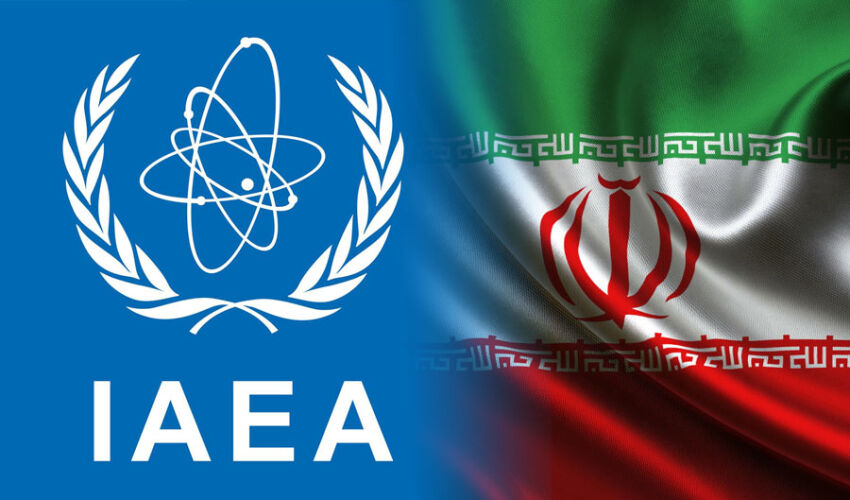
TEHRAN: Iran’s foreign minister announced on Sunday that cooperation with the International Atomic Energy Agency (IAEA) has become “irrelevant” following the reinstatement of United Nations sanctions by Western powers, marking a sharp escalation in tensions over Tehran’s nuclear programme.
Foreign Minister Abbas Araghchi said the Cairo agreement — signed last month with the UN nuclear watchdog to renew inspections and monitoring of Iran’s nuclear facilities — has lost its validity. The deal was intended to restore a framework of cooperation after Iran suspended IAEA access in June, following Israeli and US strikes on its nuclear infrastructure.
“The Cairo agreement is no longer relevant for our cooperation with the IAEA,” Araghchi told foreign diplomats in Tehran.
Western Powers Trigger Snapback Sanctions
His remarks came after Britain, France and Germany, all signatories to the 2015 Joint Comprehensive Plan of Action (JCPOA), triggered the “snapback” mechanism to restore UN sanctions on Iran. The European states accused Tehran of violating its commitments under the nuclear deal, a charge Iran has firmly denied.
“The three European countries thought they had leverage in their hands, threatening to implement a snapback,” Araghchi said. “Now they have used this lever and seen the results. They have definitely diminished their role and almost eliminated the justification for negotiations with them.”
He stressed that in any future negotiations, the European trio would “play a much smaller role than in the past,” accusing them of aligning with Washington’s hardline stance.
Criticism of IAEA and Israel
Tehran has also accused the IAEA of double standards, claiming the agency has failed to condemn Israeli strikes on Iranian nuclear facilities despite its obligations under the Nuclear Non-Proliferation Treaty (NPT). Iranian officials argue that this silence undermines the IAEA’s credibility as a neutral monitoring body.
“The IAEA cannot ignore Israeli aggression against our nuclear facilities and at the same time demand more cooperation from us,” Araghchi said, reiterating that Tehran would not accept what it views as a biased approach.
A New Phase in the Nuclear Standoff
The latest developments highlight the deepening rift between Iran and Western powers as efforts to revive the 2015 nuclear accord falter. Analysts say the rejection of IAEA cooperation signals a potential new phase of confrontation, with Tehran hardening its position while sanctions further isolate its economy.
Iran insists its nuclear programme remains peaceful, but with inspections now in question and sanctions back in place, international concern is mounting over the possibility of renewed escalation in the Middle East.






Leave a comment