

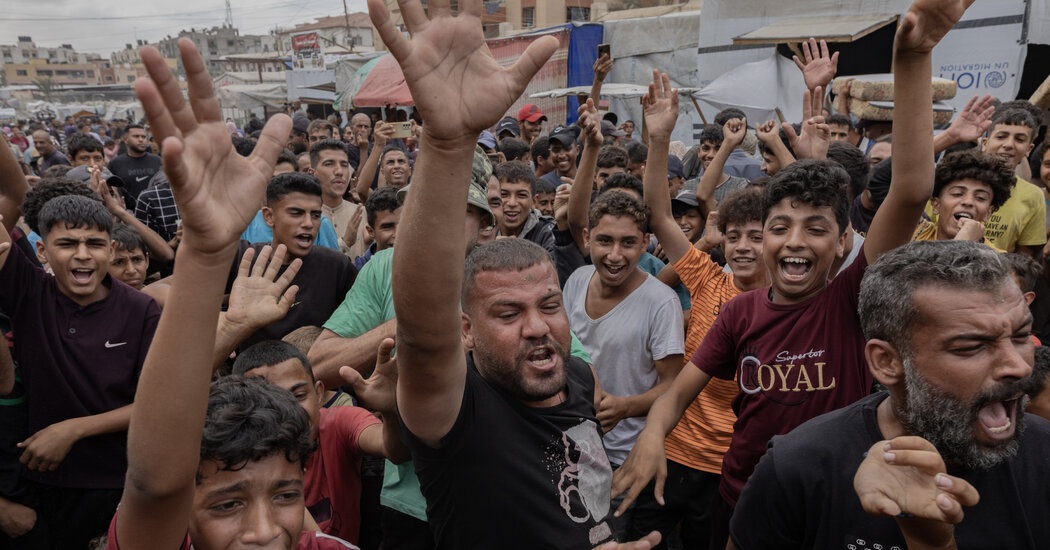
Israel’s government has approved the first phase of a ceasefire agreement that includes a limited withdrawal from Gaza and an exchange of captives, marking what could be a major turning point in the year-long war. However, questions remain over how the deal will lead to a lasting peace.
The agreement, ratified by the Israeli cabinet early Friday morning, was described by officials as the initial stage of a broader peace plan mediated by the United States, Egypt, and Qatar. Under the terms of the first phase, Israel will begin a partial withdrawal of its forces from parts of Gaza, while Hamas will release Israeli captives within a 72-hour period. In return, a cessation of hostilities is expected to take effect within 24 hours of the plan’s implementation.
Khalil al-Hayya, the head of Hamas’s negotiating delegation, said the group had received firm guarantees from the US and other mediators that the approval of the first phase means “the war in Gaza has ended completely.” His remarks signal Hamas’s readiness to commit to the ceasefire framework after nearly a year of devastating conflict.
Despite the announcement, the vote in Israel’s cabinet exposed deep divisions within Prime Minister Benjamin Netanyahu’s coalition. Far-right ministers, including National Security Minister Itamar Ben-Gvir, opposed the agreement, warning that it would allow Hamas to retain influence in Gaza. Ben-Gvir told Netanyahu ahead of the vote that he would not remain in a government “that will allow Hamas rule to continue.”
The ceasefire plan comes after months of intense negotiations and amid mounting international pressure for an end to Israel’s offensive in Gaza, which has drawn global condemnation over the scale of civilian suffering.
According to Gaza’s health authorities, Israel’s military campaign has killed at least 67,194 people and wounded 169,890 since October 2023. Thousands more are believed to be trapped under the rubble of destroyed buildings across the enclave. The war was triggered by the Hamas-led attacks on October 7, 2023, in which 1,139 people were killed in Israel and around 200 others taken captive.
If implemented successfully, the ceasefire could open the door to a longer-term political process aimed at reconstruction, reconciliation, and security guarantees for both Israelis and Palestinians. However, both sides remain wary, and the path toward a permanent resolution appears uncertain.













Leave a comment