

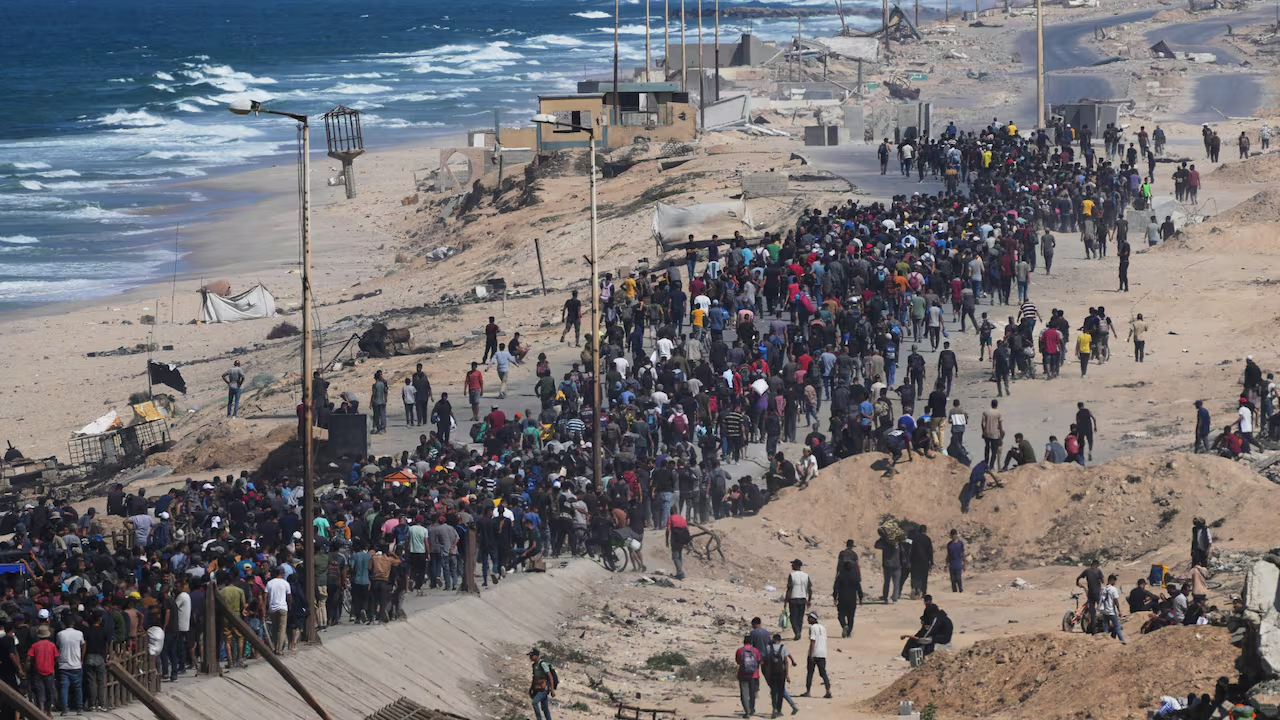
Tens of thousands of Palestinians who had been forcibly displaced over the past year are now making their way back to the ruins of northern Gaza, as a ceasefire between Israel and Hamas takes effect under the first phase of a newly brokered peace deal. Entire families were seen returning to the shattered remains of Gaza City, Beit Hanoun, and Jabalia, some walking for miles amid scenes of massive destruction, in what marks the first major pause in fighting since Israel’s devastating assault on the enclave began a year ago.
The ceasefire, approved by Israel’s government and accepted by Hamas earlier this week, includes a partial withdrawal of Israeli troops from northern Gaza and the release of Israeli captives in exchange for Palestinian detainees. According to US President Donald Trump, the first group of captives held in Gaza is expected to be freed on Monday, signalling what Washington has described as a “crucial step toward lasting peace.”
Despite the truce, tensions remain high. Hamas, the Palestinian Islamic Jihad, and the Popular Front for the Liberation of Palestine (PFLP) jointly announced that they “reject any form of foreign guardianship” over Gaza, asserting that the territory must remain under Palestinian control. The groups also called for reconstruction efforts to be led by local and international humanitarian agencies rather than external political forces.
Officials in Gaza have demanded an independent international investigation into alleged war crimes and genocide committed during Israel’s year-long offensive, which reduced vast parts of the enclave to rubble and displaced nearly two million people. Human rights organisations have also urged accountability, citing the unprecedented civilian toll of the conflict.
Meanwhile, the United Nations Relief and Works Agency (UNRWA) renewed its appeal for all border crossings into Gaza to be opened immediately. The agency said more than 6,000 aid trucks, filled with essential food, water, and medical supplies, are ready to enter the territory “within hours” once clearance is granted. UNRWA officials warned that Gaza remains on the brink of famine, with critical shortages of medicine, clean water, and electricity persisting across the strip.
Israel’s war on Gaza, launched after the October 7, 2023, attacks, has killed at least 67,211 Palestinians and wounded 169,961, according to Gaza’s health authorities. Thousands more remain missing under the debris of destroyed buildings. On the Israeli side, 1,139 people were killed in the October 7 attacks, and around 200 were taken captive.
As the guns fall silent for the first time in months, many returning Palestinians describe their journey north as both a homecoming and a confrontation with unbearable loss — a fragile moment of hope shadowed by the vast scale of Gaza’s devastation.









Leave a comment