

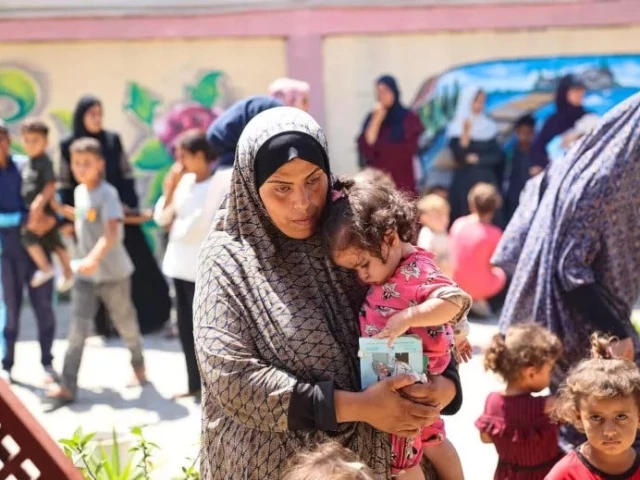
GENEVA: The United Nations and major humanitarian agencies are urging Israel to fully open all border crossings into Gaza to allow desperately needed food and medical supplies to reach millions of people trapped in what aid workers describe as “a hunger and health catastrophe.”
The UN children’s agency, Unicef, led the call on Friday, warning that children in Gaza are facing life-threatening malnutrition and disease after months of inadequate food and limited access to clean water. The appeal comes as Israeli troops began pulling back from parts of the Gaza Strip under a newly implemented ceasefire deal with Hamas, the first stage of a peace initiative brokered by US President Donald Trump.
“The situation is critical. We risk seeing a massive spike in child deaths, not only neonatal, but also infants, given their immune systems are more compromised than ever before,” said Ricardo Pires, Unicef spokesperson in Geneva.
Pires said many children have gone without proper nutrition “for way too long,” leaving them vulnerable to disease outbreaks and severe wasting. Unicef has identified at least 50,000 children at immediate risk of acute malnutrition, many of whom need urgent medical treatment.
UN plans major humanitarian surge
A senior UN official said on Thursday that the United Nations plans to dramatically increase aid deliveries during the first 60 days of the ceasefire period, prioritising food, fuel, and medical supplies.
According to the World Food Programme (WFP), around 600 aid trucks are expected to enter Gaza daily once conditions allow, compared to a fraction of that number during the war.
“Under the ceasefire arrangement, we will have more than 145 community distribution points, in addition to up to 30 bakeries and all of our nutrition sites,” said Ross Smith, WFP Director of Emergencies.
Smith told Reuters that the agency plans to begin large-scale deliveries early next week — provided Israeli forces withdraw further to expand humanitarian safe zones across the territory.
The Israeli military confirmed that aid trucks operated by the UN and “approved donors” would be allowed to enter Gaza, carrying food, medical equipment, shelter supplies, fuel, and materials to repair water and sewage systems.
Critical needs in northern Gaza
The WFP highlighted that access to northern Gaza remains one of the biggest challenges, with an estimated 400,000 people there having received no aid for weeks. Many are surviving on contaminated water and makeshift food supplies.
Both Unicef and UNRWA (the UN agency for Palestinian refugees) said they are still awaiting detailed instructions about their roles during the ceasefire period.
Unicef has announced plans to distribute one million blankets — one for every child in Gaza — and to deliver wheelchairs and crutches for the injured, many of which were previously blocked at crossings.
Meanwhile, UNRWA, which remains banned from operating inside Israel, has urged Israeli authorities to allow 6,000 trucks of aid from Jordan and Egypt into Gaza, carrying enough food to sustain the population for at least three months.
The agency also called for faster scanning and clearance procedures at checkpoints to ensure uninterrupted aid flow.
“Every delay costs lives,” said an UNRWA spokesperson. “People in Gaza are not just hungry — they are exhausted, sick, and desperate for stability and dignity.”
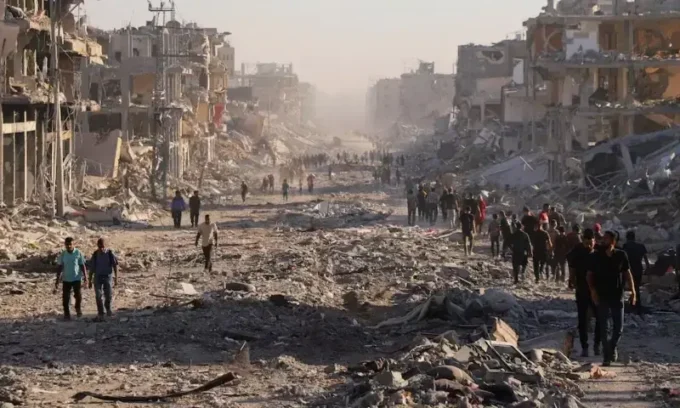
As the ceasefire enters its early stages, aid agencies stress that full humanitarian access is the only way to prevent famine and rebuild essential services across Gaza’s war-ravaged landscape.













Leave a comment