

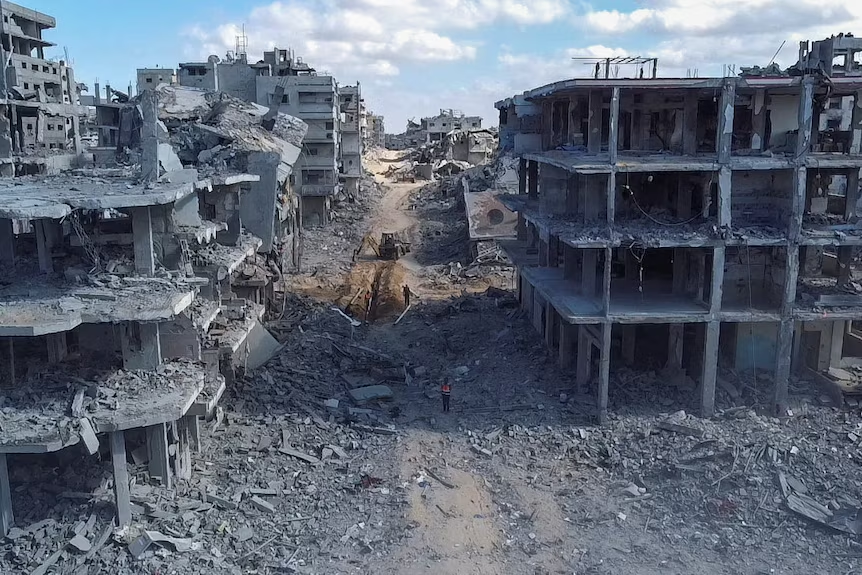
The Israeli military launched a series of new air and artillery strikes on the Gaza Strip on Sunday, marking a sharp escalation in violence and raising fears that the fragile ceasefire may collapse only days after it was declared.
According to Israeli officials, the strikes came in response to what they described as multiple Hamas attacks in areas under Israeli control, including a rocket-propelled grenade assault and sniper fire targeting Israeli forces. Military sources said the incidents represented a “clear violation of the ceasefire” agreed earlier this month.
Residents in southern Gaza reported heavy bombardment overnight, with several explosions rocking the area. Medical sources said at least 38 people were killed and more than 140 wounded in the attacks, though casualty numbers have not yet been independently verified. Many of the victims were reportedly civilians trapped in their homes as the strikes began.
Hamas denied carrying out any attacks during the truce and accused Israel of attempting to provoke a breakdown in the agreement. A senior Hamas spokesperson said the group “remains committed to the ceasefire” and warned that Israel’s actions threatened ongoing humanitarian and prisoner-exchange arrangements.
The ceasefire, brokered by the United States in coordination with Egypt, Qatar, and Turkey, took effect on October 10 and was intended to end nearly two years of war between Israel and Hamas. The deal included phased Israeli troop withdrawals from Gaza, the release of surviving Israeli hostages, and the exchange of thousands of Palestinian prisoners held in Israeli jails.
However, the truce has been fragile from the outset. Palestinian officials have accused Israel of repeated violations, saying that dozens of civilians have been killed in separate attacks since the ceasefire began. Human rights groups have also warned that Israel’s ongoing blockade and restrictions on aid convoys are worsening the humanitarian crisis in the enclave.
The latest Israeli strikes have deepened concerns that the ceasefire is on the brink of collapse. Analysts say the renewed fighting underscores the absence of a clear enforcement mechanism and the difficulty of maintaining calm amid deep mistrust on both sides.
The escalation also threatens to derail relief operations and reconstruction efforts in Gaza. Israel has said it will keep the Rafah border crossing with Egypt closed until Hamas cooperates fully with hostage-return procedures, a move that aid groups warn could worsen shortages of food, fuel, and medicine.
As tensions rise, both parties face internal and external pressure. The Israeli government is under growing scrutiny from its far-right allies, who are demanding a tougher response to any perceived ceasefire violations. Hamas, meanwhile, faces anger from Gaza’s war-weary population, who have endured months of displacement and hardship with little progress toward lasting peace.
Diplomatic sources say U.S. and Egyptian mediators are working urgently to restore calm and prevent a full-scale breakdown of the truce. But with mistrust running deep and humanitarian conditions deteriorating rapidly, prospects for stability appear increasingly uncertain.
The renewed violence in Gaza highlights the fragility of ceasefire agreements reached without a long-term political solution. Without genuine commitments to accountability, reconstruction, and governance, the cycle of truce and renewed conflict risks continuing — leaving civilians once again to bear the heaviest toll.














Leave a comment