

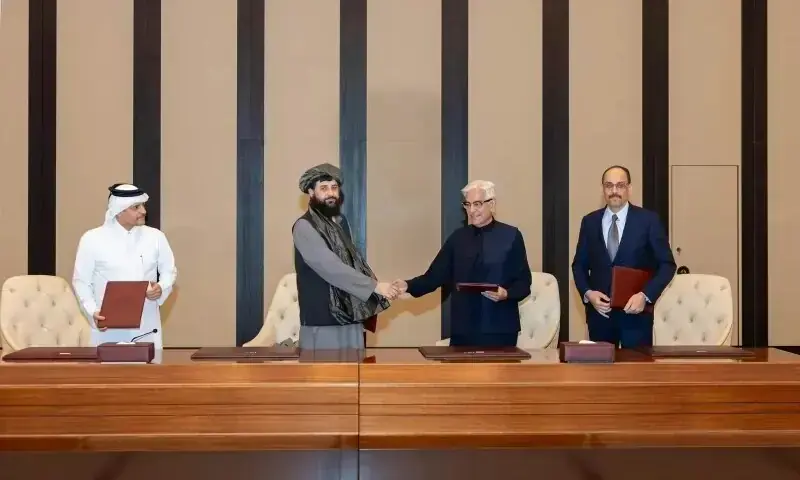
Saudi Arabia has welcomed the recent ceasefire agreement between Pakistan and Afghanistan, calling it a “positive step” toward regional stability and reaffirming its support for efforts to promote lasting peace between the two neighbouring countries.
In an official statement, the Saudi foreign ministry expressed appreciation for the ceasefire and the establishment of mechanisms aimed at consolidating peace and stability. The ministry reiterated the Kingdom’s support for all regional and international efforts to promote peace and security, while emphasizing its continued commitment to the prosperity of the “brotherly peoples of Pakistan and Afghanistan.”
The ceasefire was reached during negotiations in Doha, mediated by Qatar and Turkey. Delegations from both Pakistan and Afghanistan agreed to halt cross-border hostilities and strengthen mechanisms to prevent militant activity along their shared frontier. A follow-up round of peace talks is scheduled to take place in Istanbul later this month.
Saudi Arabia also praised the diplomatic role of Qatar and Turkey in facilitating the ceasefire. Riyadh said it “appreciates the constructive role” played by both countries in mediating discussions between Islamabad and Kabul and reaffirmed its intention to support future reconciliation efforts.
Background: Cross-Border Tensions and Mediation Efforts
Tensions between Pakistan and Afghanistan escalated sharply earlier this month following cross-border exchanges that left several people dead on both sides. Pakistani officials accused Afghan forces of initiating unprovoked attacks on border posts in Kurram and Chaman, while Kabul claimed that Pakistani airstrikes had targeted its territory.
The clashes underscored long-standing strains in bilateral relations, with Islamabad repeatedly accusing the Taliban-led government in Kabul of harbouring militants from the banned Tehreek-e-Taliban Pakistan (TTP). Afghanistan, in turn, has denied providing safe havens and accused Pakistan of violating its sovereignty through cross-border military operations.
The ceasefire agreement reached in Doha marks the first formal breakthrough in efforts to de-escalate tensions. Both countries agreed to resume joint security coordination mechanisms and establish communication channels to address potential violations swiftly.
Significance of Saudi Arabia’s Support
Saudi Arabia’s endorsement of the ceasefire carries symbolic and diplomatic importance. The Kingdom’s statement reflects its growing interest in fostering stability beyond the Middle East, particularly in South and Central Asia, where political volatility and security challenges have regional implications.
The move also aligns with Riyadh’s renewed focus on building strategic partnerships with Pakistan, a key ally with whom it recently expanded defence and investment cooperation. Saudi officials see peace between Pakistan and Afghanistan as vital for the security of the broader Muslim world and for reducing the influence of extremist groups operating in the region.
By supporting the truce, Saudi Arabia has also positioned itself as a potential facilitator for future peace initiatives, alongside Qatar and Turkey. Observers note that Riyadh’s backing adds further legitimacy to the ceasefire and may help sustain diplomatic momentum for more comprehensive security talks in the months ahead.
Challenges Ahead
Analysts caution, however, that maintaining the ceasefire will require more than diplomatic declarations. Both Pakistan and Afghanistan must establish credible mechanisms to monitor compliance, prevent militant cross-border movement, and build mutual trust. The absence of such mechanisms has often led to the collapse of previous agreements.
The upcoming Istanbul talks are expected to focus on operational details, including joint border patrols, intelligence-sharing frameworks, and humanitarian access to affected border regions. The success of these talks will be critical in determining whether the truce can evolve into a sustainable peace framework.
For now, Saudi Arabia’s endorsement and the active involvement of regional mediators offer a rare moment of optimism in a relationship long marked by tension and mistrust. Whether this diplomatic momentum translates into long-term stability, however, will depend on the willingness of both governments to honor their commitments and pursue genuine reconciliation.











Leave a comment