

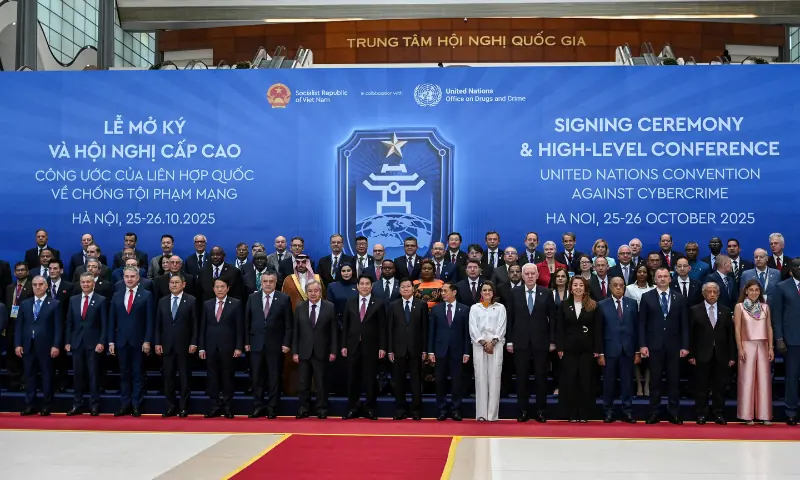
At a signing ceremony in Hanoi on October 25, a majority of United Nations member states flagged their support for the newly negotiated global treaty targeting cybercrime. Over 60 countries formally signed the UN Convention Against Cybercrime, an agreement aimed at strengthening international cooperation to fight digital crimes ranging from child pornography and online scams to money-laundering.
Speaking at the event, UN Secretary-General António Guterres called the treaty “an important milestone… but only the beginning.” He stressed that every day, sophisticated scams are destroying families, siphoning off billions of dollars, and exploiting migrants — making a coordinated global response indispensable.
The treaty’s origins trace back to a proposal by Russian diplomats in 2017, and it was adopted by consensus last year after lengthy negotiations. According to signatories, the convention will enter into force once the required number of ratifications is achieved under treaty rules.
Rights and Tech Sector Raise Red Flags
Despite broad participation, the treaty has drawn sharp criticism from human rights organisations and technology companies. Rights groups argue that the convention’s language is overly broad and could open the door to abuses of power and repression of critics across borders.
The tech industry also expressed concern. A delegation representing more than 160 firms — including Meta, Dell Technologies, and Infosys — declined to attend the Hanoi signing. Their main worry is that the treaty could criminalise legitimate cybersecurity research and compel companies to share sensitive data with governments under vague definitions of “any criminal act.”
Experts caution that the treaty gives states wide discretion to define “cybercrime” and to implement cross-border cooperation, potentially legitimising surveillance practices already used in authoritarian regimes.
Selecting Hanoi as Venue Draws Scrutiny
The choice of Hanoi, Vietnam — a country known for suppressing online dissent — as the signing venue has sparked criticism. Human Rights Watch noted that Vietnamese authorities often censor and silence online expressions critical of the government, raising concerns about the optics of hosting the treaty’s launch there.
Next Steps and Implications
As the treaty moves toward ratification, governments and rights groups face an urgent challenge: balancing law-enforcement cooperation with the protection of digital rights. While cybercrime is a global threat, many observers question whether this treaty will enhance human rights-respecting responses or instead expand unchecked state surveillance powers.
In the coming months, attention will turn to which nations ratify the treaty and how it is implemented domestically — a critical moment for the future of global digital governance.
















Leave a comment