

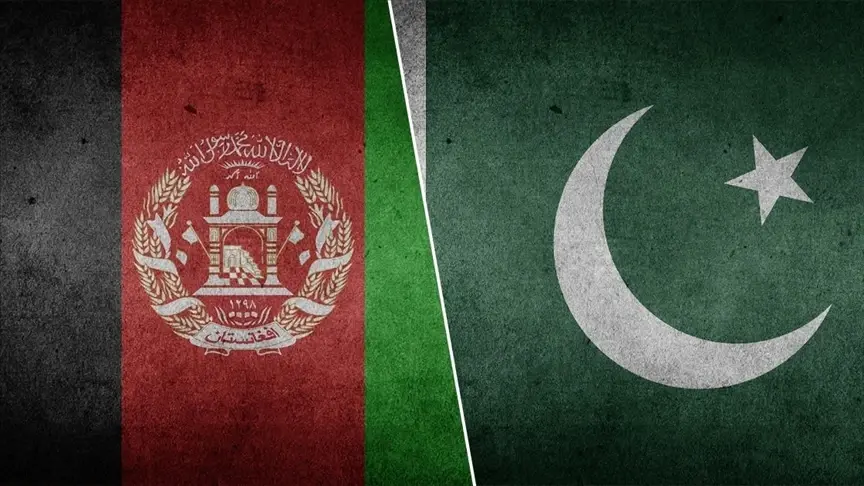
Pakistan and Afghanistan agreed early Friday morning to continue a fragile ceasefire following weeks of escalating tensions and brief armed clashes along their shared border, capping off an intense five-day dialogue in Istanbul mediated by Türkiye and Qatar. The breakthrough came after Islamabad had earlier declared the negotiations a failure, with Pakistani envoys reportedly preparing to depart. However, sustained diplomatic intervention by Türkiye and Qatar helped salvage the talks, producing a joint statement that reaffirmed both sides’ commitment to restraint and future dialogue.
The second round of discussions between Pakistani and Afghan Taliban delegations began last Saturday in Istanbul, building on an initial round in Doha. Progress was stalled for days over Islamabad’s long-standing concerns about terror attacks launched from Afghan soil, an issue that remains the core of Pakistan’s security grievances. The impasse appeared insurmountable until Türkiye and Qatar stepped in late Thursday night, persuading both sides to commit to maintaining the ceasefire and resume talks at a higher level. The joint statement, issued by Türkiye’s Ministry of Foreign Affairs early Friday, announced that “further modalities of the implementation will be discussed and decided” in a principal-level meeting on November 6 in Istanbul. Although the statement did not name the “principals,” diplomatic sources said the term likely referred to the defence ministers of both countries, who had led their delegations in the earlier Doha round.
A key element of the Istanbul understanding is the creation of a monitoring and verification mechanism designed to ensure compliance with the ceasefire and penalize violations. “All parties have agreed to put in place a monitoring and verification mechanism that will ensure maintenance of peace and impose penalties on the violating party,” the Turkish foreign ministry said in its statement. Türkiye and Qatar, both maintaining close ties with Islamabad and Kabul, expressed appreciation for the “active contribution of both parties” and reaffirmed their commitment to supporting lasting peace and stability in the region.
Afghan Taliban spokesman Zabihullah Mujahid welcomed the development, saying the Islamic Emirate “seeks good relations with neighbouring countries, including Pakistan, and remains committed to ties based on mutual respect, non-interference and peaceful coexistence.” In Pakistan, Defence Minister Khawaja Asif, who had earlier issued a stern warning to Kabul after the talks hit an impasse, struck a cautiously hopeful tone after the breakthrough. “You can say that some ray of light is visible; there is very guarded optimism. Let’s hope that some shape emerges from this,” he said in an interview with Geo News. Asif also praised Türkiye and Qatar for their mediation role, noting their longstanding friendship with Pakistan. “Türkiye clearly and openly supported us in the Pakistan-India conflict, so we respect them and their opinion,” he said.
At the heart of Pakistan’s stance was a demand that Afghanistan take clear, verifiable, and irreversible action against the Tehreek-i-Taliban Pakistan (TTP) and affiliated militant groups involved in cross-border attacks. Addressing troops earlier in Peshawar, Army Chief Field Marshal Asim Munir reiterated Pakistan’s red lines, stating that while Islamabad desired peaceful relations with all its neighbours, it “will not allow cross-border terrorism to be perpetrated from Afghan soil.”
The Taliban delegation, however, argued that it could not fully control the TTP, whose members are primarily Pakistani nationals operating inside Pakistan. A senior Taliban official told mediators that Kabul was willing to detain or expel TTP members found on Afghan territory but resisted Islamabad’s call to formally declare the group a terrorist organisation. “Pakistan keeps insisting that we control TTP’s attacks inside Pakistan,” the official said. “These fighters are Pakistani nationals operating within Pakistan.”
Diplomatic sources described the Istanbul round as tense and heavily mediated, with limited direct engagement between the delegations. “Even during meal breaks, the sides barely spoke,” one source said, noting that most exchanges were relayed through Turkish and Qatari intermediaries. Afghanistan, for its part, denied harbouring militants and accused Pakistan of violating its sovereignty through cross-border airstrikes. Afghan officials also reiterated long-standing accusations that U.S. drones operate from Pakistani airspace, a claim Islamabad denies. Kabul demanded that any future agreement include explicit assurances that Pakistan would refrain from such operations.
While the Istanbul agreement represents a notable de-escalation after weeks of hostility, diplomats cautioned that deep mistrust persists. “This is a framework for peace, not yet peace itself,” one foreign diplomat said. “It will take sustained verification, discipline and trust to make it hold.” Tensions had surged earlier this month after an October 11 border attack on Pakistani territory, followed by alleged Pakistani airstrikes against militant targets inside Afghanistan. Several subsequent skirmishes left casualties on both sides, prompting an urgent need for diplomatic intervention.
The Doha talks that followed led to a temporary truce and a commitment to reconvene in Istanbul — a process now extended into November as both sides attempt to turn the fragile ceasefire into a more durable arrangement. The continuation of the ceasefire and the establishment of a monitoring mechanism mark a tentative step forward, but officials acknowledge that trust remains scarce and implementation will be the real test. As the next round of high-level talks approaches on November 6, observers say the role of Türkiye and Qatar will be critical in keeping both sides engaged — and in preventing the region from sliding back into confrontation.










Leave a comment