

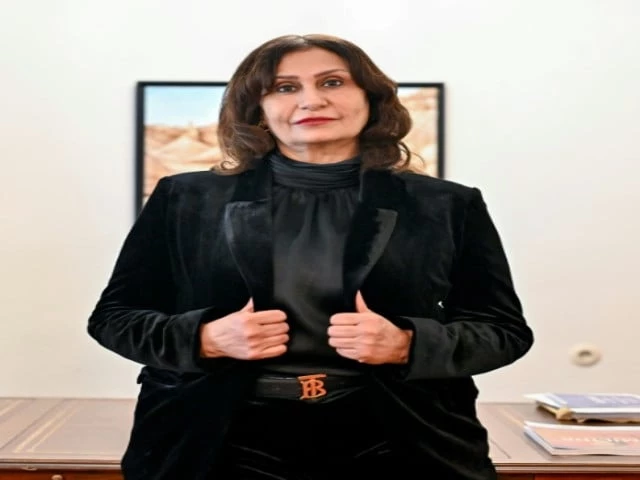
VIENNA: For more than four years, Manizha Bakhtari has stood as a symbol of defiance against the Taliban, refusing to relinquish her role as Afghanistan’s ambassador to Austria, despite repeated demands from Kabul for her removal. Appointed by the former Afghan government, Bakhtari continues to represent her country in Vienna, where she remains officially accredited by the Austrian government.
Refusing Taliban Authority
After the Taliban seized power in August 2021, their leadership sought to replace Bakhtari and other diplomats appointed by the ousted administration. Like many of her colleagues, Bakhtari received an official letter dismissing her from her duties. But rather than comply, she chose to resist.
“That was just a piece of paper for me,” she said in an interview, adding that she does not recognize the Taliban as Afghanistan’s legitimate government. “They have no recognition here in Austria, and I won’t accept their authority.”
Austria’s Continued Recognition
The Austrian foreign ministry confirmed that Bakhtari remains the accredited Afghan ambassador and permanent representative to international organizations in Austria. Vienna has refused to accept Taliban-appointed diplomats, although it has held limited talks with Taliban officials regarding deportations. From her relocated, smaller embassy in Vienna—supported by the Afghan diaspora—Bakhtari continues to provide limited consular services, such as passport extensions.
Targeted for Speaking Out
As the last Afghan woman accredited as an ambassador anywhere in the world, Bakhtari has become a prominent voice for Afghan women. She was recently featured in an Austrian documentary film highlighting her struggle, but the publicity has also made her a target.
“They call me a ‘dirty woman’ or ‘Western puppet,’ even a ‘whore,’” she revealed. “But I don’t care. Their hatred only proves that I’m doing the right thing.” She said she regularly receives online abuse and death threats from Taliban supporters.
Standing Up for Afghan Women
A journalist by training and a former chief of staff at Afghanistan’s Ministry of Foreign Affairs, Bakhtari has dedicated her diplomatic role to advocating for Afghan women and girls. “Helping Afghan women is my mission,” she said, condemning the Taliban for what the United Nations has called a “gender apartheid” against women. Under Taliban rule, girls are banned from attending school beyond age 12 and women are excluded from most jobs and public spaces.
To counter these restrictions, Bakhtari launched the “Daughters” initiative, a programme that helps Afghan girls access secret underground schools or online education. She argues that the Taliban’s assault on women’s rights extends beyond Afghanistan’s borders, influencing global attitudes toward women’s freedom. “If it impacts the situation of women in Afghanistan, it actually impacts all women around the world,” she said.
Exposing Taliban Hypocrisy
Bakhtari pointed to recent incidents that reveal the Taliban’s duplicity, including a visit by Afghanistan’s Foreign Minister Amir Khan Muttaqi to India. The official faced criticism after excluding female journalists from his press conference and was later forced to hold another session to contain the backlash. “They pretend to be modern, but they still impose the same repressive policies everywhere they go,” Bakhtari said.
Diplomatic Isolation and Determination
Despite her ongoing diplomatic status, Bakhtari remains isolated. The Taliban’s representatives in Vienna, she noted, have made no attempt to contact her. “The Taliban don’t want to talk to me. I’m a woman, you know,” she said with a wry smile. Still, she insists she would be willing to engage in peaceful dialogue if they ever sought it.
A Voice of Defiance
As Afghanistan endures increasing repression, Bakhtari’s voice has become one of the few remaining symbols of resistance. “They’ve adopted draconian policies, silencing not only women but also men, journalists, and activists,” she warned. For her, continuing to serve as ambassador is not merely a political act — it is a personal statement of courage, conviction, and defiance against a regime that seeks to erase women from public life.











Leave a comment