

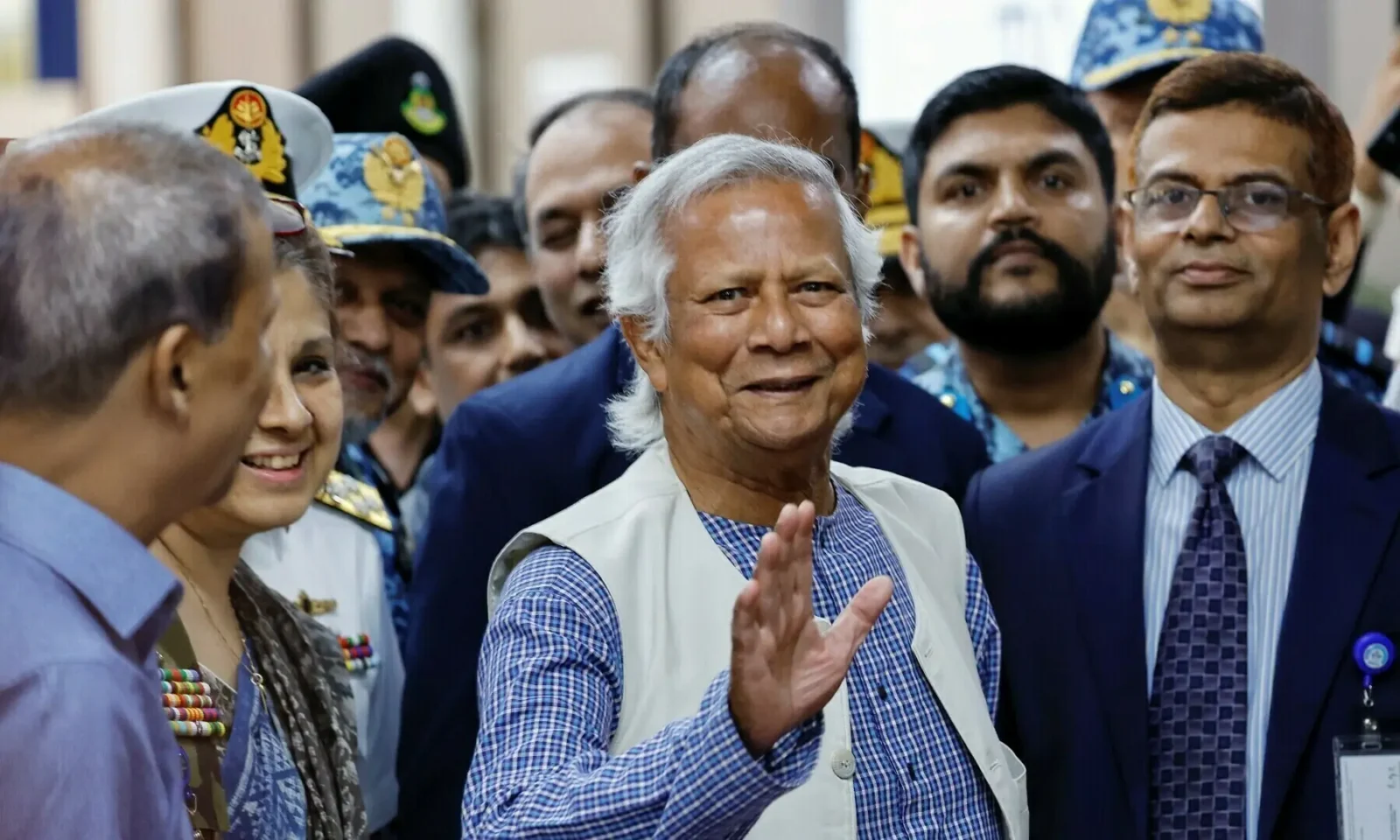
DHAKA: Deep divisions among Bangladeshi political parties have stalled a key democratic reform initiative, prompting the interim government to give rival groups one week to reach consensus or face unilateral government action, officials said on Monday.
The interim administration, led by Nobel Peace Prize laureate Muhammad Yunus, took power following a popular uprising last year. Yunus described the country’s political system as “completely broken down”, stressing that the proposed reform charter is crucial to prevent a return to authoritarian rule.
The reform document, signed by major political parties during an October ceremony, aims to reshape the country’s political landscape. However, disputes have emerged over whether the plan should be ratified through a national referendum.
Law Minister Asif Nazrul told reporters that “despite holding discussions for a long time, political parties still have unresolved issues of disagreement.” He cited differences on “the timetable of the referendum and the topics to be included.”
The reform proposal, known as the “July Charter”, was introduced after last year’s revolt and has since become a flashpoint between competing parties ahead of national elections expected in February 2026.
According to Yunus, the plan seeks to strengthen checks and balances between the executive, judiciary, and legislature, while also introducing a two-term limit for prime ministers and expanded presidential powers.
“We urge the political parties to come up with a united position on the referendum at the earliest — preferably within a week,” Nazrul warned. “Otherwise, the government will act independently.”
BNP leader Salahuddin Ahmed criticized the ultimatum, saying, “I have never seen a referee try to score a goal,” implying that the interim government should remain neutral. Both the Bangladesh Nationalist Party (BNP) and Jamaat-e-Islami have signed the reform charter, but disagreements persist over implementation.
Khaleda Zia to Contest Upcoming Elections
In a major political development, former prime minister Khaleda Zia, aged 80, will contest the general elections expected in February 2026, her party announced on Monday.
BNP senior leader Mirza Fakhrul Islam Alamgir confirmed that Zia will contest three constituencies, despite her fragile health following years of imprisonment under former leader Sheikh Hasina, who was toppled in August 2024’s mass uprising.
Her son, Tarique Rahman (also known as Tarique Zia), who has lived in London since 2008, will also stand in the elections. He claims to have fled politically motivated persecution and has not returned to Bangladesh since his exile.













Leave a comment