

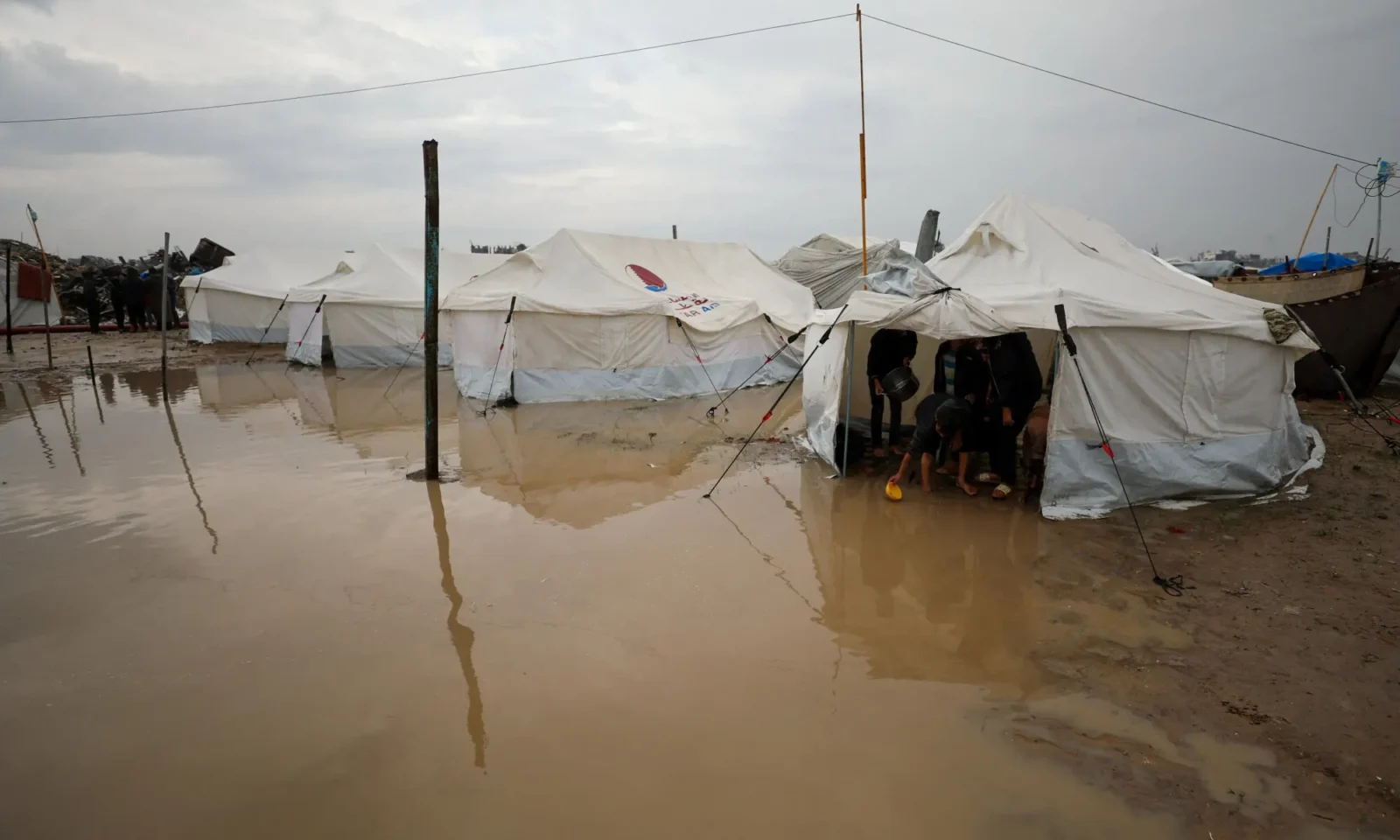
Torrential rains swept across the Gaza Strip on Thursday, flooding hundreds of tents housing families displaced by two years of conflict, and tragically resulting in the death of an eight-month-old baby girl from exposure, local health officials reported. The infant, Rahaf Abu Jazar, died after rainwater inundated her family’s tent in Khan Younis, in southern Gaza.
Holding her daughter in her arms, Rahaf’s mother, Hejar Abu Jazar, described the heartbreaking moment: “There was nothing wrong with her. We fed her before going to sleep, and when we woke up, the rain and wind had overwhelmed her. She died suddenly from the cold. Oh, the fire in my heart, oh my life.”
Residents at tent encampments struggled to cope with the storm. In Khan Younis, men used shovels to remove water and debris blocking access to shelters, while others prepared sandbags to protect tents against strong winds and flooding. Umm Mohammed Abd Elaal lamented the destruction of her tent, saying, “Look at this. How am I supposed to let the children sleep?” Her neighbour, Ahmed Salem, added, “There’s nothing we can do. Bedding is soaked and takes days to dry. These tents don’t protect against rain or strong weather.”
Gaza’s municipal and civil defense services said they were unable to manage the storm due to severe fuel shortages and damage to emergency equipment. Hundreds of vehicles, including bulldozers and water pumps, were destroyed during the conflict, leaving most of Gaza’s population, over two million people, without adequate protection. Civil defense officials reported that most tent camps across the enclave were flooded and they received over 2,500 emergency calls. Personal belongings of displaced families were seen floating in pools of rainwater.
A UN report highlighted the vulnerability of Gaza’s displaced population, noting that 761 sites, hosting approximately 850,000 people, are at high risk of flooding. Thousands of residents had moved preemptively in anticipation of heavy rain. UN and Palestinian officials emphasized that around 300,000 new tents are urgently required for roughly 1.5 million displaced people, as most existing shelters are worn out or made from thin plastic or cloth sheeting.
In the absence of proper shelter, many Gazans have resorted to removing iron rods from the rubble of bombed buildings to prop up tents or sell for a few dollars. Despite a ceasefire holding since October, the war has left much of Gaza’s infrastructure in ruins, resulting in extremely harsh living conditions.
Aid shortages further exacerbate the crisis. Hamas-led authorities accused Israel of restricting the entry of essential aid and shelter materials, while aid agencies reported continued blockages. Israel, in turn, stated it was fulfilling obligations under the truce and criticized agencies for inefficiency and failure to prevent theft, which Hamas denies.
Ismail Al-Thawabta, head of the Hamas-run Gaza media office, said, “We hold the Israeli occupation fully responsible for exposing displaced families to climate hazards as it continues closing crossings and preventing the entry of relief items and shelter materials.” UNRWA warned that flooded streets and soaked tents worsen already dire conditions, creating cold, overcrowded, and unsanitary environments that heighten the risk of disease and infection.
In Gaza City, three houses collapsed due to the rainstorm in areas previously devastated by Israeli bombardment, the civil emergency service said. Since the October 10 ceasefire, hundreds of thousands of Palestinians have returned to the city’s ruins. Israel has pulled back troops from city positions, and aid flows have reportedly increased, but displaced families continue to face severe challenges from both the elements and inadequate shelter.









Leave a comment