

NIIGATA, JAPAN: Japan took a major step toward reviving its nuclear energy program on Monday, as the Niigata Prefecture approved the restart of the Kashiwazaki-Kariwa nuclear power plant, the world’s largest, nearly 15 years after the Fukushima disaster. The move marks a pivotal moment in the country’s efforts to balance energy security with public safety concerns stemming from the 2011 earthquake and tsunami that triggered the Fukushima Daiichi nuclear crisis.
Kashiwazaki-Kariwa, situated approximately 220 km northwest of Tokyo, was among 54 reactors shut down nationwide following the Fukushima catastrophe, the most severe nuclear accident since Chernobyl. Over the past decade, Japan has gradually restarted 14 of its 33 operable reactors as it seeks to reduce dependence on imported fossil fuels. The Kashiwazaki-Kariwa plant will be the first nuclear facility operated by Tokyo Electric Power Company (TEPCO) since the Fukushima incident.
The Niigata prefectural assembly’s vote effectively endorsed Governor Hideyo Hanazumi’s earlier support for the restart. TEPCO now plans to reactivate the first of seven reactors at the plant, with public broadcaster NHK reporting a tentative date of January 20 for the initial restart. TEPCO spokesperson Masakatsu Takata emphasized the company’s commitment to preventing any repeat of past accidents and ensuring the safety of Niigata residents.
Public Concerns and Protests
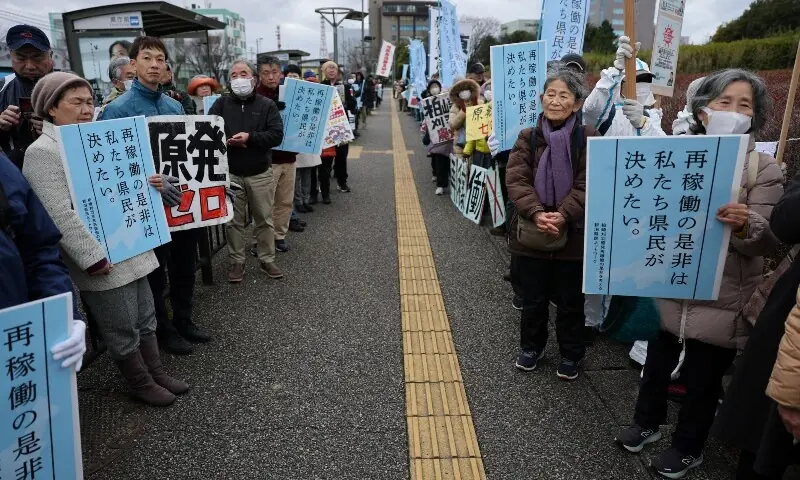
Despite official assurances, many Niigata residents remain deeply skeptical. On Monday, around 300 protesters, mostly older citizens, gathered outside the prefectural assembly in cold temperatures, holding banners reading “No Nukes,” “We Oppose the Restart of Kashiwazaki-Kariwa,” and “Support Fukushima.” The crowd, chanting slogans and singing the national song Furusato, voiced concerns about TEPCO’s competence to manage the plant safely.
Ayako Oga, 52, who relocated to Niigata after fleeing the Fukushima exclusion zone in 2011, expressed anxiety over the restart. “We know firsthand the risk of a nuclear accident and cannot dismiss it,” she said, noting that she still experiences post-traumatic stress-like symptoms from her previous ordeal. A recent survey found that 60 percent of Niigata residents believe the conditions for a safe restart have not been met, and nearly 70 percent remain concerned about TEPCO operating the plant.
Economic and Energy Implications
The Kashiwazaki-Kariwa restart is also tied to Japan’s broader energy and economic strategy. The first reactor alone could boost electricity supply to the Tokyo area by about 2 percent, according to the trade ministry. Prime Minister Sanae Takaichi, who took office two months ago, has actively supported nuclear restarts to enhance energy security and mitigate the rising costs of imported fossil fuels, which currently account for 60–70 percent of the nation’s electricity generation.
Last year, Japan spent roughly 10.7 trillion yen ($68 billion) on imported liquefied natural gas and coal, representing a tenth of its total import costs. With energy demand projected to rise due to the growth of AI data centers and other power-intensive industries, nuclear energy is seen as a critical component in meeting future consumption and decarbonization goals. The government aims to double the share of nuclear power in Japan’s electricity mix to 20 percent by 2040.
Balancing Safety and Progress
TEPCO has pledged to invest 100 billion yen ($641 million) over the next decade in Niigata Prefecture to gain local support, but public apprehension remains. Experts, including Joshua Ngu, vice chairman for Asia Pacific at Wood Mackenzie, have described the approval of Kashiwazaki-Kariwa as a “critical milestone” for Japan’s nuclear ambitions. Meanwhile, Kansai Electric Power, the country’s leading nuclear operator, is surveying the possibility of building a new reactor in western Japan, the first since Fukushima.
For residents like Oga, the restart is a sobering reminder of nuclear risks. “As a victim of the Fukushima nuclear accident, I wish that no one, whether in Japan or anywhere in the world, ever again suffers the damage of a nuclear accident,” she said, echoing the fears of many in Niigata who continue to protest and demand vigilance as Japan reenters the nuclear energy era.












Leave a comment