

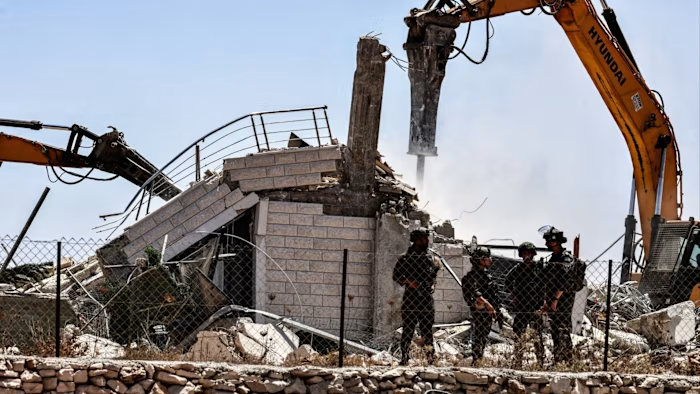
JERUSALEM: Israeli authorities barred a senior imam of the Al Aqsa Mosque from entering the compound this week, as nearly 100 countries and three major international blocs condemned Israel’s decision to designate additional lands in the occupied West Bank as so-called “state land.” The move has intensified diplomatic criticism and raised fresh concerns over settlement expansion in the Palestinian territory.
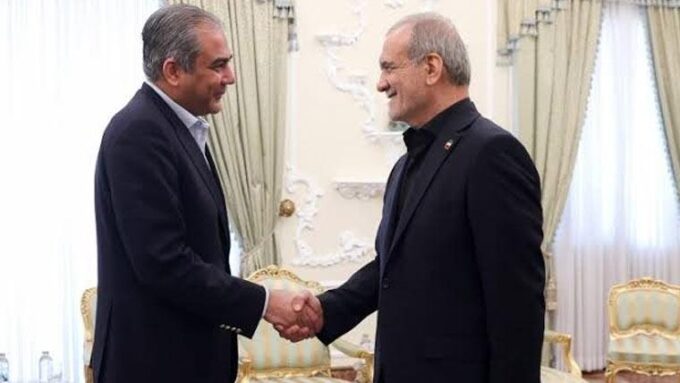
According to a statement issued by the Palestinian mission to the United Nations, 85 countries along with the European Union, the Organization for Islamic Cooperation, and the Arab League called for the immediate reversal of what they described as Israel’s annexation of land in the West Bank. Separately, foreign ministers from the eight-nation Muslim bloc also issued a strong condemnation of Israel’s approval of procedures for registering and settling land ownership across extensive areas of the occupied territory.
In their joint statement, the Muslim bloc described the move as a “grave escalation” aimed at accelerating settlement activity, confiscating Palestinian land, and entrenching Israeli control. They warned that the step seeks to impose what they called unlawful Israeli sovereignty over the Occupied Palestinian Territory, undermining Palestinian rights and weakening prospects for a two-state solution. The statement further cautioned that such measures threaten the establishment of an independent and viable Palestinian state and jeopardize efforts toward a comprehensive and lasting peace in the region.
Last week, the Israeli cabinet approved measures that would expand Israeli civilian authority in Areas A and B of the West Bank, which together account for roughly 40 percent of the territory. The decision has drawn criticism from both international actors and Israeli civil society groups concerned about its long-term implications.
Israeli non-governmental organizations have also voiced alarm over the government’s settlement plan, describing it as a significant development. According to activists, the proposal would mark the first expansion of Jerusalem’s borders into the occupied West Bank since 1967. The planned development, announced by Israel’s Ministry of Construction and Housing, is formally described as a westward expansion of the Geva Binyamin settlement, also known as Adam, located northeast of Jerusalem in the West Bank.
However, rights groups argue that the location of the new project raises serious concerns. The area slated for development lies on the Israeli side of the separation barrier constructed in the early 2000s, while Geva Binyamin itself is situated on the West Bank side of the barrier, with a road separating the two. In a statement, the Israeli settlement watchdog Peace Now said there would be no “territorial or functional connection” between the new area and the existing settlement.
Lior Amihai, executive director of Peace Now, stated that the new neighborhood would effectively become part of Jerusalem despite being beyond the city’s annexed municipal boundary. He noted that the project would be located entirely within West Bank territory but directly adjacent to Jerusalem, thereby reinforcing Israeli presence in the area.
Meanwhile, tensions have also risen around religious access in Jerusalem. Sheikh Muhammad Al-Abbasi, a senior imam at the Al Aqsa Mosque, said Israeli authorities barred him from entering the compound for a week, with the possibility of renewal. The ban comes just days before the start of the holy month of Ramazan. The imam stated that he was not informed of the reason behind the decision.
On Monday, Israeli police announced that they had recommended issuing 10,000 permits to Palestinians from the occupied West Bank, who require special authorization to enter Jerusalem. The developments collectively highlight mounting diplomatic pressure on Israel, growing concerns over settlement expansion, and heightened sensitivities surrounding religious access in Jerusalem.









Leave a comment