

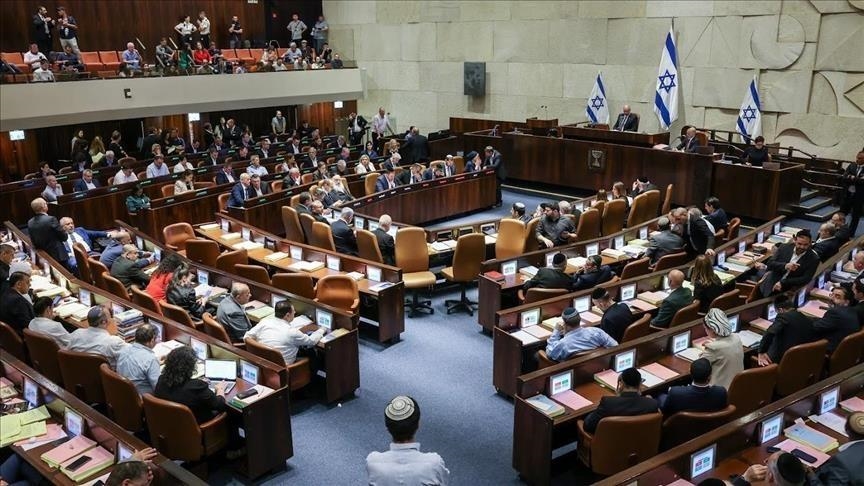
Israel’s parliament is preparing to vote on a controversial bill that would impose the death penalty as the default punishment for West Bank Palestinians convicted of murdering Israelis. The legislation, introduced by the far-right religious party led by National Security Minister Itamar Ben-Gvir, has sparked fierce debate ahead of the Knesset’s spring recess.
The proposed law seeks to make executions mandatory within 30 days for Palestinians convicted of acts deemed terror-related, though military courts retain the discretion to reduce sentences to life imprisonment in exceptional cases. If passed, the measure would mark a major victory for Ben-Gvir, who has publicly promoted the bill by wearing a symbolic noose on his lapel, signaling his support for swift capital punishment.
Opponents, including human rights organizations, Israeli legal experts, and the United Nations, argue that the bill is discriminatory, applying the death penalty exclusively to Palestinians in the West Bank while exempting Israeli citizens. Critics also warn that the legislation could complicate future hostage negotiations and contravene international law, as West Bank territories are not considered sovereign Israeli land.
“The law creates a two-tiered system that applies the death penalty in Palestinian military courts, while limiting its use for Israelis to certain politically motivated crimes,” said Amichai Cohen, senior fellow at the Israel Democracy Institute’s Center for Democratic Values and Institutions. He called the bill “both discriminatory and legally problematic.”
Although Israel technically retains the death penalty for limited offenses such as genocide and wartime espionage, no executions have been carried out since Nazi war criminal Adolf Eichmann in 1962. The bill does not apply retroactively to militants held for the October 7, 2023 attacks but reflects a broader push by Netanyahu’s far-right coalition to escalate punitive measures against Palestinians amid ongoing tensions.
Some Israeli security officials previously opposed reinstating capital punishment, citing fears it could incite further revenge attacks by Palestinian militants. Nevertheless, Ben-Gvir has emphasized that the bill represents one of the most important legislative measures in recent years and vowed to implement it fully if passed.
The Knesset vote is expected in the coming days, with international observers and rights groups closely monitoring the debate and planning possible legal challenges to Israel’s Supreme Court.














Leave a comment