

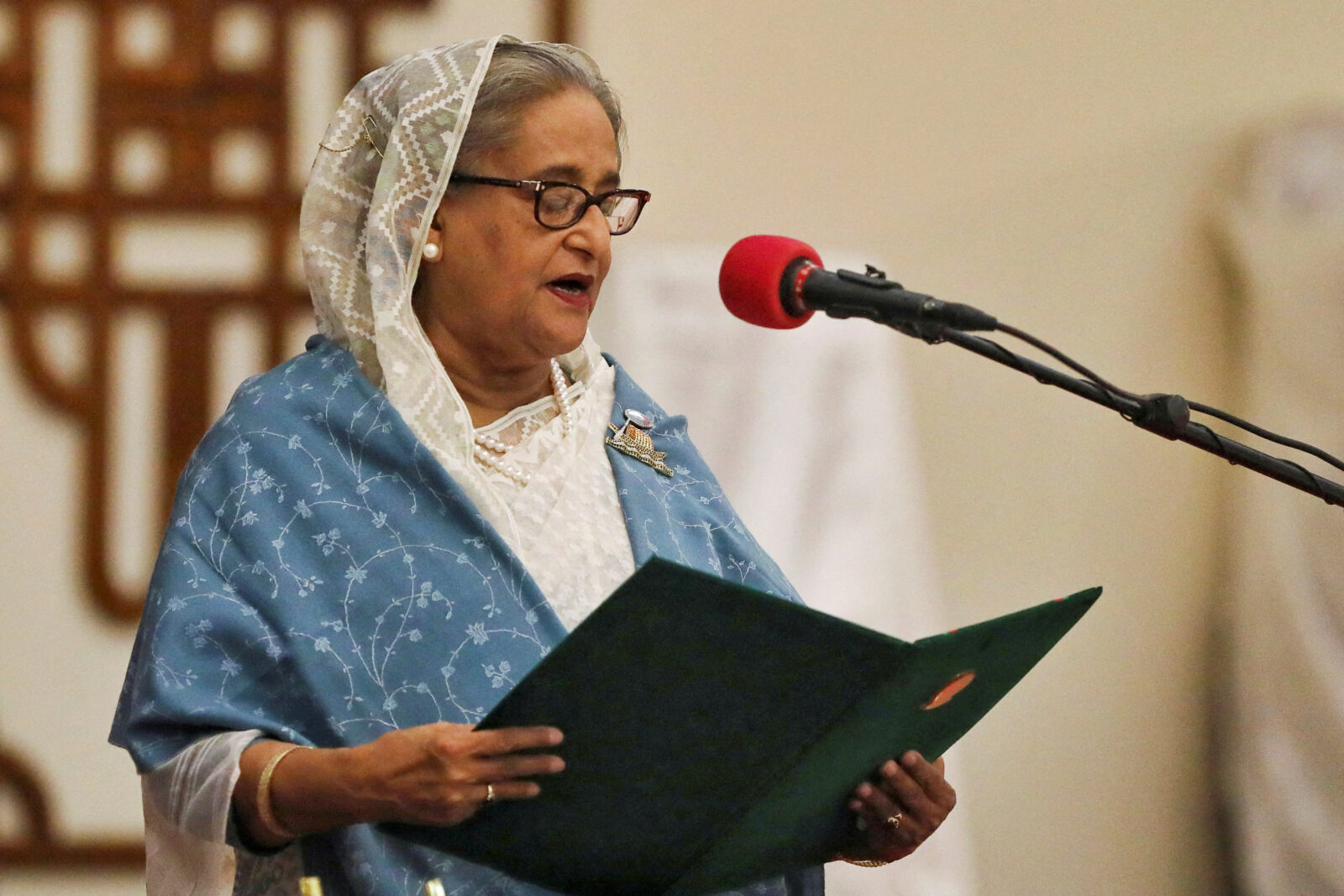
A Bangladesh court on Monday sentenced ousted Prime Minister Sheikh Hasina to death, concluding a months-long trial that found her responsible for ordering a deadly crackdown on a student-led uprising last year. The verdict, delivered by the International Crimes Tribunal in Dhaka, comes amid heightened tensions in the country and just months before parliamentary elections scheduled for early February.
Hasina, who fled to India in August 2024, was tried in absentia. Her party, the Awami League, has been barred from contesting the upcoming elections, raising concerns that the ruling could further inflame political unrest ahead of the vote. The death sentence can still be appealed to Bangladesh’s Supreme Court. However, Hasina’s son and adviser, Sajeeb Wazed, told Reuters that the family would not pursue an appeal unless a democratically elected government with Awami League participation assumed office.
Prosecutors argued that Hasina had directly commanded security forces to use lethal force to suppress student protests in July and August 2024. According to a United Nations report, up to 1,400 people may have been killed during the demonstrations, with thousands more injured — most by gunfire from security personnel. The violence marked the deadliest civil unrest in Bangladesh since the country’s 1971 war of independence.
Hasina was represented by a state-appointed defence lawyer, who denied all charges and requested her acquittal. Hasina herself had dismissed the trial as biased and predicted that a guilty verdict was “a foregone conclusion.”
The ruling came as Bangladesh faced mounting unrest, with at least 30 crude bomb explosions and 26 vehicles set on fire across the country in the days preceding the verdict. Authorities reported no casualties in these incidents, but the security situation remained tense across major cities, reflecting deep political polarization.
Observers note that Monday’s decision could further destabilize the country ahead of elections, with potential protests and unrest from supporters of Hasina and the Awami League. Meanwhile, analysts emphasize that the verdict underscores the judiciary’s willingness to pursue high-profile political figures, even amid an intensely charged political environment.












Leave a comment