

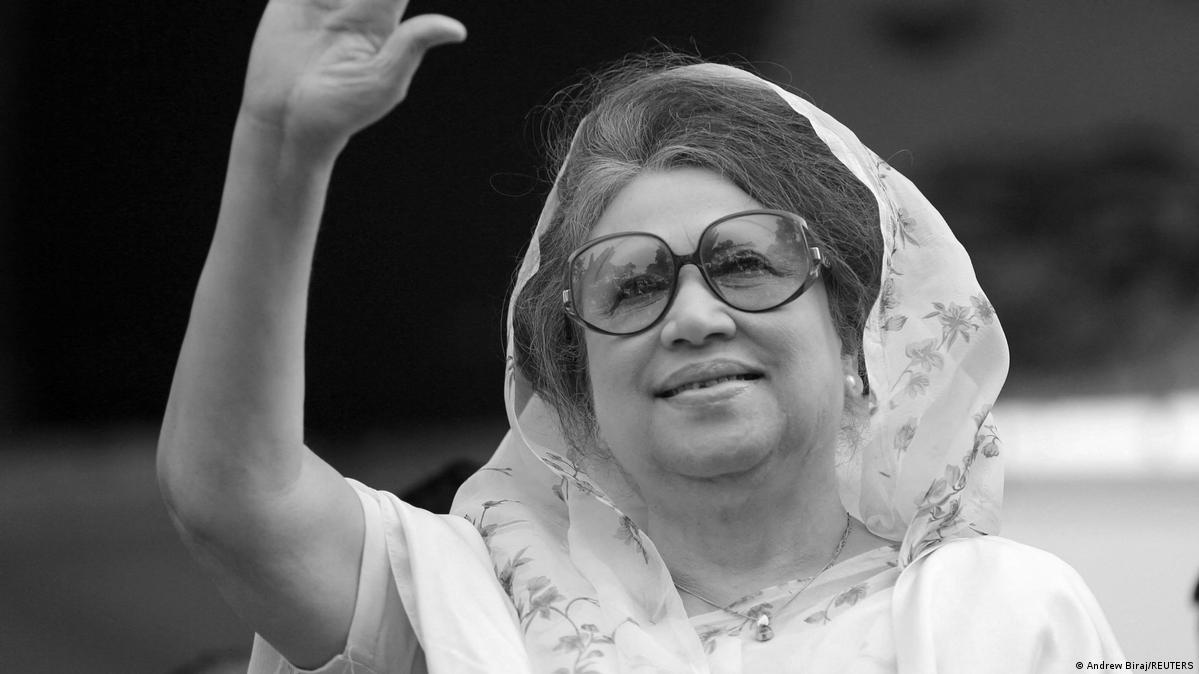
Bangladesh on Wednesday bid a final farewell to former prime minister Khaleda Zia, as a state funeral drew massive crowds to the streets of the capital, marking the end of an era for one of the country’s most influential political figures. Zia, who dominated national politics for decades, died on Tuesday at the age of 80.
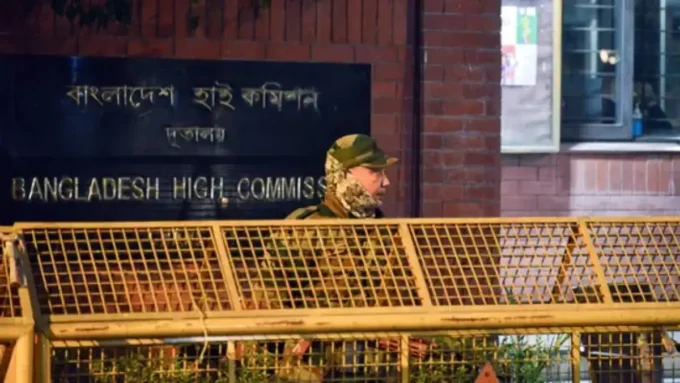
The first woman to serve as Bangladesh’s prime minister, Zia led the nation of around 170 million people through three separate terms in office. Her death prompted nationwide mourning, with flags flown at half-mast and heightened security across Dhaka as her coffin, draped in the national flag, was transported through the city.
Thousands gathered along the funeral route, with security personnel lining the streets to manage the crowds. Among the mourners was retired civil servant Minhaz Uddin, 70, who said he had not supported Zia politically but felt compelled to pay his respects. “I came with my grandson to say goodbye to a veteran leader whose contributions will always be remembered,” he said.
Many mourners highlighted Zia’s impact on women’s empowerment. Sharmina Siraj, a 40-year-old mother of two, described Zia as an inspiration, noting that education stipends introduced during her tenure had transformed opportunities for girls across the country. “It’s hard to imagine women rising to leadership roles so soon again,” she said.
Despite years of illness and periods of imprisonment, Zia had pledged to return to active politics ahead of elections scheduled for February 12 — the first since a popular uprising last year ousted her long-time rival, former prime minister Sheikh Hasina. Her Bangladesh Nationalist Party (BNP) is widely viewed as a leading contender in the vote.
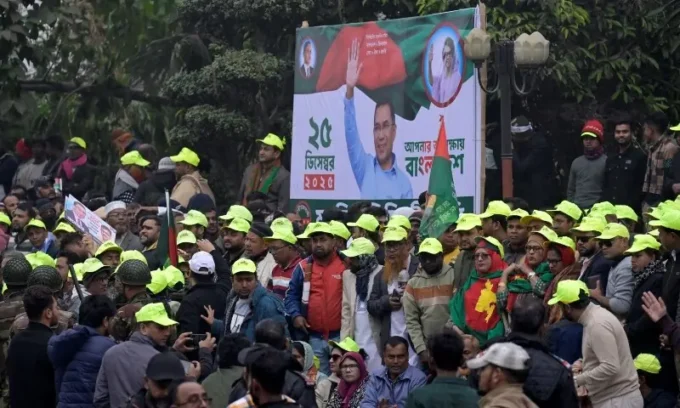
Attention has now turned to Zia’s son, Tarique Rahman, who returned to Bangladesh last week after 17 years in exile. The 60-year-old BNP leader is seen as a potential prime minister should the party secure a parliamentary majority.
“The leader is gone, but her legacy lives on,” said Jenny Parvez, who travelled hours with her family to witness the funeral procession. “So does the BNP.”
The interim government headed by Nobel Peace Prize laureate Muhammad Yunus declared three days of national mourning and arranged a full state funeral. Large crowds assembled outside parliament, where prayers were scheduled to begin in the afternoon. Yunus described Zia as “a great guardian of the nation”.
Zia will be buried beside her late husband, Ziaur Rahman, the former president and army chief who was assassinated in 1981.
In a statement, Tarique Rahman said the country was mourning “a guiding force that shaped Bangladesh’s democratic aspirations”. He said his mother endured repeated arrests, medical neglect and political persecution, but remained “unbreakable” in her resolve.
Zia’s health had deteriorated steadily after she was hospitalised in late November due to multiple medical complications. Despite her condition, BNP workers submitted nomination papers on her behalf for three constituencies just hours before her death.
International leaders also paid tribute. Indian Prime Minister Narendra Modi expressed hope that Zia’s “vision and legacy” would continue to guide relations between the two countries, despite strained ties since Hasina’s fall. India confirmed that Foreign Minister Subrahmanyam Jaishankar would attend the funeral — the highest-level Indian visit since last year’s political upheaval.
Pakistan also announced senior-level representation, with Deputy Prime Minister and Foreign Minister Ishaq Dar confirming that National Assembly Speaker Ayaz Sadiq would attend the funeral on Islamabad’s behalf.










Leave a comment