

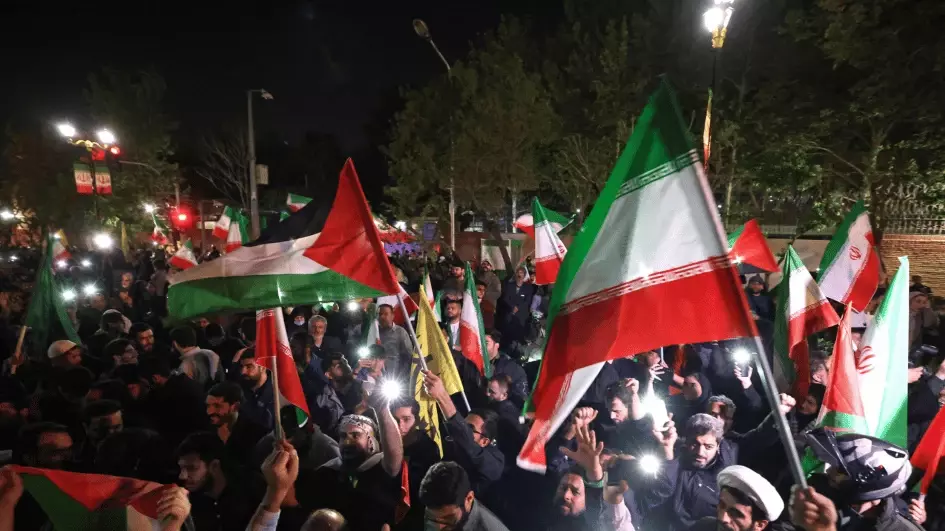
Europe is playing a far more consequential role in the ongoing U.S.–Israeli war against Iran than its public stance suggests, according to a report by The Wall Street Journal. Despite political distancing, European territory is actively enabling U.S. military operations, making the continent a critical backbone of the war effort.
Across multiple countries, American forces are using key bases to sustain operations. At Ramstein Air Base, drone missions are coordinated while troops, weapons, and equipment are transported through strategic airlift operations. Facilities such as Spangdahlem Air Base and U.S. Army Garrison Stuttgart are central to troop deployment and planning. In the UK, RAF Fairford is being used to arm and refuel U.S. bombers, while Greece’s Souda Bay Naval Base has supported repairs of the USS Gerald R. Ford.
These bases collectively make Europe an indispensable operational hub for U.S. military campaigns.
European infrastructure is also hosting key intelligence and reconnaissance systems, significantly expanding Washington’s reach across the Middle East, Central Asia, and Africa. This behind-the-scenes support contrasts sharply with Europe’s public narrative of non-involvement.
Politically, European leaders have attempted to distance themselves from the war due to strong domestic opposition. German Chancellor Friedrich Merz and Defense Minister Boris Pistorius have both stated that “this isn’t our war.”
However, critics argue that Europe’s actions tell a different story than its words.
The conflict has also driven rising energy prices across Europe, increasing economic pressure on governments already facing public discontent. This has intensified scrutiny of Europe’s dual position—publicly opposing the war while materially supporting it.
Critics describe this as a clear contradiction. European nations may not be directly fighting, but they are providing the infrastructure that makes the war possible. This has led to growing accusations of hypocrisy in how European governments balance political messaging with strategic alliances.
An exception is Spain, which has refused to allow U.S. forces to use its jointly operated bases for strikes related to Iran. Spain’s stance highlights that participation is not uniform across Europe. As a result, some U.S. aircraft have been redirected to bases in Germany and France.
Overall, Europe’s role is far more central than it publicly admits, serving as a logistical and strategic hub for U.S. operations despite political efforts to appear uninvolved.





Leave a comment