

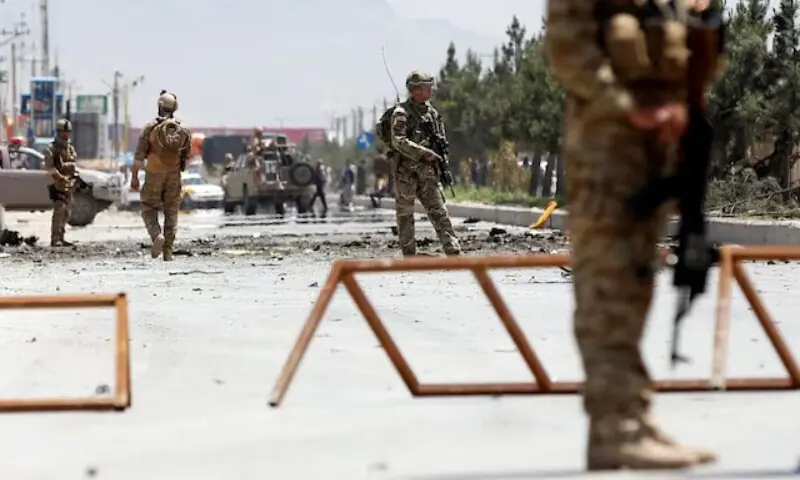
A former senior British officer has told a public inquiry that British special forces in Afghanistan appeared to commit war crimes by executing detainees, and that despite awareness of the issue at multiple levels of the chain of command, no action was taken.
The inquiry was launched by the Ministry of Defence (MoD) following a BBC documentary that alleged elite Special Air Service (SAS) soldiers had killed 54 people in suspicious circumstances during operations in Afghanistan more than a decade ago. The investigation focuses on night-time raids carried out between mid-2010 and mid-2013, when British forces were part of a US-led coalition fighting the Taliban and other militant groups.
Previous military police investigations into misconduct by British forces, including the SAS, did not produce sufficient evidence for prosecutions. The current inquiry, led by senior judge Charles Haddon-Cave, seeks to determine whether credible information existed regarding extrajudicial killings, whether later investigations were properly conducted, and if unlawful actions were concealed. Haddon-Cave stressed the importance of holding those who broke the law accountable while clearing suspicion from personnel who acted lawfully.
Testimony from soldiers has previously raised concerns about a SAS sub-unit, referred to as UKSF1, with allegations that it killed fighting-age males regardless of threat level. In new evidence released on Monday, an officer identified as N1466, who was the Assistant Chief of Staff for Operations at UK Special Forces Headquarters in 2011, revealed he had become suspicious about the high number of detainee deaths.
N1466 examined official reports following raids and found that the number of enemies killed in action exceeded the number of weapons recovered. He also questioned reports claiming detainees repeatedly attempted to use weapons or grenades after capture, calling them implausible.
“I will be clear we are talking about war crimes … we are talking about taking detainees back on target and executing them with a pretence, the pretence being that they conducted violence against the forces,” N1466 told Oliver Glasgow, the lead lawyer for the inquiry.
He said he raised the issue with the Director of Special Forces (referred to as 1802), but instead of pursuing criminal action, the official only ordered a review of operational tactics. N1466 later reported his concerns to the military police in 2015, expressing regret that he had not done so earlier.
“I was deeply troubled by what I strongly suspected was the unlawful killing of innocent people, including children,” he said. “I had come to the view that the issue of extrajudicial killings was not confined to a small number of soldiers in a single subunit of UKSF1 but was potentially more widespread, and was apparently known to many in UKSF.”
Other testimony presented to the inquiry noted operational frustrations, particularly when detainees captured during intelligence-led operations were quickly released due to the Afghan judicial system’s limitations. Evidence also highlighted rivalry between two SAS units, UKSF1 and UKSF3, to which N1466 belonged.
“I want to make clear that nothing could be further from the truth than portraying me as having an axe to grind,” N1466 told the inquiry. “We didn’t join UKSF for this sort of behaviour — toddlers being shot in their beds or random killings. It’s not special, it’s not elite, it’s not what we stand for, and most of us would neither condone it nor cover it up.” The inquiry into alleged unlawful killings by British forces in Afghanistan continues.



Leave a comment