

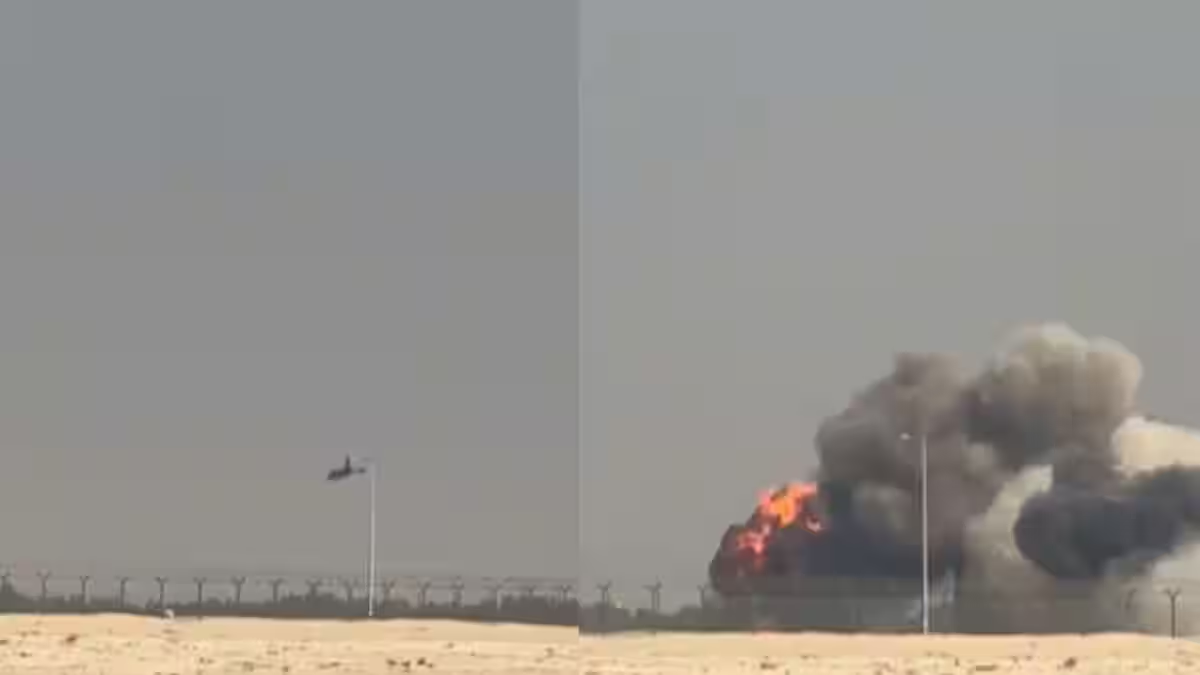
An Indian Tejas light combat aircraft crashed in a fiery explosion during an aerial display at the Dubai Airshow on Friday, shocking thousands of spectators and prompting an immediate investigation by the Indian Air Force (IAF). Dramatic footage from the scene showed thick black smoke billowing above the airstrip as emergency crews raced toward the burning wreckage.
Dubai authorities released images of firefighters battling smouldering debris behind a secured section of the runway. Witnesses described a sudden and catastrophic descent. Jignesh Variya, a 46-year-old attendee watching the demonstration with his family, told Reuters that the jet had been performing for less than ten minutes when it abruptly nose-dived. “I saw three separate fireballs when it hit the ground,” he said. “The entire crowd jumped to their feet, and within half a minute emergency vehicles were already heading toward the crash site.”
This marks only the second known crash involving the Tejas fighter jet, manufactured by India’s state-owned Hindustan Aeronautics Limited (HAL) and powered by U.S.-made General Electric engines. The first incident occurred during an exercise in India in 2024. The aircraft—whose Sanskrit name means “brilliance”—is central to India’s long-term effort to modernise its fleet of largely Russian and Soviet-era warplanes.
The accident took place on the final day of the Dubai Airshow, the Middle East’s largest aviation event, which began on Monday. Despite the crash, flying displays resumed later in the afternoon, and several jets returned to the sky over the venue. The IAF announced that a formal court of inquiry had been convened to determine the cause of the accident.
General Electric, which supplies the Tejas engine, said it would fully support investigators. “We are deeply saddened by the loss of the Indian Air Force Tejas fighter jet at the Dubai Airshow and extend our heartfelt sympathies to the loved ones of the pilot,” a GE spokesperson said. Dubai’s government added that emergency response teams had contained the situation at the site.
Development of the Tejas dates back over 40 years to feasibility studies launched in the 1980s. Although first manufactured in 2001, the programme has seen repeated delays, including setbacks linked to slow engine deliveries from GE—an issue the company has attributed to post-pandemic supply chain disruptions. The IAF has plans to induct nearly 220 Tejas fighters and upgraded Mk-1A variants over the coming decade as HAL works through existing orders.
Defence experts note that the Tejas remains India’s first fully indigenous fighter aircraft not derived from foreign designs. British defence analyst Francis Tusa said export interest has been limited so far, though India is developing a more advanced Tejas Mark II. New Delhi had been actively promoting the aircraft to potential foreign buyers throughout the week-long airshow, a major platform for global arms sales and high-intensity flight demonstrations.
Earlier in the week, India’s Vice Chief of Air Staff, Air Marshal Narmdeshwar Tiwari, expressed optimism that the Tejas display would attract significant interest. “We expect this year’s performance to showcase the aircraft’s capabilities to both local visitors and international delegations,” he told ANI in Dubai.
The Dubai Airshow—considered the world’s third-largest aviation exhibition after Paris and Farnborough—features a wide array of military and commercial aircraft from global powers, including China, Russia, Pakistan and India. Friday’s incident marked the first crash in the event’s history, casting a sombre tone over an otherwise high-profile showcase of international aviation technology.









Leave a comment