

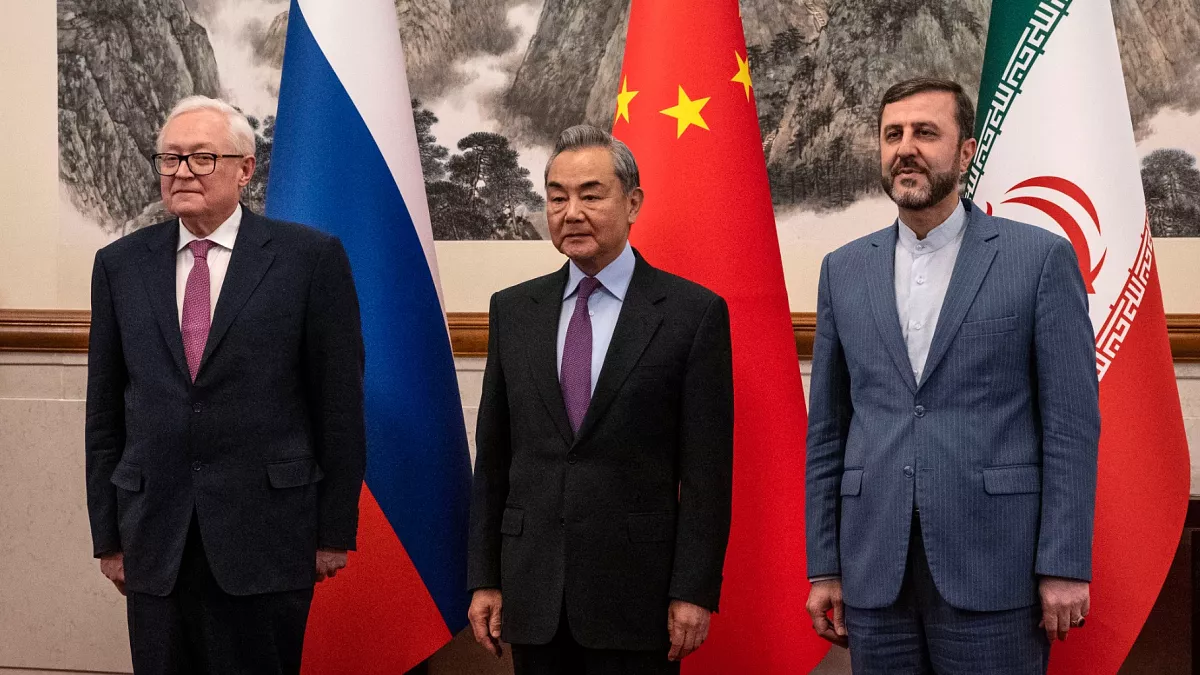
In a rare display of coordinated diplomacy, Iran, Russia, and China have submitted a joint letter to the United Nations Security Council (UNSC), holding the United States and its European allies responsible for the ongoing crisis surrounding the 2015 Joint Comprehensive Plan of Action (JCPOA), commonly known as the Iran nuclear deal.
According to diplomatic sources at the UN, the letter strongly criticizes Washington and European signatories Britain, France, and Germany for failing to uphold their obligations under the agreement, which was designed to limit Tehran’s nuclear activities in exchange for sanctions relief. The three nations argued that the U.S. withdrawal from the JCPOA in 2018 under then-President Donald Trump, coupled with the subsequent imposition of sweeping sanctions, destabilized the framework and directly triggered the current stalemate.
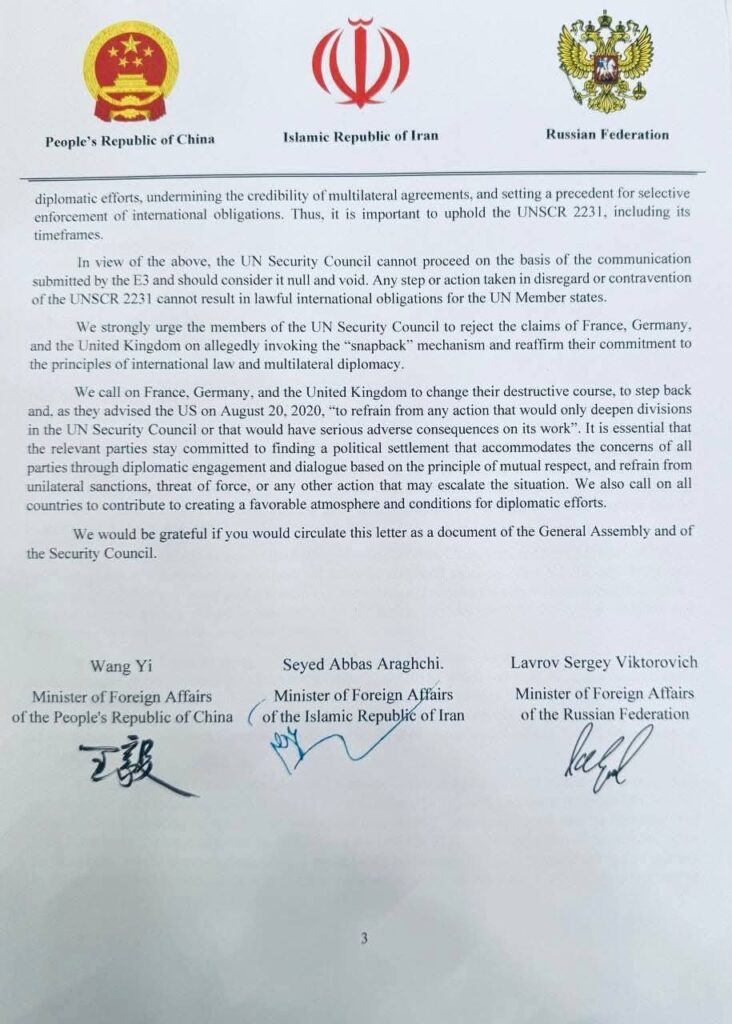
The letter also accuses European states of “complicity,” claiming they did not take adequate steps to shield the Iranian economy from U.S. secondary sanctions, despite repeated commitments to preserve the deal. Iran, Russia, and China warned that continued Western “non-compliance and double standards” not only undermine global non-proliferation efforts but also threaten regional security and stability in the Middle East.
Tehran, backed by Moscow and Beijing, reiterated that it remains open to dialogue but insisted that the responsibility for restoring the nuclear agreement lies with Washington and its European allies. The letter calls on the UNSC to pressure the U.S. to lift unilateral sanctions and return to compliance, while also urging Europe to fulfill its “legal and political commitments” under the pact.
The joint démarche underscores the growing geopolitical alignment between Iran, Russia, and China in countering Western influence, particularly at a time when U.S.-led sanctions are expanding and global power rivalries are intensifying. Analysts note that the move also reflects a broader push by Moscow and Beijing to leverage multilateral institutions like the UN to challenge what they describe as Western “hegemony” in global security affairs.





Leave a comment