

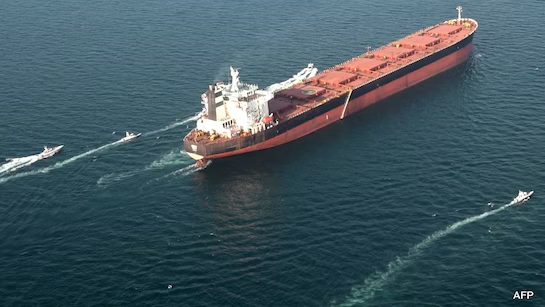
Iran conducted live missile drills in the Strait of Hormuz on Tuesday, demonstrating its readiness to close the strategic waterway if ordered by senior leadership, according to Iranian state-affiliated media. The naval exercises, dubbed the “Smart Control of the Strait of Hormuz,” involved missile launches from vessels, coastal positions, and inland sites, as well as drone operations under simulated signal-jamming conditions. Traffic through the crucial oil transit corridor was reportedly suspended for several hours during the exercises.
The drills coincided with a high-profile diplomatic effort, as U.S. envoys Steve Witkoff and Jared Kushner met with senior Iranian officials in Geneva for the second round of nuclear talks. The timing of the exercises appeared to signal Iran’s leverage in ongoing negotiations over its nuclear program.
Rear Admiral Alireza Tangsiri, commander of the Islamic Revolutionary Guard Corps (IRGC) Navy, emphasized Tehran’s ability to close the strait, underscoring the country’s strategic control over a key maritime chokepoint. The Strait of Hormuz remains a critical artery for global oil shipments, making any disruption a potential trigger for heightened regional tensions.
The U.S. Central Command (CENTCOM) previously urged the IRGC to conduct the exercise “in a manner that is safe, professional and avoids unnecessary risk to freedom of navigation for international maritime traffic.” CENTCOM also noted that while it recognizes Iran’s right to operate professionally in international waters, unsafe or unprofessional behavior could increase the risk of collisions, escalation, and destabilization in the region.
The Trump administration has strengthened its military presence in the Middle East as nuclear negotiations with Iran continue, signaling that any potential deal must address broader security issues in addition to Iran’s nuclear program. U.S. officials, including Secretary of State Marco Rubio, have stated that meaningful negotiations should also cover Iran’s ballistic missile program, its support for regional militant groups, and its domestic policies toward citizens.
President Donald Trump, speaking to reporters aboard Air Force One on Monday, said he would be involved in the talks “indirectly” and commented on Iran’s negotiation style. He described Iran as a “very tough negotiator” and suggested that past opportunities for a deal had been missed, citing the deployment of B-2 bombers to target nuclear capabilities. Trump expressed hope that Iran would approach the current round of talks more reasonably, noting that “they want to make a deal.”
The missile drills, combined with the diplomatic engagement in Geneva, highlight the delicate balance of military signaling and negotiations, as both Tehran and Washington seek leverage in the complex and high-stakes discussions over Iran’s nuclear ambitions and regional security role.



Leave a comment