

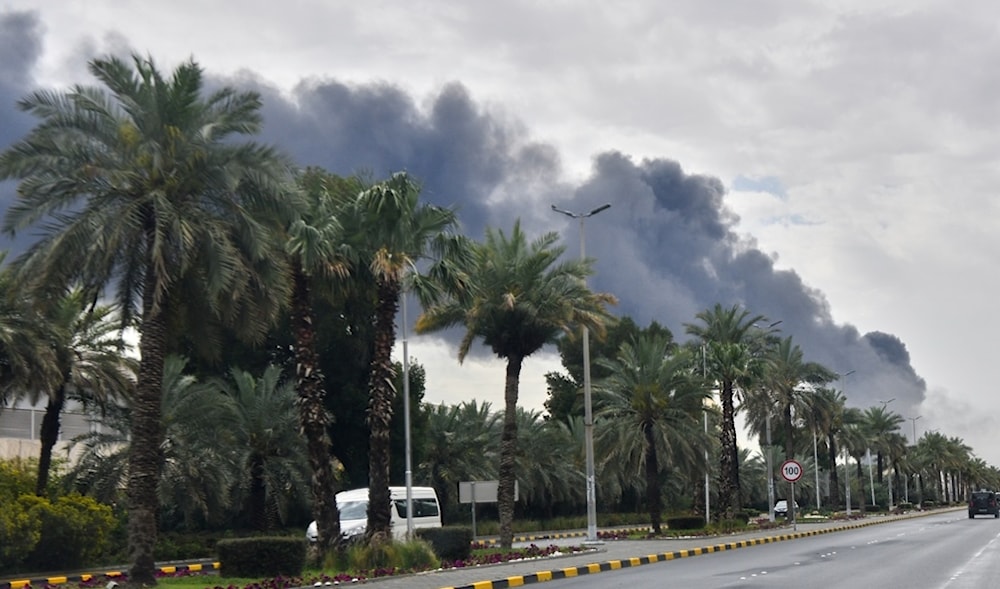
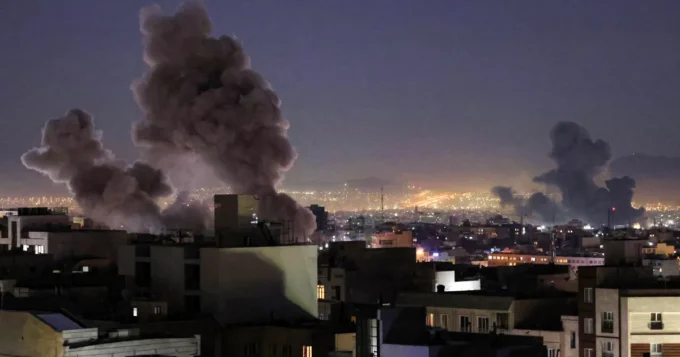
As the war involving Iran continues, Gulf states are increasingly questioning whether reliance on the United States’ security umbrella still justifies its economic and strategic costs. The conflict, which escalated following US and Israeli strikes in late February, has exposed vulnerabilities across the region, with missile and drone attacks targeting US bases and key infrastructure in Gulf देशों.
For decades, the relationship between the Gulf and the United States has been built on what analysts describe as the “petrodollar bargain” — an implicit agreement in which Washington provided military protection in exchange for stable oil supplies priced in US dollars, along with the reinvestment of oil revenues into American financial markets and defense industries. This arrangement, formalised in the 1970s, has been central to ties between the US and Saudi Arabia and has underpinned the global dominance of the dollar.
Member states of the Gulf Cooperation Council — including United Arab Emirates, Qatar, Oman, and Bahrain — have long pegged their currencies to the dollar. Backed by reserves estimated at around $800 billion, and sovereign wealth funds exceeding $6 trillion, these economies remain deeply tied to US financial systems. Significant portions of these funds are invested in dollar-based assets, including US Treasury securities, equities, and private equity markets.
However, analysts note that the foundations of this system are under growing strain. First, the United States has reduced its dependence on Gulf oil, becoming a major energy producer itself. Second, alternative currency arrangements are gaining traction, with countries like China, Russia, and Iran increasingly exploring non-dollar oil trade. Third, and most critically, the current war has raised doubts about the reliability of US security guarantees, as Gulf infrastructure continues to face attacks despite Washington’s military presence.
These developments are prompting Gulf nations to reassess their strategic alignments. Economists suggest the conflict may accelerate a shift toward Asian partners, particularly China and India, which are now the largest consumers of Gulf energy exports. Saudi Arabia, for instance, reportedly exports significantly more oil to China than to the United States, reflecting a broader eastward pivot in trade relations.
There are also indications that Gulf states may begin diversifying away from dollar-denominated assets. Some analysts warn that prolonged instability could force countries to liquidate US holdings to offset economic losses caused by the war. In parallel, discussions around alternative pricing mechanisms — including the use of China’s yuan in oil transactions — are gaining renewed attention.
The potential implications extend beyond regional politics. Experts suggest that the current conflict could accelerate a gradual shift away from the petrodollar system toward a more diversified global financial structure, incorporating currencies such as the yuan, euro, or rupee. Reports that Iran may allow oil shipments through the Strait of Hormuz under non-dollar payment arrangements highlight how geopolitical tensions are increasingly intersecting with global economic systems.
Despite these shifts, analysts caution that the Gulf’s role remains crucial to the stability of global energy markets and the US dollar’s status as a reserve currency. The outcome of the war — and the extent to which it reshapes security and economic alignments — is likely to have long-term consequences for both regional stability and the global financial order.
As the conflict continues, policymakers and investors across the Gulf are closely monitoring developments, aware that the decisions made in its aftermath could redefine alliances, trade patterns, and monetary systems for decades to come.







Leave a comment