

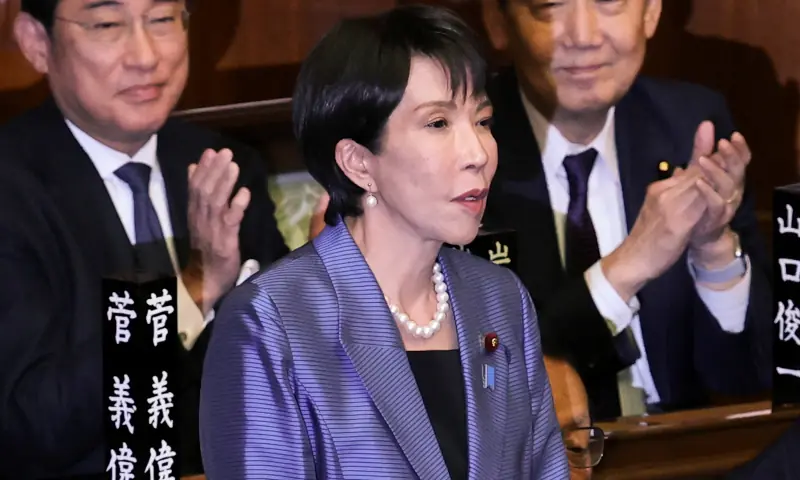
TOKYO: Japan made history on Tuesday as Sanae Takaichi, a China hawk and social conservative, became the country’s first female prime minister after forming a last-minute coalition agreement. Takaichi, 64, will lead a minority government as the nation’s fifth premier in as many years, facing a full agenda that includes a scheduled visit from US President Donald Trump next week.
Parliament appointed Takaichi following her unexpected majority win in the first round of voting. She will formally assume office after meeting the emperor. Known for her admiration of Margaret Thatcher, Takaichi previously led the Liberal Democratic Party (LDP) starting October 4, succeeding outgoing premier Shigeru Ishiba. However, her conservative views and an LDP slush fund scandal prompted the Komeito party to leave the coalition, forcing Takaichi to ally with the reformist, right-leaning Japan Innovation Party (JIP).
The JIP, which signed the coalition agreement on Monday evening, supports policy changes such as reducing the consumption tax on food to zero, abolishing corporate and organisational donations, and cutting the number of parliamentary seats. Takaichi pledged to “make Japan’s economy stronger, and reshape Japan as a country that can be responsible for future generations.”
Women in Cabinet and Gender Policies
Takaichi has promised a cabinet with “Nordic” levels of female representation, a significant increase from just two women under Ishiba. Potential cabinet members could include right-wing Satsuki Katayama as finance minister and half-American Kimi Onoda as economic security minister. Despite these moves, Japan still ranks low in gender equality, placed 118 out of 148 countries in the 2025 Global Gender Gap Report.
Takaichi has expressed interest in raising awareness about women’s health issues, including menopause, but opposes revising a 19th-century law requiring married couples to share the same surname and supports male-only succession in the imperial family. Local residents expressed cautious optimism, hoping her leadership might bring more policies from a woman’s perspective, including support for childcare and women re-entering the workforce.
Economic and Security Challenges
Takaichi inherits a challenging domestic and international portfolio. Her government faces unresolved trade negotiations with Washington, pressure from Trump to end Russian energy imports, and demands to increase defence spending. Domestically, she must address Japan’s population decline, boost the flatlining economy, and restore the LDP’s fortunes after a series of poor election results.
Previously, Takaichi supported aggressive monetary easing and government spending, aligning with her mentor, former Prime Minister Shinzo Abe. While she moderated her “Abenomics” stance during the leadership contest, her election victory has already boosted Japanese stocks. She has also softened her rhetoric on China, although she remains focused on addressing Beijing’s perceived security threats.
Public Sentiment and Political Landscape
Public opinion remains mixed. Some residents view Takaichi as strong-minded and capable of decisive leadership, while others worry about economic pressures and rising prices. Smaller parties like the populist Sanseito, which campaigns against immigration, are gaining support, reflecting growing public concern over economic and social issues.
As Japan’s first female prime minister, Takaichi’s leadership will be closely watched both domestically and internationally, with her coalition’s minority status requiring negotiation and compromise to pass legislation. Her tenure will test whether she can balance conservative policies with the expectations of a modern, diverse electorate.
















Leave a comment