

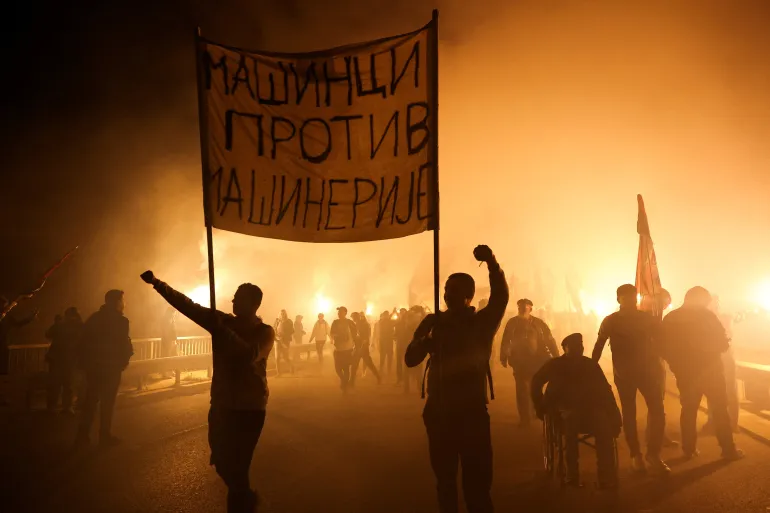
As Serbia prepares to mark the first anniversary of the deadly collapse of a canopy at the central train station in Novi Sad that killed 16 people, student-led protest movements have called for large-scale rallies and marches across the country.
The tragedy has galvanised public anger over corruption, infrastructure negligence, and lack of accountability.
Legacy of the November 1 Disaster
On 1 November 2024, the concrete canopy of the newly-renovated railway station collapsed, killing 16 people and injuring others.
The station had been rebuilt under a major government infrastructure programme, and many Serbians believe corruption and substandard work caused the collapse.
The disaster has since become a symbol of the country’s deep governance crisis.
The Student-Led Protest Movement
University students have become the driving force behind the protests.
They have organised marches, road blockades, and symbolic 15-minute silences at the exact time of the collapse — 11:52 a.m.
The movement has spread to more than 240 towns and cities, turning into one of Serbia’s largest civic campaigns in recent years.
Demands and Government Response
Protesters are demanding full transparency on the station project, criminal accountability for those responsible, and early parliamentary elections.
Although 13 individuals have been indicted, no senior officials have yet been tried, fuelling further anger.
The government, meanwhile, has dismissed the protests as foreign-backed and organised counter-rallies in response.
Anniversary Protests and Political Pressure
As the anniversary approaches, thousands are expected to converge in Novi Sad after walking from cities such as Belgrade.
The mass rally will test the strength of Serbia’s protest movement and could challenge President Aleksandar Vučić’s decade-long rule.
Observers say the outcome may influence Serbia’s democratic image and its EU membership ambitions.
What Lies Ahead
The tragedy and protests have raised questions about corruption, safety standards, and transparency in public infrastructure.
Analysts believe the coming weeks could define whether the government listens to public grievances or intensifies repression.
This anniversary is being seen as a turning point for Serbia’s civic and political future.










Leave a comment