

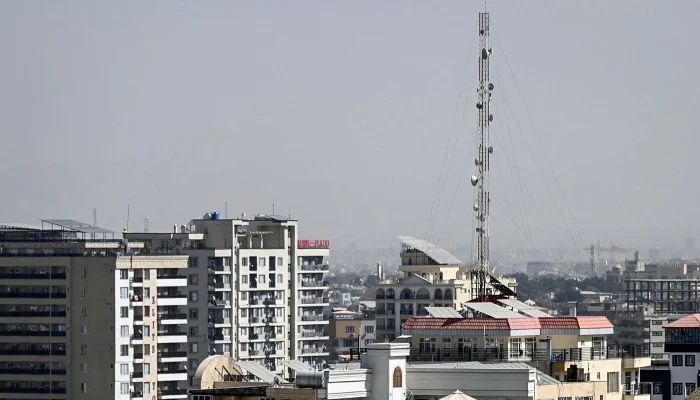
According to officials and watchdogs, the shutdown began late Monday when mobile signals and internet connections gradually dropped to less than one per cent of ordinary levels. NetBlocks, an international internet governance monitor, confirmed it was the first total blackout since the Taliban seized power in 2021.
Authorities said the decision was ordered directly by Taliban supreme leader Hibatullah Akhundzada, who instructed the government to restrict high-speed internet across several provinces earlier this month to curb “vice.” On Monday, the ban was extended nationwide, cutting off banking, trade, customs, and other vital services.
A senior Taliban official, speaking on condition of anonymity, said between “eight and nine thousand telecommunications pillars” were disabled and the blackout would remain “until further notice.” The official acknowledged the move would have severe economic consequences, but insisted there was no alternative system in place.
Ordinary Afghans described the impact as devastating. “We are blind without phones and internet,” said Najibullah, a 42-year-old shopkeeper in Kabul. “All our business relies on mobiles. Deliveries are with mobiles. The market is totally frozen.” Others voiced fear over losing contact with family members and not knowing how long the blackout would last.
Diplomatic and UN sources confirmed that most mobile networks were down, forcing humanitarian agencies and government offices to rely on radio and limited satellite communications. Telephone services, which often share fibre optic infrastructure in Afghanistan, were also disrupted.
Earlier warnings from within the Taliban government about the economic fallout were reportedly ignored. Akhundzada insisted on the ban despite concerns it would damage trade, banking, and international aid operations.
In recent weeks, restrictions had already been observed in northern provinces such as Badakhshan and Takhar, and in the southern regions of Kandahar, Helmand, Nangarhar, and Uruzgan. On September 16, Balkh provincial spokesman Attaullah Zaid confirmed the orders had come directly from the Taliban leadership and framed them as measures to “prevent vice.”
For many Afghans abroad, the shutdown has cut off their last link with home. “Because of the shutdown, I’m totally disconnected with my family in Kabul,” said an Afghan man in Oman. “I don’t know what’s happening, I’m really worried.”
Just last year, Taliban authorities had touted the country’s 9,350-kilometre fibre optic network — built largely under US-backed governments — as a priority for economic development and a bridge to the wider world. Today, that promise lies in ruins as Afghanistan faces one of its harshest communication crises since the Taliban takeover.












Leave a comment