

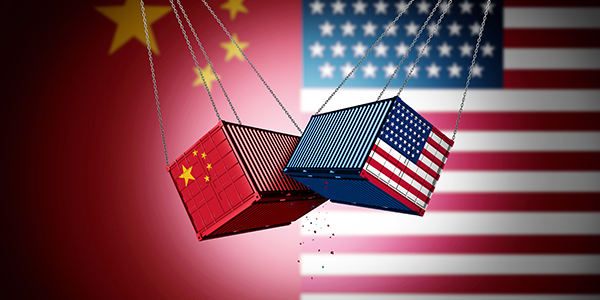
WASHINGTON: US President Donald Trump reignited trade tensions with China on Friday, threatening to impose steep new tariffs on Chinese exports and announcing the cancellation of a long-anticipated meeting with President Xi Jinping. The move marked a sharp deterioration in relations between the world’s two largest economies, sending shockwaves through global markets.
Trump’s outburst came a day after Beijing announced sweeping new restrictions on rare earth element exports, a vital sector for global high-tech industries. China currently dominates more than 90 percent of the global supply of these materials, which are used in everything from smartphones and electric vehicles to defense systems.
Trump’s Retaliatory Threats
Posting on Truth Social, Trump accused China of attempting to “hold the global economy hostage” through its export controls. “Dependent on what China says about the hostile ‘order’ that they have just put out, I will be forced, as President of the United States of America, to financially counter their move,” he wrote. “For every element that they have been able to monopolize, we have two.”
Trump added that he was now reconsidering his planned meeting with Xi at the Asia-Pacific Economic Cooperation (APEC) summit scheduled to take place in Gyeongju, South Korea, later this month. “I was to meet President Xi in two weeks, at APEC, in South Korea, but now there seems to be no reason to do so,” he said.
The White House had previously billed the meeting as a potential turning point in trade relations. However, Beijing never formally confirmed Xi’s participation, and Trump’s latest remarks have thrown any diplomatic engagement into doubt.
Market Fallout and Global Reaction
The president’s comments triggered immediate market turbulence. The S&P 500 Index fell by 2 percent on Friday, as investors feared an escalation of the ongoing trade war that has already disrupted global supply chains. Analysts warned that the renewed tension could derail fragile progress in negotiations and heighten economic uncertainty at a time of slowing global growth.
Trump’s post also suggested that several foreign governments had contacted Washington to express alarm over Beijing’s new restrictions. “I’ve heard from multiple countries—very angry—over China’s decision,” he said, noting his surprise given the “very good” recent relationship between Washington and Beijing.
Beijing’s Rare Earths Move
China’s latest export control measures added five new rare earth elements and dozens of refining and processing technologies to its restricted list. The rules also require foreign companies using Chinese-sourced materials to comply with Beijing’s export regulations.
The decision followed months of mounting geopolitical and economic tensions, as China’s leadership has sought to leverage its near-total control over the global rare earths market in response to Western trade restrictions and technology bans.
Beijing defended the move as a matter of “national interest,” saying it aimed to ensure “sustainable development and resource security.” However, US officials and industry analysts viewed it as a retaliatory step that could further squeeze global manufacturers.
Washington’s Silence and Next Steps
While Trump publicly hinted at “massive” new levies, officials in Washington remained tight-lipped about concrete measures. A spokesperson for the US Trade Representative (USTR) declined to comment on potential counteractions, while the US Treasury Department did not immediately respond to inquiries.
The USTR and Treasury have led previous rounds of negotiations with Beijing, seeking to balance punitive tariffs with diplomatic engagement — a strategy that has produced only temporary truces in the years-long trade dispute.
Trump’s latest statements mark the most dramatic escalation in four months, raising fresh questions about whether a sustained economic détente between the United States — the world’s biggest consumer — and China — its largest manufacturer — can survive.










Leave a comment