

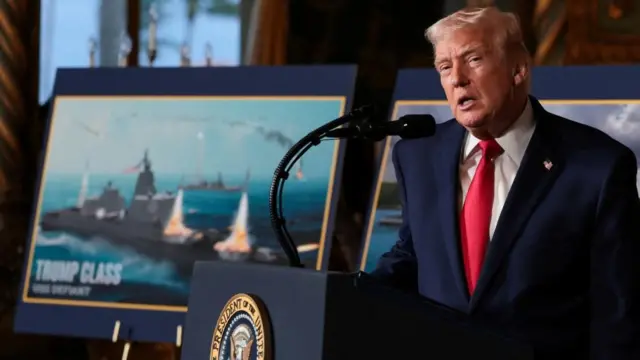
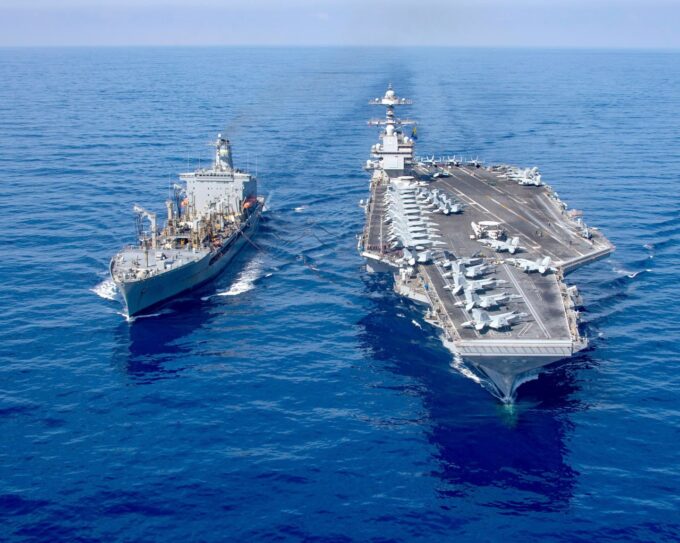
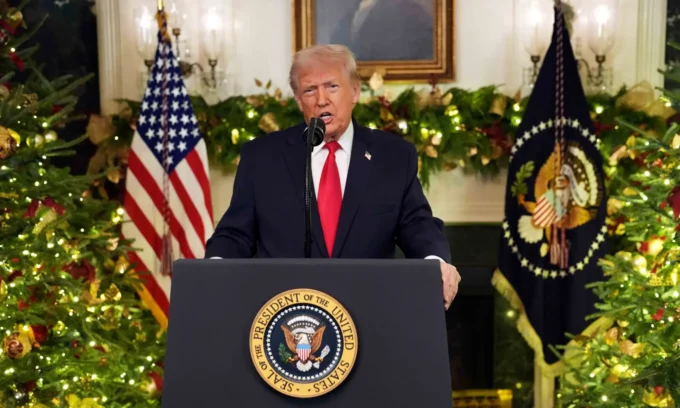
US President Donald Trump announced on Monday that the United States will either retain or sell the crude oil seized from tankers off the coast of Venezuela, along with the vessels themselves. The move comes as Washington steps up military and economic pressure on Caracas, including a naval blockade targeting Venezuelan oil shipments, in an effort to curb what the US alleges is the country’s funding of illicit activities.
Trump also suggested that it would be “smart” for Venezuelan President Nicolas Maduro to step down after 12 years in power. Speaking from his Florida residence, Trump said, “That’s up to him, what he wants to do. I think it would be smart for him to do that.” He warned, however, that if Maduro resisted, it would be “the last time he’s ever able to play tough.”
Venezuela reacted sharply, with Maduro firing back in a televised address, urging Trump to focus on domestic issues. “He would be better off in his own country on economic and social issues, and he would be better off in the world if he took care of his country’s affairs,” Maduro said. The Venezuelan leader accused Washington of pursuing regime change and described US actions as “international piracy.”
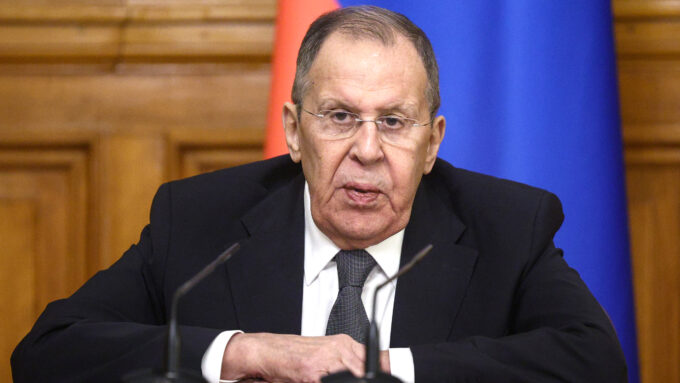
The escalating tension has drawn international attention. Russia, a key ally of Caracas, expressed “full support” for Maduro, with Russian Foreign Minister Sergei Lavrov and his Venezuelan counterpart Yvan Gil coordinating a diplomatic response. Moscow said the two ministers discussed the “aggressions and flagrant violations of international law being perpetrated in the Caribbean,” citing attacks on vessels, extrajudicial killings, and acts of piracy attributed to the US.
The announcement follows a series of US military operations in the Caribbean and eastern Pacific, which Washington claims targeted drug-trafficking vessels. These operations have reportedly killed more than 100 people, including fishermen, according to families and governments. The US military reported that the latest strike targeted a “low-profile vessel” in the eastern Pacific, resulting in one fatality.
In addition to military operations, the US imposed a blockade on “sanctioned oil vessels” traveling to and from Venezuela, claiming that Maduro’s government uses oil revenues to finance “drug terrorism, human trafficking, murder, and kidnapping.” Washington has emphasized that these actions are meant to curb illicit activities, while Caracas insists the measures constitute an attack on its sovereignty.
The growing tensions prompted Caracas to seek support at the United Nations. Russia and China backed Venezuela’s request for a UN Security Council meeting to address what Caracas calls ongoing US aggression. Meanwhile, US Secretary of State Marco Rubio downplayed Moscow’s support, stating that Washington was “not concerned about an escalation with Russia with regards to Venezuela,” as Moscow remains heavily engaged in the war in Ukraine.
The developments mark a significant escalation in US-Venezuela relations and underscore the broader geopolitical friction between Washington and Moscow. Trump’s aggressive stance on Venezuela coincides with his frustration over unresolved issues in Ukraine, further complicating already tense US-Russia relations.



Leave a comment