

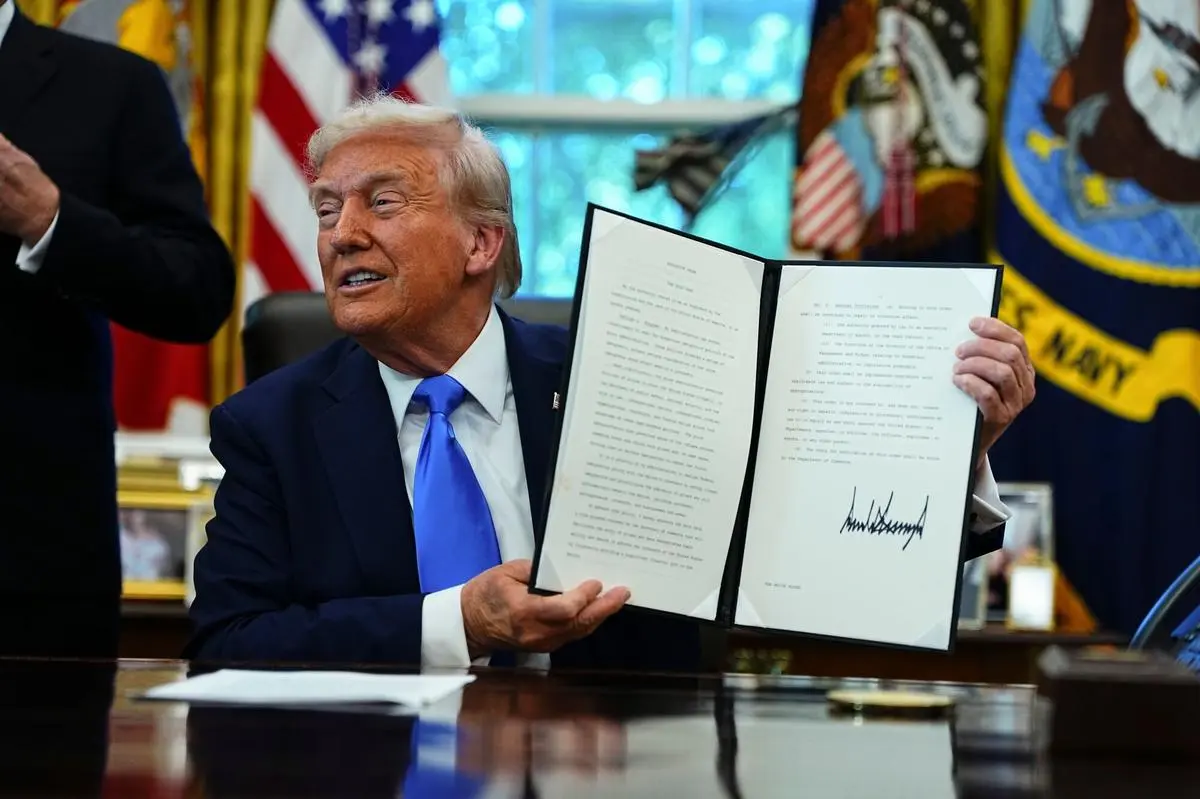
WASHINGTON — U.S. President Donald Trump has ordered that all H-1B skilled-worker visa holders must now pay an annual fee of \$100,000, a measure expected to disrupt tech companies that depend heavily on foreign workers. The fee was signed into effect as part of a broader executive order that also introduces a “gold card” residency program with a \$1 million price tag.
The H-1B program allows U.S. employers to sponsor foreign professionals — scientists, engineers, programmers — for work in specialized fields. These visas are initially valid for three years and can be extended to six. Under the new rule, the \$100,000 fee will take effect starting Sunday. However, the order gives the Secretary of Homeland Security power to grant exemptions for particular individuals, companies, or entire industries. The fee mandate is set to expire in one year unless renewed.
Large tech firms strongly rely on workers from countries like India, which account for about three-quarters of H-1B recipients. Many in the industry, including prominent figures such as Elon Musk, warn that such fees may stifle innovation and worsen shortages in specialized sectors, arguing the U.S. still lacks sufficient domestic talent in many technical fields.
This isn’t the first time the H-1B program has come under scrutiny. Trump had previously criticized the scheme during his first term, proposing limits on which jobs qualify. The new executive order is viewed as part of his second-term immigration crackdown, following earlier policy shifts and court challenges.
In addition to the visa fee, Trump signed the gold-card residency order, which provides an expedited path to U.S. residency for those who pay \$1 million — or through corporate sponsorships with a payment of \$2 million. The gold-card is intended to attract high-net-worth individuals and investors, aligning with Trump’s broader strategy to reshape both immigration and residency pathways.
The tech sector, already bracing for stricter immigration policies, could face significant cost increases and administrative burdens under the new fee regime. Companies and industry experts are likely to mount legal challenges, contesting both the fee’s legality and its potential effects on workforce supply and competitiveness.















Leave a comment