

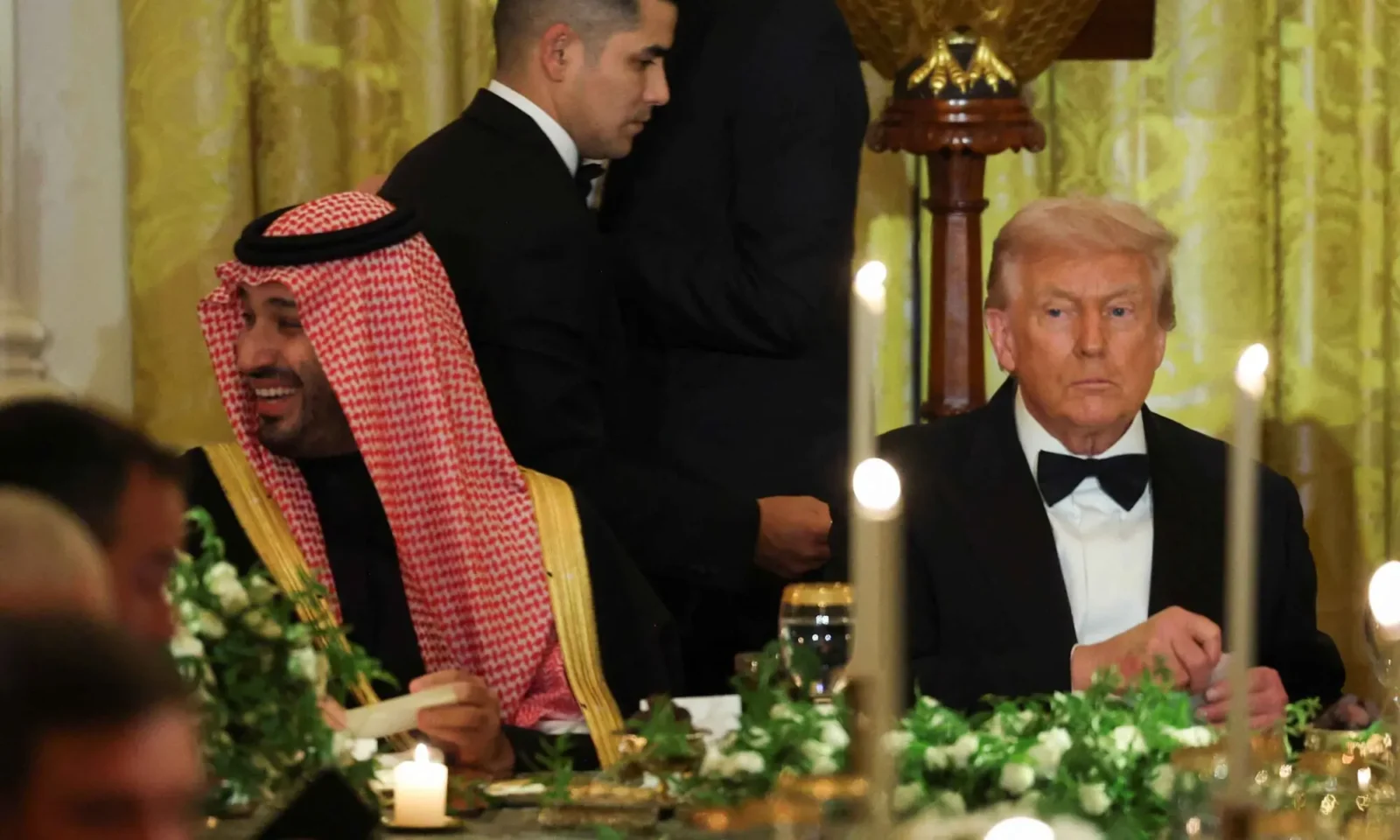
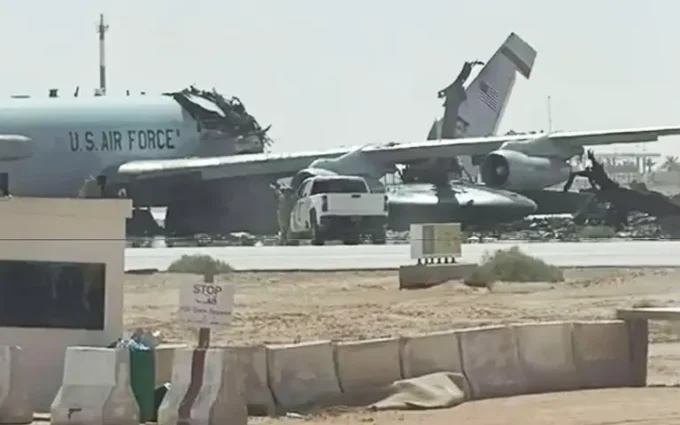
US President Donald Trump announced on Tuesday that Saudi Arabia has been designated as a “major, non-NATO ally,” a status that places Riyadh among only 20 countries to have received the recognition. Speaking at a formal black-tie dinner at the White House, Trump said, “Tonight, I’m pleased to announce that we’re taking our military cooperation to even greater heights by formally designating Saudi Arabia as a major non-NATO ally, which is something that is very important to them.” He added that the announcement was being made publicly for the first time, describing it as a “little secret” that had been kept for the occasion.
The designation provides Saudi Arabia with a range of military and economic privileges, including easier access to US defense equipment and technology. However, it does not entail formal US security commitments. Trump noted that previous US strikes on Iranian nuclear facilities in June had enhanced Saudi Arabia’s security, underscoring the strategic importance of the new designation. Other countries in the same category include Israel, Jordan, Kuwait, and Qatar.
During the dinner, Saudi Crown Prince Mohammed bin Salman expressed gratitude for the reception and highlighted the historical ties between the two countries. “This relationship started close to nine decades ago,” he said, adding that current efforts marked a “special day” and promising broader horizons for US-Saudi economic cooperation. Bin Salman also confirmed plans to increase Saudi investments in the US to $1 trillion, up from a $600 billion pledge he made during Trump’s visit to Riyadh in May, though he did not provide a detailed timetable for the investment.
In parallel with the announcement, the two countries signed a Strategic Defence Agreement aimed at “fortifying deterrence across the Middle East.” The agreement is expected to simplify operations for US defense firms in Saudi Arabia and establish new burden-sharing funds from Riyadh to offset US defense costs. While the accord falls short of the full NATO-style treaty that Saudi Arabia initially sought, it represents a significant deepening of defense cooperation.
As part of the agreement, Trump approved the future delivery of F-35 stealth fighter jets to Saudi Arabia, marking the first sale of the advanced aircraft to Riyadh. The kingdom has requested 48 jets. Additionally, Saudi Arabia agreed to purchase 300 American tanks. The sale of F-35s could shift the military balance in the Middle East and will test US efforts to maintain Israel’s “qualitative military edge,” which has until now kept Israel as the sole Middle Eastern operator of the aircraft.
The two countries also finalized a joint declaration on civil nuclear energy cooperation. The agreement lays the groundwork for long-term collaboration in nuclear energy, a key priority for Saudi Arabia as it seeks to match the nuclear capabilities of regional competitors such as the UAE and Iran. However, negotiations on a full nuclear pact have faced challenges, particularly over US conditions that prohibit uranium enrichment and reprocessing of spent fuel in Saudi Arabia.
The US-Saudi partnership is thus entering a new phase, with expanded military ties, significant arms sales, and potential nuclear cooperation, signaling a closer strategic and economic alignment between the two nations.





Leave a comment