

US President Donald Trump is set to host the leaders of all five Central Asian countries—Kazakhstan, Kyrgyzstan, Tajikistan, Turkmenistan, and Uzbekistan—in Washington on Thursday, marking the first time such a summit will take place in the United States. The meeting comes just months after the Central Asian leaders held separate summits with Russian President Vladimir Putin and Chinese President Xi Jinping, reflecting the region’s growing geopolitical significance.
The resource-rich region has drawn heightened attention from the West since Russia’s invasion of Ukraine, which has called Moscow’s traditional influence into question. China also maintains strong economic and infrastructural ties with Central Asia, while Turkiye has leveraged cultural and historical connections to expand military and trade partnerships. Since the outbreak of the Ukraine war, Central Asian states have increased multilateral engagement, including through the “C5+1” framework with the US, underscoring their desire to diversify diplomatic and economic relations.
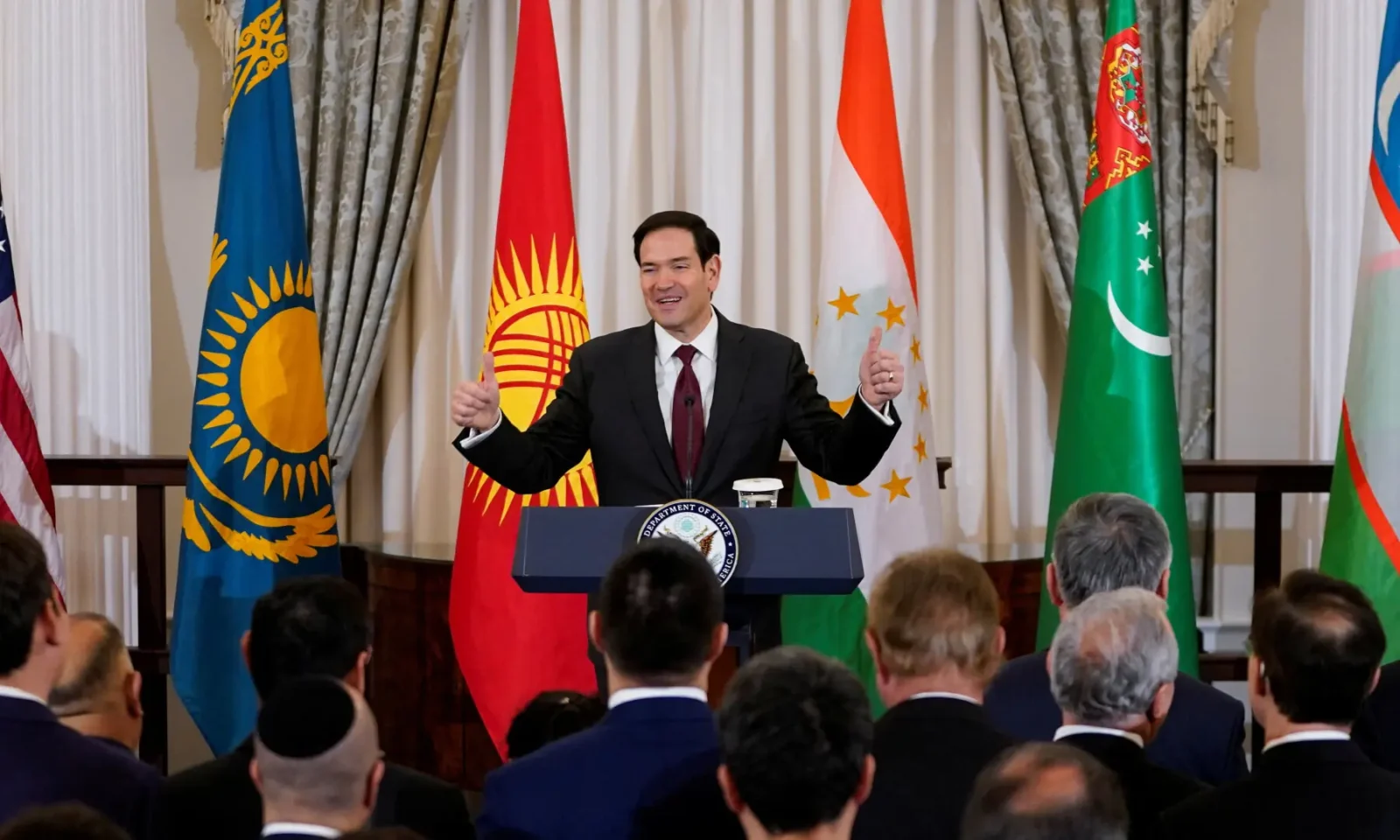
US Secretary of State Marco Rubio emphasized the alignment of US and Central Asian interests during a reception at the State Department, highlighting the region’s abundant natural resources and potential for sustainable economic development. Rubio announced plans to visit all five countries in the coming year to further strengthen these ties. Deputy Secretary of State Christopher Landau noted that the summit reflects Trump’s personal commitment to actively engaging with Central Asia, with preparatory visits by US diplomats to Kazakhstan and Uzbekistan last week to finalize agreements expected to be signed during the summit.
Competition for influence in Central Asia remains intense. Russia continues to maintain a strategic foothold, particularly in energy and infrastructure, while China positions itself as a major commercial partner with investments in large-scale infrastructure projects. The EU and the US aim to diversify trade routes and reduce dependence on Beijing, supporting new transport corridors across the Caspian Sea to link Europe with Central Asia while bypassing Russia. Central Asia’s natural wealth—including Kazakhstan’s uranium, Uzbekistan’s gold reserves, Turkmenistan’s gas, and Kyrgyzstan and Tajikistan’s developing mineral deposits—makes it an increasingly attractive target for global powers, despite the logistical challenges posed by its remote terrain and landlocked geography.
While economic cooperation takes precedence for the Trump administration, human rights and press freedom in Central Asia remain severely restricted. Human Rights Watch has urged the US to address civil liberties during the summit, noting that participating governments have intensified efforts to suppress dissent and control media. Reporters Without Borders ranks Turkmenistan 174th out of 180 countries in press freedom, highlighting the authoritarian environment. Critics have also pointed out that the US, under Trump, has prioritized economic engagement over promoting democratic reforms, as exemplified by the dismantling of Radio Free Europe, one of the few alternative media outlets in the region.
The summit, therefore, represents both an opportunity for economic and diplomatic engagement with a strategically vital region and a challenge for the US to balance strategic interests with the promotion of human rights and democratic governance in Central Asia.





Leave a comment