

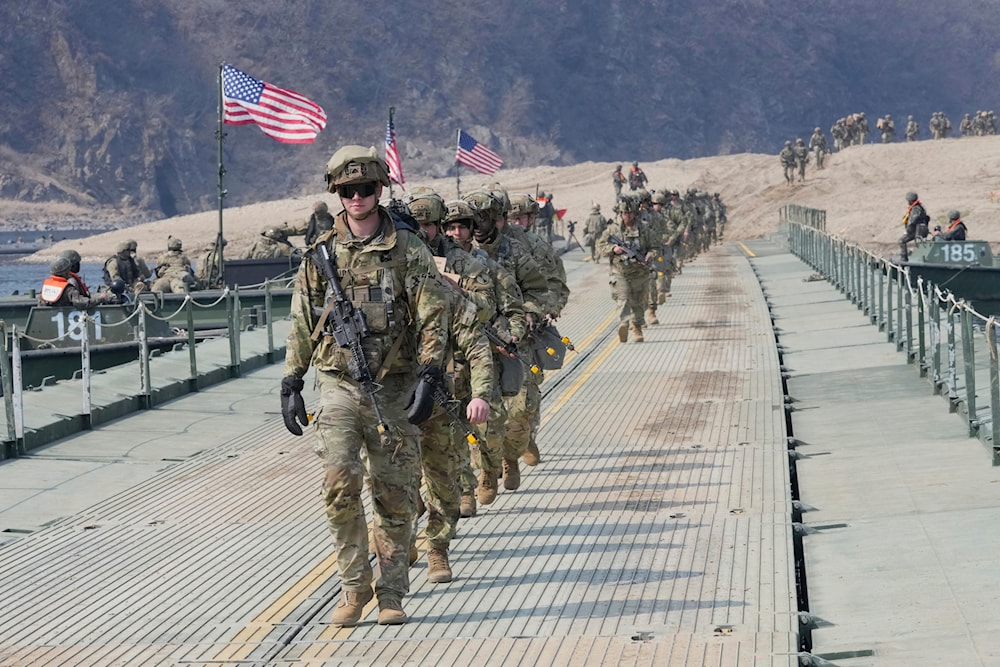
The United States is considering a significant reduction of its military presence in South Korea, with discussions underway to potentially withdraw around 4,500 American troops, according to defense officials cited by the Wall Street Journal.
The plan, which remains under internal review, envisions redeploying the personnel to other strategic locations across the Indo-Pacific region, including Guam. Officials familiar with the matter described it as part of a broader reassessment of U.S. policy toward North Korea (DPRK), with preparations in progress to present the proposal to then-President Donald Trump.
Strategic Shifts and Regional Implications
This development comes amid ongoing debates in Washington over the structure of U.S. forces in Asia and renewed scrutiny of long-standing defense commitments. While no final decision has been made, sources suggest the plan could reshape the U.S. military footprint in Northeast Asia without fully abandoning its deterrence posture on the Korean Peninsula.
In recent years, Trump repeatedly urged Seoul to shoulder a greater share of defense costs. South Korea agreed in October to a five-year cost-sharing deal that increased its contribution by 8.3%, amounting to 1.52 trillion won (about $1.09 billion). Approximately 28,500 U.S. troops are currently stationed in South Korea under a decades-old alliance aimed at countering threats from Pyongyang.
Missile Defense Realignments
In a related development, South Korea’s Yonhap News Agency reported in April that the U.S. had agreed to temporarily deploy a Patriot Advanced Capability-3 (PAC-3) missile battery from South Korea to the Middle East—marking a rare transfer of U.S. Forces Korea (USFK) assets outside the peninsula.
NBC News also confirmed the redeployment of two Patriot batteries and a THAAD system from Asia to the Middle East, reflecting shifting U.S. priorities amid rising tensions in multiple regions.
Despite the potential troop movements, both Washington and Seoul continue to monitor heightened military activity by North Korea. The U.S.-South Korea missile defense system—comprised of PAC-3 and THAAD interceptors—remains a vital element of the alliance’s strategy to defend against North Korean missile threats.








Leave a comment