

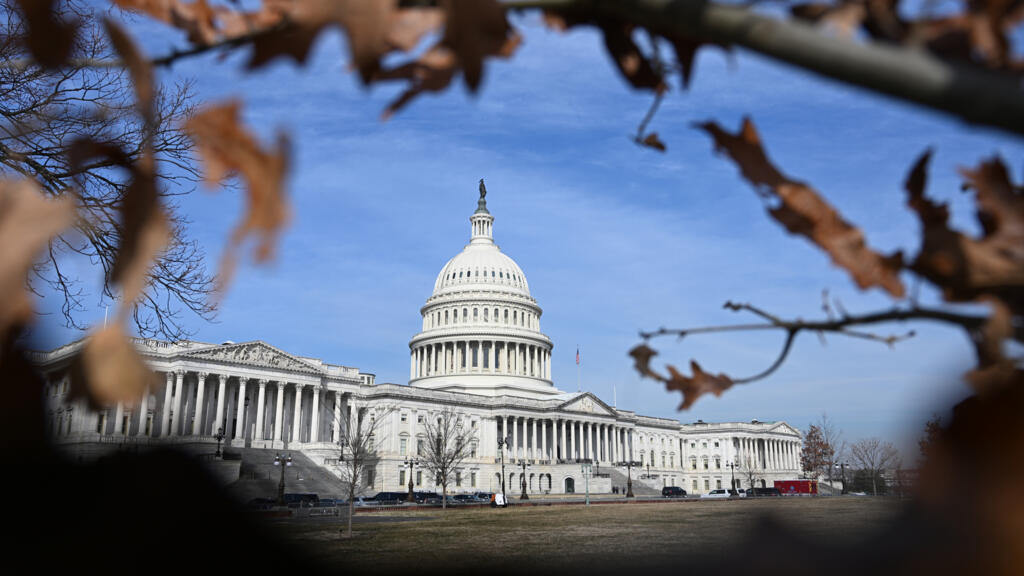
Washington: The US Congress convenes this week to consider measures aimed at limiting President Donald Trump’s authority to expand US military operations against Iran without explicit congressional approval. Lawmakers are weighing a Senate resolution and two competing House measures in response to escalating military strikes in the Middle East.
In the Senate, a resolution led by Senator Tim Kaine (D-Virginia) invokes the 1973 War Powers Resolution, enacted during the Vietnam War to constrain presidential war-making authority. If passed, the resolution would require the withdrawal of US forces from hostilities in Iran unless Congress authorizes continued engagement. Kaine emphasized, “The Constitution says we’re not supposed to be at war without a vote of Congress… The lives of our troops are at risk. We ought to come back to Washington right away and vote on this.”
In the House of Representatives, two competing approaches have emerged. Rep. Ro Khanna (D-California) and Rep. Thomas Massie (R-Kentucky) introduced a bipartisan resolution directing the president to remove US forces from hostilities against Iran without congressional approval. At the same time, a more cautious House measure, backed by Rep. Josh Gottheimer (D-New Jersey) and other centrist lawmakers, urges compliance with existing law and consultation with Congress, stopping short of demanding an immediate halt. Gottheimer said he expects the administration to “comply with the War Powers Act.”
The debate follows coordinated US and Israeli strikes on Iranian military and political targets, which reportedly resulted in American casualties and heightened concerns of a broader regional conflict. Democratic leaders have framed their position around congressional oversight, rather than immediate disengagement. Senate Minority Leader Chuck Schumer (D-New York) urged Secretary of State Marco Rubio to brief Congress and the public on the objectives and next steps, stating that the Senate “should return to session to pass a war powers resolution.”
In the House, Minority Leader Hakeem Jeffries (D-New York) called for classified briefings and a formal vote, stressing that the administration must “provide an ironclad justification for this act of war, clearly define the national security objective, and articulate a plan to avoid another costly, prolonged military quagmire in the Middle East.” Progressive lawmakers have been more direct, with Sen. Bernie Sanders (I-Vermont) and Sen. Jeff Merkley (D-Oregon) publicly declaring “no war with Iran.”
However, divisions exist within the Democratic Party. Sen. John Fetterman (D-Pennsylvania) described the resolution as “an empty gesture” and said he would oppose it. Among Republicans, support for the president remains strong, with Sen. Tom Cotton (R-Arkansas) predicting “overwhelming support from elected Republicans in Congress.” Yet Rep. Massie (R-Kentucky) argued the conflict runs counter to the “America First” doctrine associated with Trump’s foreign policy.
Lawmakers have also questioned the clarity of the administration’s objectives. Sen. Mark Warner (D-Virginia), the top Democrat on the Senate Intelligence Committee, noted that the goals for the operation appear to have shifted multiple times, raising concerns about the mission’s endgame.
Even if a resolution passes either chamber, a presidential veto could require a two-thirds majority in both the House and Senate to override, a threshold difficult to achieve given Republican control of Congress. Analysts compare the current effort to the 2020 attempt to curb presidential war powers following the US strike on Iranian General Qasem Soleimani, when Congress passed S.J.Res. 68, which ultimately did not restrain executive action.
With partisan divisions deep and the conflict evolving rapidly, the upcoming votes will serve as a critical test of Congress’s ability to assert its constitutional authority in matters of war and peace.











Leave a comment