

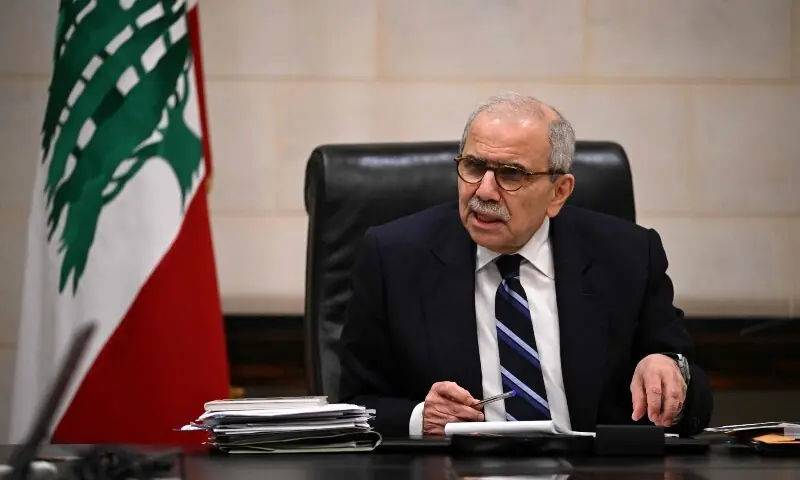
Lebanese and Israeli civilian representatives met for the first direct talks in decades on Wednesday, Israeli Prime Minister Benjamin Netanyahu’s office said. The meeting, held at the UN peacekeeping force headquarters in Naqura near the Israel-Lebanon border, falls under a year-old ceasefire monitoring mechanism aimed at overseeing the conflict with Hezbollah.
Until now, both Israel and Lebanon, which have no formal diplomatic relations, had relied exclusively on military officers to monitor the ceasefire. The inclusion of civilian representatives marks a significant shift in engagement between the two countries. Shosh Bedrosian, a spokeswoman for Netanyahu, described Wednesday’s meeting as “an initial attempt to establish a basis for a relationship and economic cooperation between Israel and Lebanon” and called it “a historic development.”
“This is the first step to paving a path with Lebanon, and it’s clear the Lebanese recognise the economic challenges they are facing,” Bedrosian told reporters. The Lebanese delegation was led by Simon Karam, a former ambassador to the United States, while Israel included Uri Resnick, a National Security Council official, reflecting a deliberate move to involve non-military participants.
The United States, which has been pressing Lebanon to disarm Hezbollah, welcomed the civilian participation. The US Embassy in Beirut highlighted that the inclusion of Karam and Resnick “reflects the Mechanism’s commitment to facilitating political and military discussions to achieve security, stability, and a durable peace for all communities affected by the conflict.” US special envoy for Lebanon Morgan Ortagus attended the talks, after meeting with Netanyahu and Israeli Foreign Minister Gideon Saar in Jerusalem the previous day.
Lebanese President Joseph Aoun’s office confirmed that the delegation had been informed Israel would include a civilian member, signaling both sides’ readiness to explore broader dialogue. Analysts note that this development could pave the way for future economic cooperation, particularly in energy and cross-border trade, while also serving as a confidence-building measure amid ongoing regional tensions.
Netanyahu has repeatedly urged Lebanon to consider joining the Abraham Accords, the framework under which several Arab and Muslim countries have normalised ties with Israel. Historically, direct talks were briefly held in 1983 following Israel’s invasion of Lebanon, culminating in an agreement that was never ratified. Wednesday’s meeting represents the first civilian-led engagement in decades, a milestone that could influence the trajectory of Israel-Lebanon relations in the coming years.









Leave a comment