

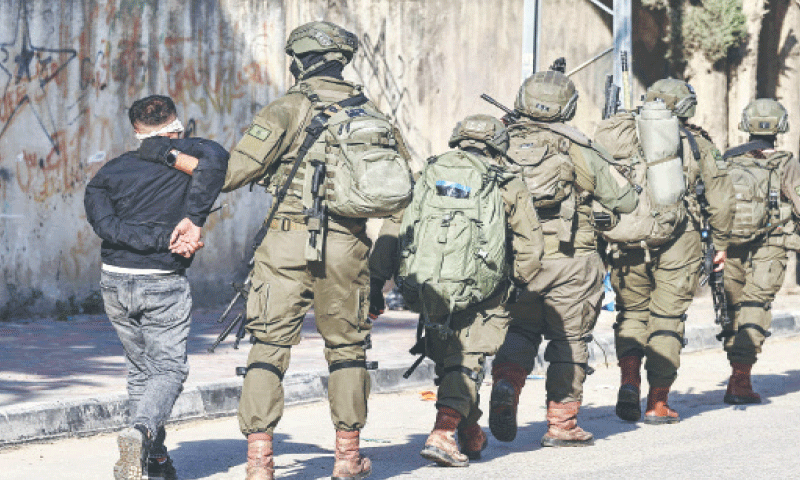
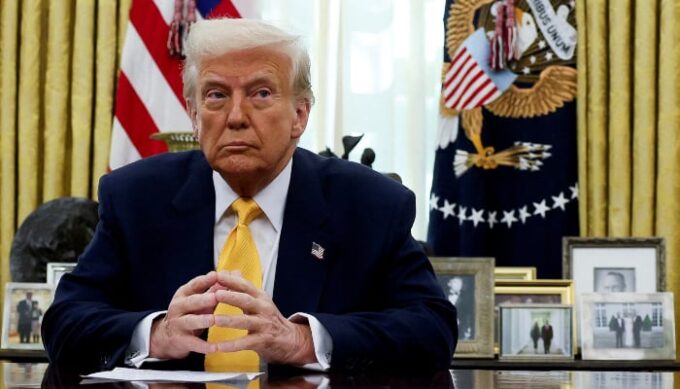
US President Donald Trump indicated on Wednesday that the next stage of his administration’s Gaza plan is expected to commence soon, even as clashes in the region continued to claim lives. Speaking to reporters in the Oval Office, Trump avoided giving a specific timeline, saying only that the process is “going along well” and asserting, controversially, that “we have peace in the Middle East,” a claim immediately questioned by reports of ongoing casualties from Israeli airstrikes.
Trump added, “Phase two is moving along. It’s going to happen pretty soon,” despite having previously announced on October 14 that the second phase “had already begun.” The remarks come amid renewed violence following Israeli Prime Minister Benjamin Netanyahu’s warning that his forces would respond after soldiers were injured during clashes with Palestinian fighters in Rafah.
According to the Middle East Monitor, in a recent phone call between Trump and Netanyahu, the US president urged the Israeli leader to adjust his approach to Gaza, emphasizing that Hamas fighters should be allowed to surrender rather than be killed. Netanyahu reportedly responded that the fighters were “armed and dangerous” and therefore were being eliminated.
Negotiations on implementing the next phase of the Gaza ceasefire are continuing, though progress remains limited. The first phase, which began with an Israeli withdrawal on October 10, involved a partial pullback that still left Israeli forces controlling more than half of Gaza, the release of prisoners held by Hamas or its allies, and an increase in humanitarian aid entering the territory. All living prisoners were released by October 13, although one body is reportedly still in Gaza.
Israel has made the return of the last hostage’s remains a precondition for initiating talks on the second phase, which are being mediated by the United States, Egypt, Qatar, and Turkey. Egypt is also planning a conference focused on Gaza’s reconstruction and humanitarian needs, though no date has yet been announced.
Analysts say the process remains stalled due to unclear guidelines in Trump’s Gaza plan. Michael Milshtein, a researcher at Tel Aviv University, noted, “Israel doesn’t really seem to be putting any serious thought into what the post-war phase is supposed to look like,” highlighting uncertainties about the political and humanitarian arrangements that will govern the next stage.
As discussions continue, the situation in Gaza remains fragile, with civilian populations at risk amid intermittent violence and the slow pace of diplomatic progress. Observers warn that without clear frameworks and enforceable measures, the second phase of the plan could face significant delays, further complicating efforts to stabilize the region.









Leave a comment