

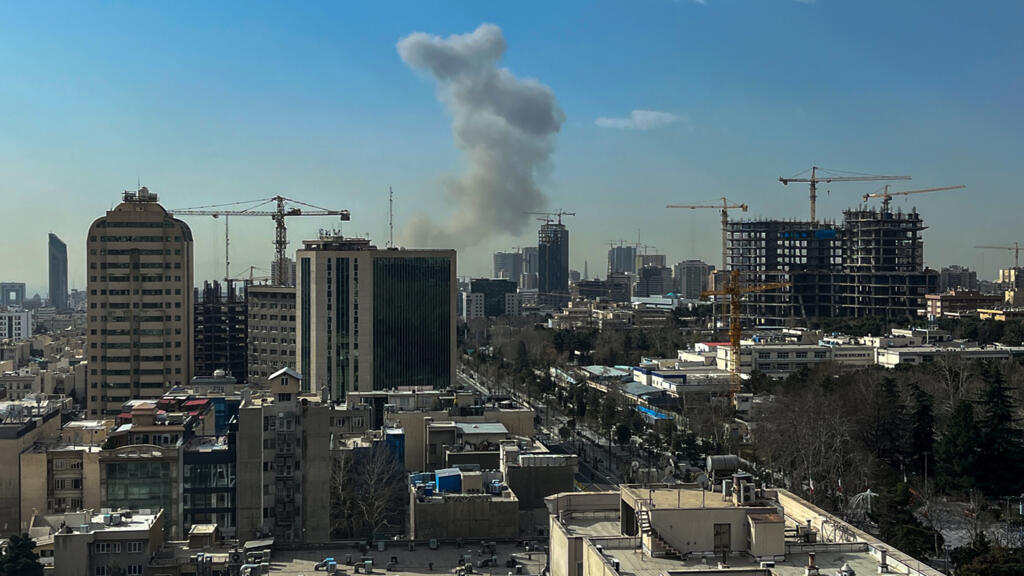
Doha, Qatar: Iranian missile strikes over the weekend targeted Doha, Dubai, and Manama, causing widespread damage and casualties, and striking a blow not only to buildings but also to the Gulf states’ carefully cultivated image as safe, stable hubs in the Middle East. The attacks forced regional governments to confront a difficult dilemma: retaliate and risk being seen as siding with Israel, or remain passive while their cities came under fire.
Monica Marks, a professor of Middle East politics at New York University Abu Dhabi, compared the situation to the United States: “For people and political leaders here, seeing Manama, Doha, and Dubai bombed is as strange and unimaginable as seeing Charlotte, Seattle, or Miami bombed would be for Americans.”
The strikes were part of Iran’s retaliation against a large-scale joint US-Israeli operation launched on Saturday, which killed Iran’s Supreme Leader Ayatollah Ali Khamenei and other senior military figures. That initial attack also struck schools and government sites, resulting in at least 148 deaths in Iran alone.
Tehran responded with missiles and drones targeting US and Israeli assets in the Gulf, causing at least three fatalities in the UAE and injuring 58 others. The missiles, or debris from intercepted projectiles, struck landmark buildings, airports, and high-rises across Dubai, Manama, Kuwait City, and Doha. Saudi Arabia reported that Iran also targeted Riyadh and its eastern provinces. In total, Qatar reported 16 injuries, Oman four, Kuwait 32, and Bahrain four.
Gulf States’ Reluctance and Predicament
The Gulf states had sought to avoid this confrontation. In the weeks prior, Oman mediated indirect talks between Washington and Tehran, with Foreign Minister Badr Albusaidi suggesting that peace was “within reach” after Iran agreed to limit its enriched uranium stockpiles. However, the US and Israel launched their offensive just hours later.
Analysts say the Gulf states now face a conundrum. Rob Geist Pinfold, a lecturer at King’s College London, noted that the GCC countries did not want war and had lobbied to prevent it. Yet remaining passive risks reputational damage: “Doing nothing while Iran strikes repeatedly is just as damaging to their standing as entering the war,” he said.
Marks added that Gulf states had anticipated the crisis: a cornered Iranian regime would rather escalate than retreat, potentially taking neighboring countries hostage to preserve its interests.
Options and Calculated Response
Analysts suggest the Gulf states may strike, but likely on their own terms. Pinfold predicted a joint GCC military response, possibly through the Peninsula Shield Force (PSF), rather than merely allowing US or Israeli forces to operate from their territories. This approach would allow Gulf states to assert leadership, demonstrate agency, and avoid the perception of acting as proxies for Israel.
“The Gulf states want to be seen as leading, not just following,” Pinfold explained. “Now the Gulf states can show they are not merely passive — they are actors in their own right.”
Strategic and Reputational Threats
The immediate concern for Gulf governments lies in critical infrastructure. Marks identified potential strikes on power grids, desalination plants, and energy facilities as a “nightmare scenario,” warning that without such infrastructure, Gulf countries could become uninhabitable during extreme heat, and economic activity would grind to a halt.
Beyond physical damage, Pinfold emphasized the soft power implications. Attacks on high-profile cities threaten the Gulf states’ image as stable, investment-friendly hubs, potentially undermining tourism and global business confidence.
Shift to State-on-State Warfare
This crisis marks a dramatic shift in regional security dynamics. Gulf states had previously focused on non-state actors such as the Houthis or Hezbollah. Analysts now see a return to state-on-state conflict, with large-scale missile strikes replacing proxy wars and disinformation campaigns.
Marks observed that pre-war assessments of Israel as the primary regional threat have changed, noting that Iran’s initial salvo has been “broad and alarmingly scattershot”, with potentially more damage to come. Gulf leaders are rapidly recalibrating, but with cities like Dubai, Doha, and Manama now scarred, the luxury of remaining on the sidelines may be disappearing fast.






Leave a comment