

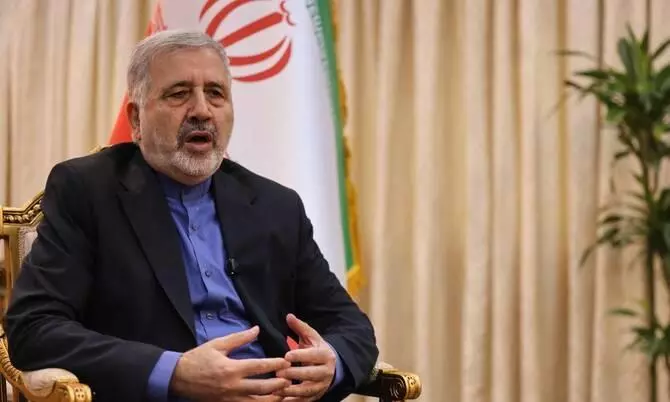
RIYADH: Tehran has called for a “serious review” of relations between Iran and Gulf states in light of the ongoing U.S.-Israeli war on Iran, aiming to limit the influence of external actors and foster regional prosperity, according to Iran’s ambassador to Saudi Arabia. Ambassador Alireza Enayati told Reuters that while the conflict has strained regional ties, the neighboring countries remain interdependent. “We are neighbors and we cannot do without each other; we will need a serious review,” he said in response to questions about potential damage to Gulf-Iran relations. He criticized decades of exclusionary policies and overreliance on foreign powers, calling instead for stronger cooperation among the six members of the Gulf Cooperation Council, Iraq, and Iran.
The Gulf region has been reeling from over 2,000 missile and drone attacks since the outbreak of the war on February 28, targeting U.S. diplomatic missions, military bases, critical oil infrastructure, ports, airports, hotels, and residential buildings. The United Arab Emirates, which normalized relations with Israel in 2020, has borne the brunt of these attacks, though all Gulf states have been affected. In response, all member states have condemned Iran, even as analysts note rising frustration at the U.S. for involving them in a war they neither endorsed nor were prepared to sustain financially or militarily.
In Saudi Arabia, attacks have focused primarily on the eastern oil-producing regions, the Prince Sultan Air Base hosting U.S. forces, and the Diplomatic Quarter in Riyadh. Despite these hostilities, Saudi-Iranian relations have seen cautious progress. The two countries re-established full diplomatic ties in 2023 after years of animosity marked by proxy conflicts across the region.
Addressing claims regarding Saudi oil infrastructure attacks, Enayati denied Iranian involvement in strikes on facilities such as the Ras Tanura refinery and the Shaybah oil field near the UAE border. “Iran is not the party responsible for these attacks, and if Iran had carried them out, it would have announced it,” he said, without specifying who was behind the incidents. He emphasized that Iran’s operations have targeted U.S. and Israeli interests rather than Gulf nations directly. Saudi official statements have similarly refrained from assigning blame for individual incidents.
Despite the tensions, Enayati stressed ongoing diplomatic engagement with Saudi officials. He noted positive developments, including cooperation on the safe departure of Iranian pilgrims from the kingdom and the provision of medical assistance to Iranians in Saudi Arabia. “Relations are progressing naturally in many areas,” he said, suggesting that bilateral ties, while tested by regional conflict, continue to function with cautious pragmatism.







Leave a comment