

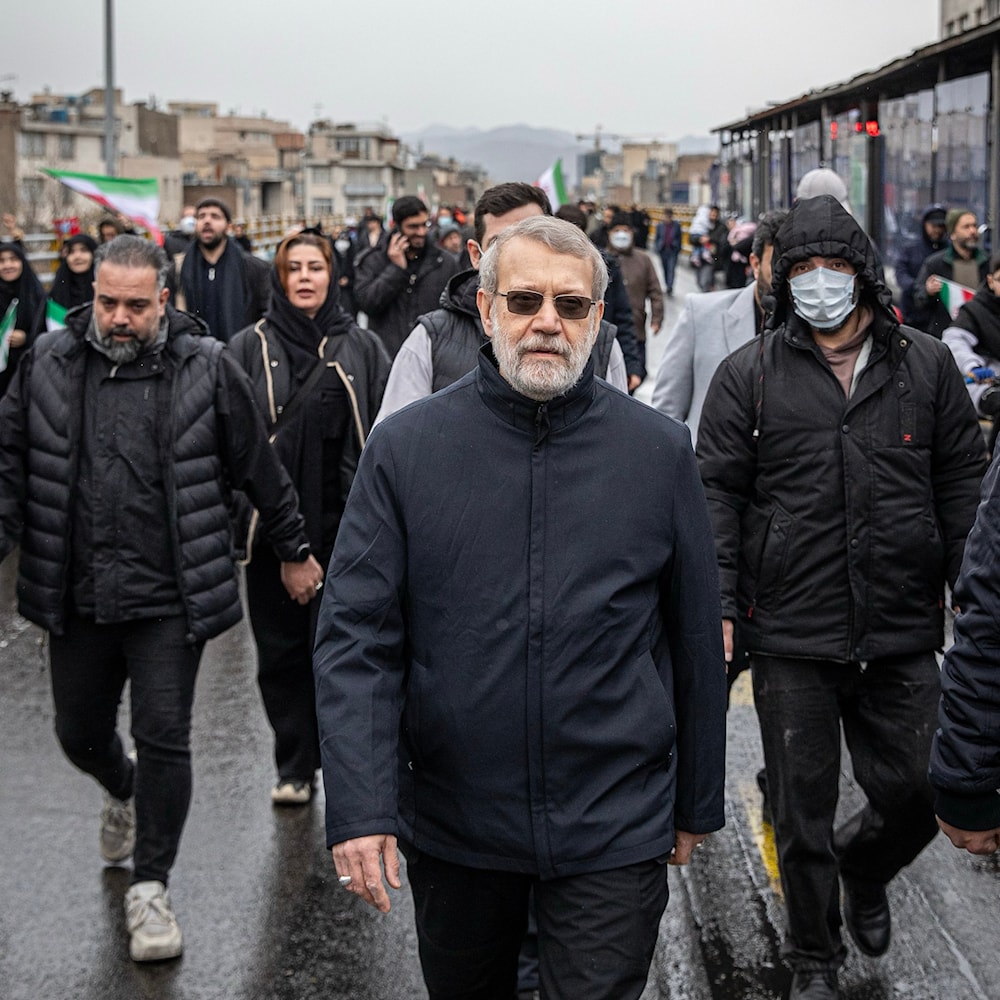
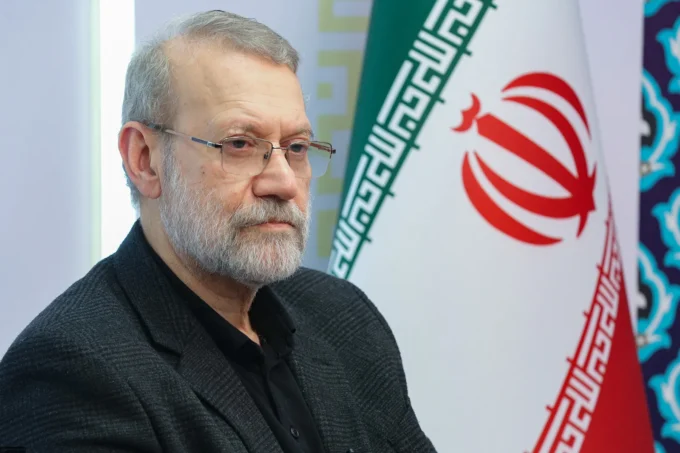
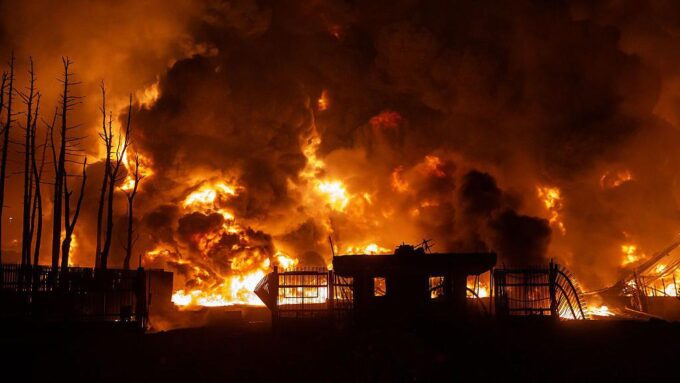
TEHRAN: Iran’s Supreme National Security Council has confirmed the killing of senior official Ali Larijani in what it described as a joint US-Israeli attack carried out overnight, declaring his death as “martyrdom” and a profound loss for the country’s political and security establishment. According to the official statement, Larijani was killed alongside his son Morteza Larijani, senior council official Ali Reza Bayat, and several members of his security detail during the strike.
Official Statement and National Reaction
In a strongly worded statement, the Secretariat of the Supreme National Security Council praised Larijani as a lifelong servant of the Islamic Republic and the ideals of the Islamic Revolution. It described his death during the holy month of Ramadan as spiritually significant, portraying it as a sacrifice made in the path of faith, national honour, and resistance.
The statement emphasised that Larijani remained committed to strengthening Iran’s position and calling for unity until his final moments. It framed his killing as part of a broader campaign targeting Iranian leadership and vowed that such actions would not weaken the country but instead reinforce its determination. Iranian authorities also hinted at eventual accountability, suggesting that justice for the attack would be pursued.
In the Name of God, the Most Gracious, the Most Merciful
“Among the believers are men who have been true to what they pledged to God; of them some have completed their term, and some are still waiting, but they have not altered in the least.”
To the dear and steadfast Iranian people,
A servant of God has joined his Lord.
The pure soul of the martyr, Dr. Ali Larijani, has been embraced by the spirits of the righteous, answering the call of truth after a lifetime dedicated to striving for the honor of Iran and the Islamic Revolution. He attained the noble rank of martyrdom in the field of service, achieving the aspiration he had long sought.
He has now joined Imam Ali ibn Abi Talib (peace be upon him), and the convoy of martyrs, led by the great guides of the nation, including the revered teacher and martyr Ayatollah Motahhari, and his fellow martyrs Sayyed Hassan Nasrallah and Hajj Qassem Soleimani.
Until his final moments, he remained devoted to raising the Word of God and enhancing the stature of Iran, calling for unity and steadfastness in confronting the enemies of the nation. On the dawn of the blessed month of Ramadan, he achieved martyrdom alongside his faithful son Morteza, the deputy of the Supreme National Security Council Ali Reza Bayat, and a number of his guards.
The inevitable victory belongs to the fighters on the path of truth, and such martyrdoms strengthen the nation’s resolve and determination to continue the journey.
Peace be upon his pure soul, and may his path remain alive, enduring, and inspiring.
“We have avenged those who committed crimes, and it was right upon us to aid the believers.”
The Secretariat of the Supreme National Security Council
Early Life, Family, and Background
Ali Larijani was born on June 3, 1958, in Najaf, into a prominent Iranian family with deep religious and political roots tracing back to the Larijan region in northern Iran. His family returned to Iran during his early childhood, where he was raised in an environment shaped by both religious scholarship and political engagement.
He later married into the influential Motahhari family, further strengthening his connections within Iran’s religious and intellectual elite. He had four children, and his family background played a significant role in shaping his worldview and career trajectory.
Academic Career and Intellectual Contributions
Larijani was widely regarded as an intellectual figure within Iran’s political system. He completed his early education in Qom before enrolling at Sharif University of Technology, where he earned a degree in mathematics and computer science, graduating at the top of his class.
He later pursued higher education at University of Tehran, obtaining both a master’s degree and a PhD in philosophy. His academic work focused primarily on Western philosophy, particularly the ideas of Immanuel Kant. Larijani authored several books and research papers, including works examining the relationship between metaphysics, science, and philosophical reasoning, contributing to intellectual discourse in Iran.
Political Career and Rise to Power
Larijani’s political career spanned decades and included a range of influential positions across Iran’s political system. In August 2025, he was appointed Secretary of the Supreme National Security Council, one of the most powerful positions in Iran’s security structure.
He previously served as Speaker of the Iranian Parliament for three consecutive terms from 2008 to 2020, playing a central role in legislative affairs during a critical period in the country’s modern history. He also held positions as Minister of Culture and Islamic Guidance and head of state broadcasting, demonstrating his influence across both political and media institutions.
Earlier in his career, Larijani was associated with the Islamic Revolutionary Guard Corps, joining in the early years after the revolution and rising through its ranks before transitioning into senior governmental roles. His career reflected a blend of military, political, and intellectual experience.
Views on US-Israeli Actions
Larijani was known for his firm and often uncompromising stance against the United States and Israel. He frequently warned of decisive retaliation against any actions targeting Iran and emphasised that the country would not retreat under pressure.
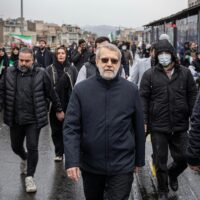
His speeches and public appearances often highlighted themes of resistance, sovereignty, and national dignity. He participated in major national events, including International Quds Day rallies, where he appeared alongside large crowds in defiance of external threats.
Final Message and IRIS Dena Incident
Shortly before his death, a handwritten message attributed to Larijani was made public, addressing the victims of an attack on the Iranian naval vessel IRIS Dena. In the message, he paid tribute to fallen sailors, describing their sacrifice as a lasting source of strength for the Iranian nation and its armed forces.
Iranian authorities reported that the vessel had come under a “brutal attack,” allegedly by US naval forces, resulting in heavy casualties. According to official figures, more than 100 crew members were killed, while others were wounded or missing. The incident marked one of the most severe losses for Iran’s navy in recent years and further intensified tensions.
Broader Regional Implications
The killing of Larijani is expected to further escalate tensions across the Middle East, which is already witnessing heightened instability due to ongoing conflict involving Iran, Israel, and the United States. Iranian officials have signalled both mourning and defiance, indicating that the country remains committed to responding to what it describes as acts of aggression.
Analysts warn that the assassination of such a high-ranking figure could trigger a new phase of escalation, potentially expanding the conflict beyond its current scope. With regional alliances shifting and military actions intensifying, Larijani’s death may prove to be a pivotal moment in an already volatile geopolitical landscape.




Leave a comment