

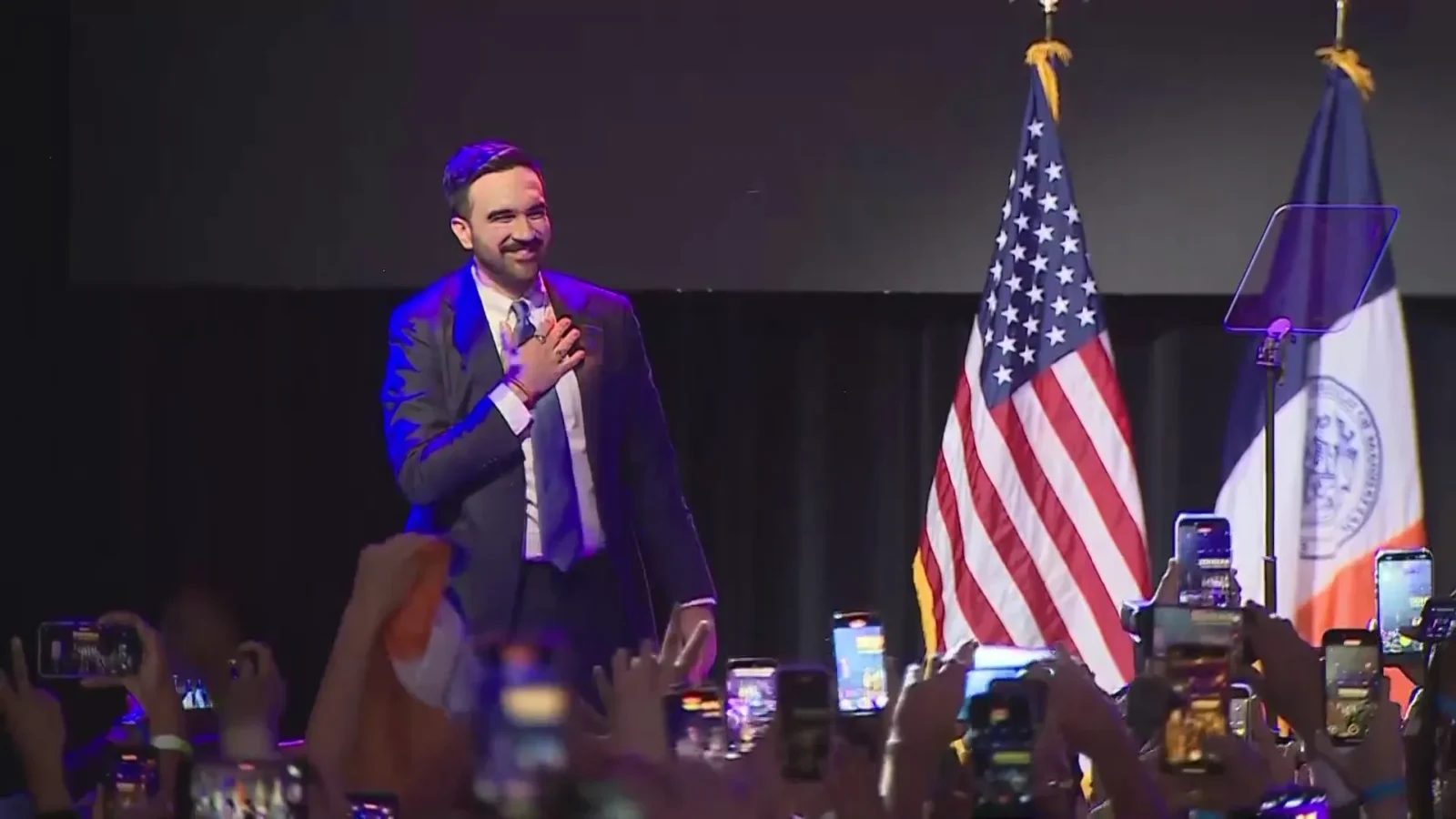
In a milestone moment for representation in the United States, Zohran Mamdani has secured a historic win as the mayor-elect of New York City — becoming the first Muslim and first South Asian to lead America’s largest city, and at age 34, its youngest mayor in a century.
During his victory speech, Mamdani drew upon Indian-Independence era rhetoric, quoting extensively from Jawaharlal Nehru’s famed “Tryst with Destiny” address. With a background rooted in South Asian heritage — born in Uganda to parents of Indian origin (his father Mahmood Mamdani, a scholar; his mother Mira Nair, a filmmaker) — Mamdani claimed his identity unapologetically: “I am young, despite my best efforts to grow older, I am Muslim, I am a democratic socialist and — most damning of all — I refuse to apologise for any of this,” he told supporters.
His win represents more than just an electoral victory — it signals a deeper shift in how South Asian Americans and other minority communities are participating in U.S. politics. With more than five million South Asians living in the U.S., the community is among the fastest-growing demographic groups and one that has increasingly entered the political arena (notably through figures like Kamala Harris, whose mother was from India).
Yet Mamdani’s approach to his identity stands out. While many previous candidates from South Asian backgrounds have downplayed outward expressions of their cultural or religious roots to assimilate into mainstream American politics, political scientists see Mamdani’s open embrace of his heritage as a turning point. “The comfort level expressing and … embracing outwardly your identity has varied from candidate to candidate over the years,” said Kishan Putta, an elected commissioner in Washington D.C. who monitors South Asian participation in U.S. politics.
Academic Sara Sadhwani of Pomona College commented that Mamdani’s “brand of authenticity and embracing difference — fully accepting the nuance of those differences” is what makes this moment “a symbolic moment of acceptance of Indian Americans,” even if not all will align with his politics.
The broader political context around Mamdani’s election is illuminating. While some South Asian Americans have adopted more mainstream or assimilated identities (for example, some have emphasised conversion to Christianity or a distancing from immigrant heritage), Mamdani’s rhetoric boldly foregrounds his origins and faith.
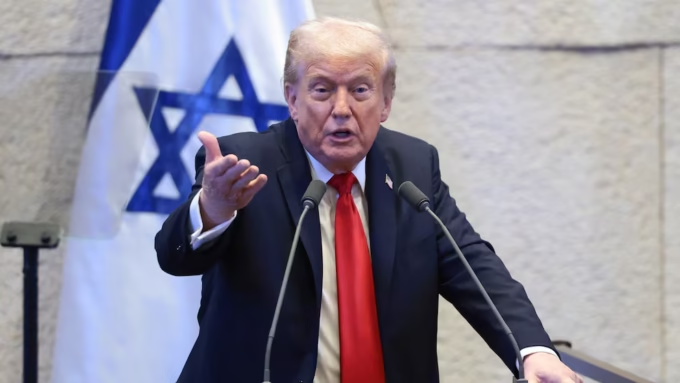
At the same time, his victory also intersects with tensions in U.S. politics — particularly concerning immigration, identity, and race. For instance, Donald Trump has previously courted Indian-American voters while simultaneously facing criticism from far-right elements within his base who have targeted Indian Americans online.
For South Asian American communities, Mamdani’s electoral success offers both inspiration and a new benchmark. It suggests that embracing one’s full identity — cultural, religious, generational — is not necessarily a political liability, and in fact may resonate powerfully with voters who are increasingly diverse, younger and seeking representation that mirrors their lived experience.
In short, Mamdani’s ascent is not only about changing who leads New York City — it reflects a broader evolution in American democracy, where identity is no longer something to be hidden, but can be a source of strength and connection. His win may well be a watershed moment for South Asian Americans and other under-represented communities in the U.S. political landscape.










Leave a comment