

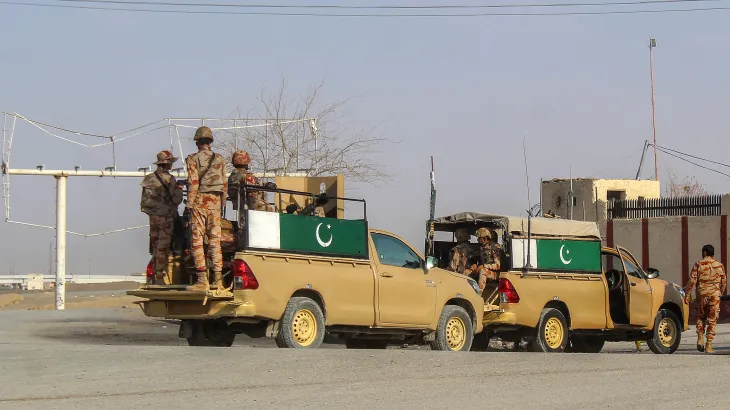
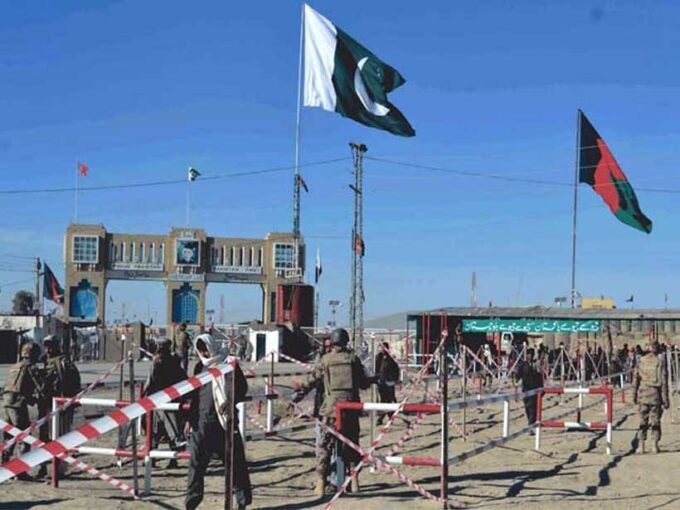
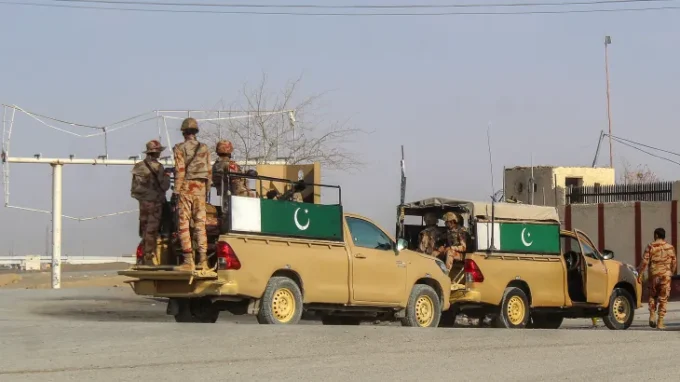
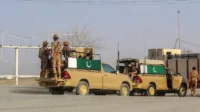
ISLAMABAD: Tensions between Pakistan and Afghanistan have sharply escalated following a series of cross-border attacks and retaliatory airstrikes, with leaders on both sides issuing strong statements and claiming heavy losses. The latest flare-up has raised fears of a broader conflict along the 2,600-kilometre mountainous border shared by the two neighbours.
Pakistan’s Defence Minister Khawaja Asif declared that the situation had reached the level of an “open war” with the Afghan Taliban government. In a strongly worded statement, he said Pakistan had made every effort to keep the situation normal through diplomacy and engagement with friendly countries, but that patience had run out. “Our cup of patience has overflowed. Now it is open war between us and you,” he said.
Prime Minister Shehbaz Sharif also warned that Pakistan’s armed forces had the “full capability to crush any aggressive ambitions.” He stressed that there would be no compromise on the defence of the country and that any aggression would be met with a befitting response. President Asif Ali Zardari praised the military’s response as “comprehensive and decisive,” adding that those who mistake Pakistan’s desire for peace as weakness would face strong consequences.
The latest crisis began after the Taliban government in Afghanistan claimed it had launched a large-scale offensive against Pakistani military posts near the border on Thursday night. Taliban officials said the operation was in response to Pakistani airstrikes earlier in February, which the United Nations reported had killed at least 13 civilians. Pakistan had stated at the time that those strikes targeted militant hideouts responsible for suicide attacks in Pakistani cities.
In response to the Taliban offensive, Pakistan confirmed it carried out fresh airstrikes targeting major Afghan cities, including Kabul, Kandahar, and Paktika, which lies close to the border. Residents in Kabul reported hearing loud explosions in the early hours of the morning, accompanied by the sound of jets and subsequent gunfire. Taliban authorities confirmed that strikes had taken place but initially provided limited details about damage or casualties.
Casualty figures released by both sides remain difficult to verify. According to Pakistan’s government, its forces have killed 133 Afghan Taliban fighters and wounded more than 200 during the ongoing hostilities. Officials also claimed that 27 Taliban military posts had been destroyed, nine captured, and over 80 tanks and armoured vehicles eliminated. The Taliban, however, disputed these claims and asserted that 55 Pakistani soldiers had been killed and 19 Pakistani posts captured. Pakistan has confirmed that two of its soldiers were killed and three injured in earlier border clashes. Both sides accuse each other of initiating the attacks and exaggerating losses.
Taliban officials in the eastern province of Nangarhar alleged that Pakistani rockets struck a refugee camp housing Afghan citizens who had returned from Pakistan, injuring at least nine people, including seven women. One of the injured was reported to be in critical condition. Pakistan has not confirmed this allegation.
Despite the overnight violence, residents in Kabul, Kandahar and Nangarhar later described the situation as relatively calm, though tensions remain high and security forces on both sides are on alert. A Taliban military spokesperson stated that their forces would retaliate if attacked but would not initiate further clashes at the moment.
The international community has expressed concern over the escalating situation. United Nations Secretary-General Antonio Guterres urged both countries to adhere strictly to their obligations under international law, particularly international humanitarian law. The UN High Commissioner for Human Rights, Volker Turk, called for dialogue to prevent further civilian casualties.
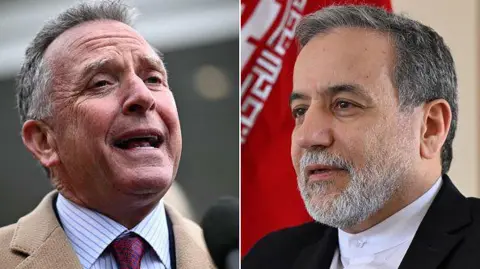
Iran has also offered to mediate. Iranian Foreign Minister Abbas Araghchi said Tehran was ready to help facilitate dialogue between the two countries and encouraged them to resolve differences through good neighbourly relations. Meanwhile, Saudi Foreign Minister Faisal bin Farhan Al Saud held a phone call with Pakistan’s Foreign Minister Ishaq Dar to discuss regional developments and ways to reduce tensions.
Former US envoy to Afghanistan Zalmay Khalilzad described the unfolding situation as “a terrible dynamic that must stop,” warning that innocent Afghans and Pakistanis were being injured or killed. He suggested a diplomatic agreement ensuring that neither country allows its territory to be used to threaten the security of the other, potentially monitored by a third party.
Analysts speaking to regional media have suggested that a full-scale conventional war remains unlikely due to the significant disparity in military capabilities. Pakistan possesses a well-equipped and nuclear-armed military ranked among the strongest globally, while the Afghan Taliban primarily rely on weapons left behind by the former Afghan army and foreign forces, as well as arms acquired through other channels. Experts note that the Taliban’s experience lies largely in guerrilla tactics rather than conventional warfare.
The two countries had agreed to a fragile ceasefire in October 2025 following earlier deadly clashes, but sporadic violence has continued since then. The latest escalation represents one of the most serious confrontations in recent months, with diplomatic efforts now underway to prevent the situation from spiralling further.




Leave a comment