

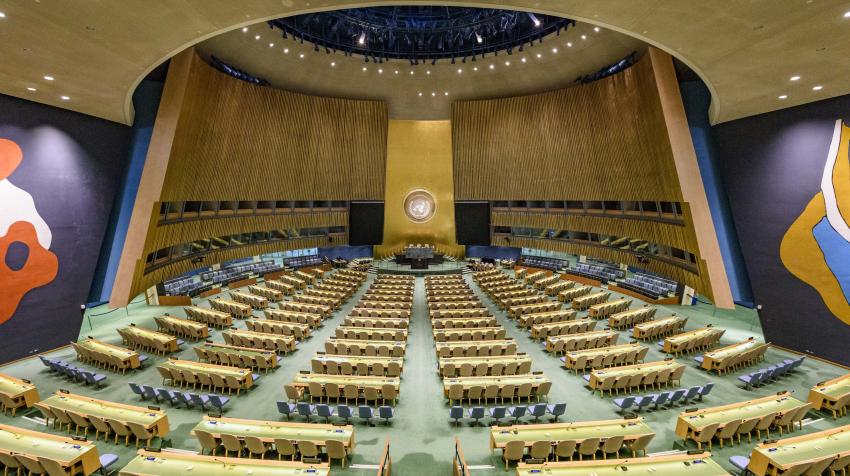
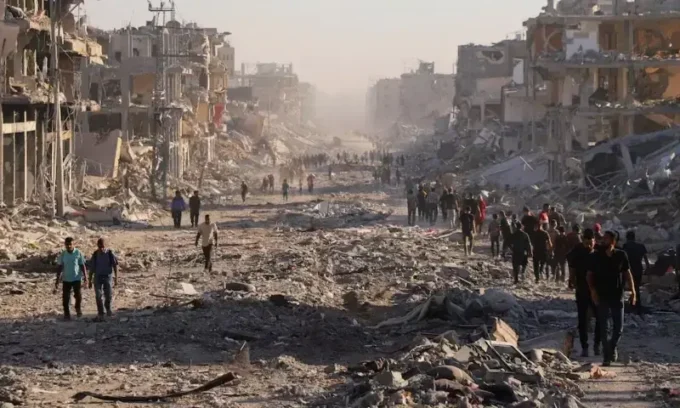
As the 80th Session of the United Nations General Assembly convenes, world leaders have gathered under heightened tensions over the Israel-Palestine conflict. Protests outside UN headquarters have swelled, with activists demanding a ceasefire in Gaza, calling attention to what many in the international community view as a long-standing, unresolved wound in global peace efforts. The General Assembly is expected to be dominated by deliberations on Palestine, including the push for renewed momentum toward a two-state solution.
Amid this diplomatic spotlight, the UN General Assembly passed a resolution with overwhelming support—145 votes in favour, only five opposed, and six abstentions—to allow Palestinian President Mahmoud Abbas to address the Assembly virtually. This comes after the United States denied him a visa to enter New York for the UNGA proceedings.
According to the resolution, Abbas will submit a prerecorded statement to be played in the General Assembly Hall. The move was framed by many UN members as a necessary accommodation to uphold diplomatic norms and uphold the right of heads of state to participate, even if remotely.
The US government’s refusal to grant visas to Abbas and dozens of Palestinian officials—citing national security concerns—has drawn criticism from multiple quarters. Critics argue that the denial violates customary practice under the Host Country Agreement, which obliges the US to allow foreign heads of state and government to travel to New York for the annual General Assembly.
For many countries, the vote and decision to allow Abbas’s video address are more than procedural—they are symbolic and political signals. Diplomats and observers see them as demonstrations of growing global impatience with stalled peace processes and rising international pressure for Israel to adhere to international law and humanitarian norms, especially in Gaza and the occupied territories.
The broader context: The UNGA session opens amid calls from the international community for intensified efforts toward a viable two-state framework. Co-chairs France and Saudi Arabia are leading a high-level conference aimed at reviving diplomatic support. Meanwhile, leaders from nearly 150 countries are present, each confronting the challenge of balancing diplomatic relationships, moral imperatives, and strategic interests.








Leave a comment