

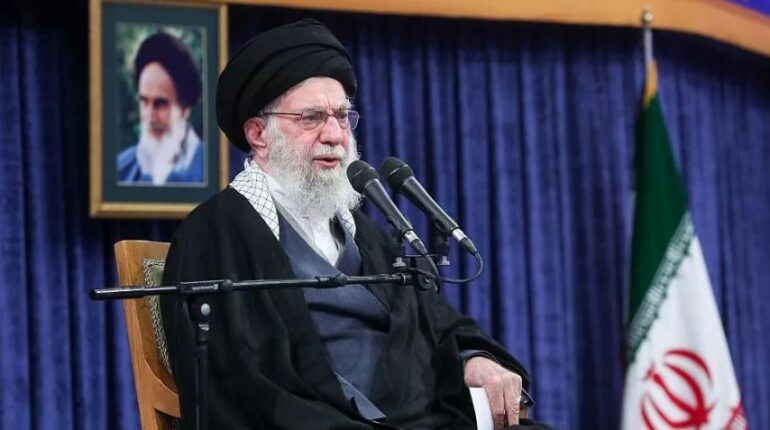
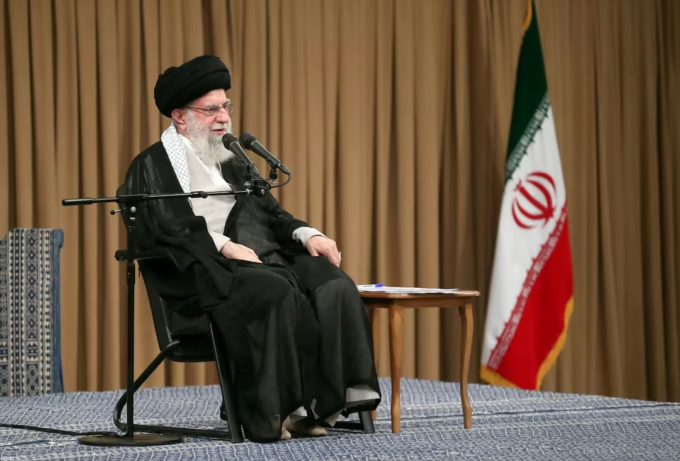
With deep sorrow and solemn respect, this detailed account honors the life, struggles, and ideological legacy of Ali Khamenei, the Leader of the Islamic Revolution and the Islamic Republic, whose martyrdom on February 28, 2026, marked the end of a defining chapter in Iran’s history and reshaped the political landscape of West Asia.
Born in 1939 in the sacred city of Mashhad, built around the shrine of Imam Reza, Ali Khamenei entered the world in a modest clerical household. His father, Javad Khamenei, was a respected but financially humble scholar, and the family’s difficult economic circumstances deeply influenced the young Ali’s worldview. Throughout his life, he would frequently recall those years of hardship to underscore a central conviction: a meaningful life is rooted in justice, faith, and steadfast belief, not in material comfort or worldly prestige.
From an early age, he displayed an intellectual curiosity that extended beyond traditional seminary education. Alongside his religious studies in Mashhad, and later in Najaf and Qom, he cultivated a love for literature, poetry, and classical music interests he quietly preserved even in the highest offices of power. In Qom, the intellectual heart of Shia scholarship, his destiny intersected with Ruhollah Khomeini, the man who would define his ideological and political future.
Imam Khomeini’s doctrine of Velayat-e Faqih , the guardianship of the Islamic jurist profoundly transformed Khamenei’s political thought. It proposed that clerical leadership was not merely spiritual guidance but a governing responsibility. For the young scholar, this was a revelation. He became one of Khomeini’s most committed disciples, absorbing an interpretation of Islam that rejected separation between faith and governance. For Khamenei, religion and politics were never separate spheres; they were inseparable dimensions of a unified Islamic mission.
His intellectual influences extended beyond Iran. He translated works of Egyptian thinker Sayyid Qutb into Persian, particularly The Future in the Realm of Islam, reflecting his belief in an activist Islam. He was also deeply inspired by Muhammad Iqbal, whose call for Islamic revival resonated with his vision of civilizational resurgence.
Imprisonment, Resistance, and Revolution
During the 1960s and 1970s, under the rule of Mohammad Reza Pahlavi, Khamenei was repeatedly arrested by the Shah’s security apparatus for revolutionary activities. He endured imprisonment, interrogation, torture, and internal exile. These trials became foundational to his moral authority. He would later assert that suffering in the path of justice prepares a leader for responsibility.
Following the victory of the 1979 Islamic Revolution, Khamenei emerged as a key figure in consolidating the new Islamic Republic. He served in parliament, became Tehran’s Friday prayer leader, and played a foundational role in the Islamic Republican Party. Yet his life was again tested in June 1981 when a bomb concealed in a tape recorder exploded during a press conference. He survived but permanently lost the use of his right arm and sustained vocal cord damage.
Those close to him recall that he accepted this injury with remarkable composure. He often cited Imam Hussein’s declaration “One like me shall never pledge allegiance to one like Yazid” as the foundational principle of the Islamic Republic’s defiance.
His presidency (1981–1989) unfolded during the brutal Iran-Iraq War, a devastating conflict initiated by Saddam Hussein and backed by Western powers. The war cost hundreds of thousands of Iranian lives and defined the early years of the Republic. Amid this crisis, Khamenei navigated internal political tensions, including disagreements with Prime Minister Mir-Hossein Mousavi, while strengthening institutional cohesion during wartime.
The Unexpected Succession
When Imam Khomeini passed away in 1989, the Islamic Republic confronted an existential transition. The expected successor, Grand Ayatollah Montazeri, had been sidelined. In a surprising move, the Assembly of Experts elevated Khamenei to Supreme Leader despite initial hesitation and questions regarding clerical rank.
Over time, however, he methodically consolidated authority and reshaped the office into the central strategic command of the state.
A 36-Year Guardianship
As Supreme Leader, Khamenei held constitutional authority over the armed forces, judiciary, state broadcasting, and key institutions, including the Guardian Council and commanders of the Islamic Revolutionary Guard Corps (IRGC). Yet his leadership style was less about day-to-day management and more about setting ideological direction and defining strategic red lines.
He never traveled abroad as Leader and never granted interviews to foreign journalists, projecting deliberate detachment from global political theatrics. His foreign policy doctrine “Neither East nor West” translated into resistance against American dominance and unwavering opposition to Israel.
Under his leadership, Iran deepened alliances with Syria, strengthened Hezbollah in Lebanon, supported Palestinian factions such as Hamas and Islamic Jihad, and later extended ties to Yemen’s Ansar Allah movement. This network became widely known as the “Axis of Resistance,” with Khamenei regarded as its ideological architect.
Palestine as Sacred Duty
Among all causes he championed, none was more central than Palestine. For Khamenei, the Palestinian issue was not merely geopolitical, it was a religious obligation upon the entire Islamic world.
In his book Palestine, he advocated a referendum including Muslims, Christians, and Jews native to the land as the path forward. He strongly opposed normalization agreements with Israel, calling them betrayals of Palestinian rights. The annual International Quds Day, initiated by Imam Khomeini, was expanded under his leadership as a global symbol of solidarity with al-Quds.
Ideology Committed to Paper
Khamenei was also a prolific intellectual figure. His work An Outline of Islamic Thought in the Quran articulated his core thesis: Islam is not a private belief system but a comprehensive social and political ideology. In A 250-Year-Old Person, he interpreted the lives of the twelve Shia Imams as components of a unified political strategy. In The Spirit of Monotheism, he framed tawhid as a force that inherently resists unjust authority.
His 2019 manifesto, The Second Step of the Islamic Revolution, addressed Iranian youth directly, emphasizing self-sufficiency, cultural resistance, and generational renewal.
The Theology of Resistance
Central to his worldview was the narrative of Karbala, the martyrdom of Imam Hussein in 680 CE. Khamenei interpreted Karbala as a living template for governance and resistance. In this framework, tyranny must never be legitimized, even at immense cost. Submission becomes theologically forbidden; resistance becomes sacred duty.
For decades, he applied this “Ashura model” to sanctions, war, and confrontation. He governed Iran for thirty-six years longer than the Shah he helped overthrow while shaping a state committed to sovereignty, ideological endurance, and strategic patience.
Sayyed Ali Khamenei leaves behind a Republic molded in the image of resistance: self-reliant, ideologically anchored, and unwilling to bow before external pressure. Whether viewed as a polarizing political figure or as a steadfast revolutionary leader, his impact on Iran and West Asia remains profound and enduring.






Leave a comment