

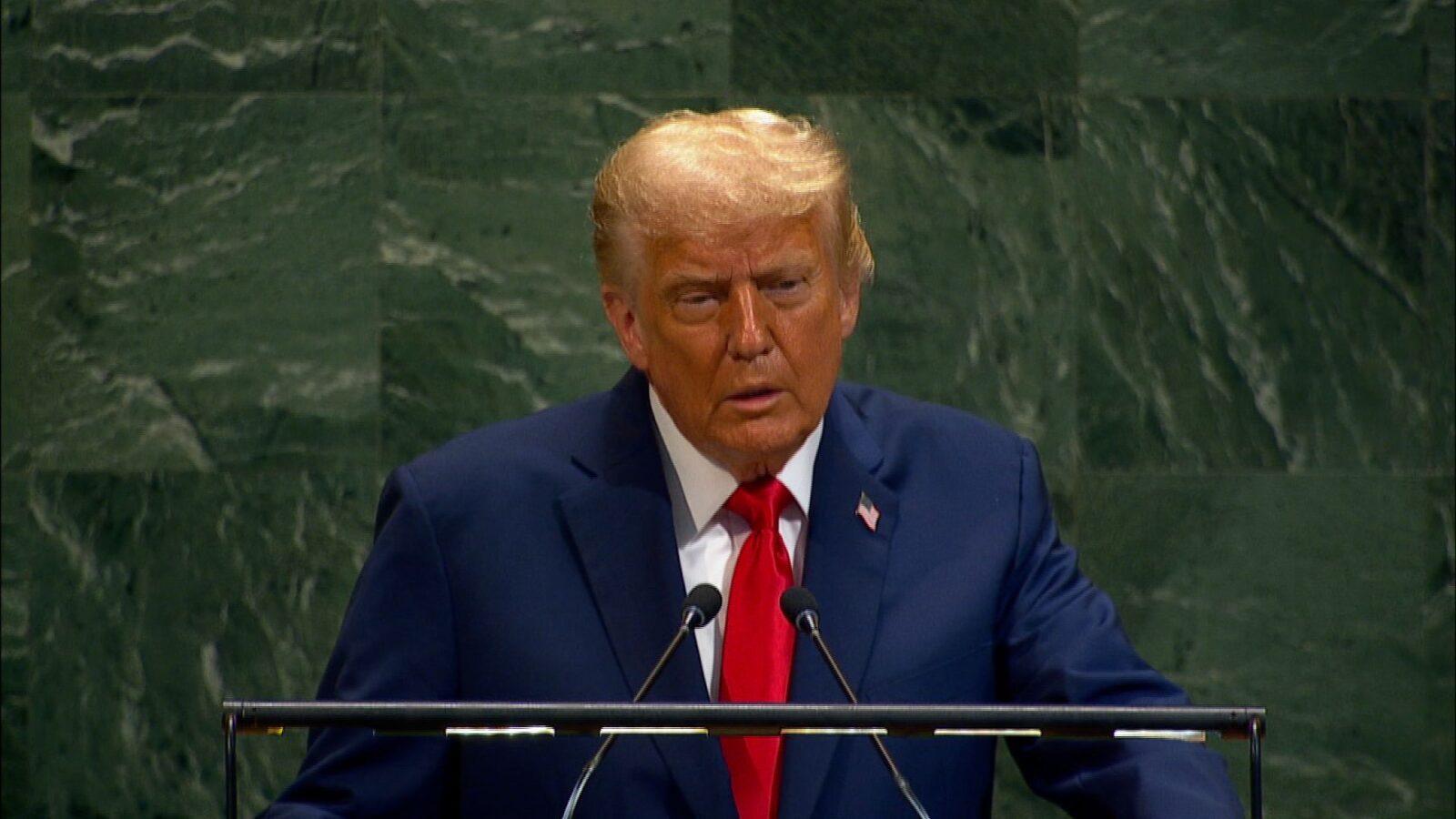
In a dramatic policy statement that could mark a significant shift in U.S. posture toward the Israeli-Palestinian conflict, U.S. President Donald Trump said he would not allow Israel to annex the occupied West Bank, directly contradicting the ambitions of Israeli Prime Minister Benjamin Netanyahu and his far-right coalition partners. The statement, made on Thursday, comes just ahead of Netanyahu’s scheduled address at the United Nations General Assembly in New York.
Speaking to reporters during an impromptu briefing, President Trump made his position unequivocally clear. “I will not allow Israel to annex the West Bank. Nope. I will not allow. It’s not gonna happen,” he said, signaling a rare public rebuke of one of his closest political allies. The comment came as a surprise to many, including members of the Israeli government, who have long counted on Trump’s unwavering support.
When asked whether he had communicated his stance directly to Netanyahu, Trump gave a vague response, avoiding confirmation of any direct discussion on the matter. “Yeah, but I’m not gonna allow it. Whether I spoke to him or not, I’m not allowing Israel to annex the West Bank. There’s been enough. It’s time to stop now, OK?” he said, without elaborating on the details or mechanisms of how he would enforce such a stance.
The remarks place Trump in direct opposition to growing calls from within Netanyahu’s ruling coalition for the formal annexation of large parts of the West Bank — territory captured by Israel in the 1967 war and home to millions of Palestinians. Several far-right Israeli ministers have been pushing for the move as a priority, especially amid the ongoing war in Gaza and increasing tensions across the region.
While Trump has not yet outlined any concrete steps or policy measures to back up his statement, his declaration has already sparked debate in both Washington and Tel Aviv. Some analysts have expressed skepticism, noting Trump’s history of making bold pronouncements without following through, and his tendency to shift positions abruptly based on political considerations.
The statement marks a notable departure from Trump’s prior approach to the Israeli-Palestinian conflict. During his previous term, Trump moved the U.S. embassy to Jerusalem, recognized Israeli sovereignty over the Golan Heights, and brokered the Abraham Accords that normalized relations between Israel and several Arab states. All of these steps were seen as heavily favoring Israeli interests, often at the expense of Palestinian aspirations.
However, Trump’s latest comments suggest a recalibration of his Middle East policy — possibly in light of mounting international criticism of Israel’s handling of the Gaza conflict, as well as renewed calls from Arab and Muslim leaders for a fair and lasting resolution to the Palestinian issue.
As of now, there has been no official response from the Israeli government to Trump’s remarks, though Netanyahu is expected to address the matter — either directly or indirectly — during his speech at the UN General Assembly. It remains unclear whether Trump’s opposition to annexation is a firm policy stance or a strategic signal aimed at brokering a broader regional agreement.
Regardless, the statement has already added a new layer of complexity to the volatile Middle East political landscape, and it could have far-reaching implications for U.S.-Israel relations moving forward.






Leave a comment