

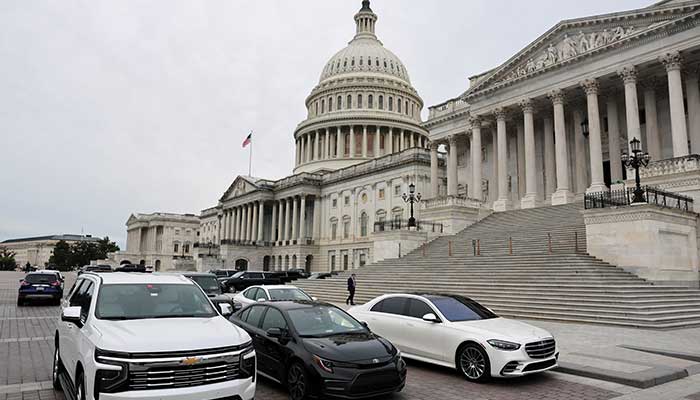
The United States government officially shut down at midnight after lawmakers in Congress failed to pass a stopgap spending bill. Deep partisan divides in Washington—particularly over health care funding and budget cuts—prevented either side from reaching a compromise. As a result, federal agencies have been forced to scale back operations, and hundreds of thousands of employees now face furloughs or delayed pay.
The shutdown is expected to have widespread effects across the country. About 750,000 federal workers could be furloughed, costing the economy hundreds of millions of dollars daily. Essential services such as military operations, law enforcement, and air traffic control will continue but without immediate pay for staff. Programs under the Department of Agriculture, including food assistance for vulnerable families, are set to continue temporarily using reserve funds, though other services like farm loans and data collection will pause.
The economic impact is already being felt. Key federal agencies, including the Bureau of Labor Statistics, have suspended the release of crucial economic data such as the September jobs report, creating uncertainty for investors and businesses. Financial markets responded nervously, with the U.S. dollar slipping to its lowest level in a week and stocks showing volatility. Travel is also expected to face disruptions, as the Transportation Department plans to furlough more than 12,000 employees, including over 11,000 at the Federal Aviation Administration.
Politically, the shutdown underscores the deep divisions in Washington. Republicans, despite holding control of Congress, were unable to advance their proposed temporary funding measure due to Senate rules requiring bipartisan support. Democrats opposed the Republican bill, insisting that it should also restore Medicaid funding and extend health care subsidies. President Trump’s administration has warned that if the impasse continues, the government may resort to permanent job cuts and deeper structural changes.
The standoff has left the nation facing not only immediate economic consequences but also broader questions about the ability of its political leadership to govern effectively. For ordinary Americans, the shutdown threatens to disrupt daily life, from food assistance to air travel, adding pressure on both parties to break the deadlock.












Leave a comment