

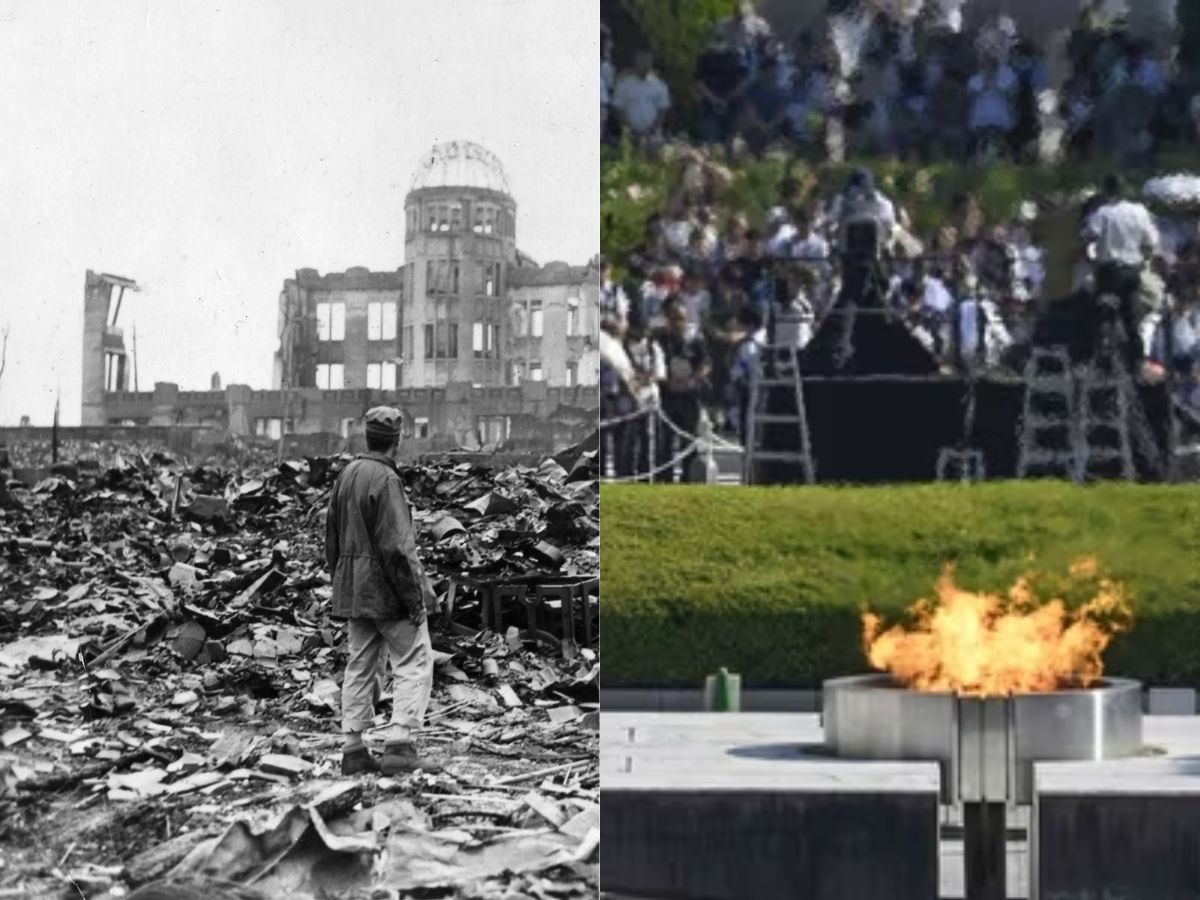
To this day, the official U.S. narrative insists the bombings were necessary to end World War II and save lives.
Eighty years ago, the skies over Hiroshima and Nagasaki turned blinding white. In mere seconds, entire cities were erased. Homes, schools, temples and families all were gone. Over 200,000 people, most of them civilians, were killed. Children were incinerated where they stood. Survivors staggered through ruins, their skin melting, their loved ones lost. It was the dawn of the nuclear age and one of the darkest moments in human history.
To this day, the official U.S. narrative insists the bombings were necessary to end World War II and save lives. But that explanation is increasingly hard to accept. Historians, ethicists, and global voices including Emanuel Pastreich, President of the Asia Institute argue that the bombings were not primarily about defeating Japan. Japan was already nearing surrender. The real message was meant for the Soviet Union: a brutal warning of who would dominate the post-war world.
The atomic bomb, in that sense, was not just a weapon it was a symbol. A show of force. A declaration of geopolitical supremacy. And Hiroshima and Nagasaki became unwilling stages in a deadly performance, where civilians were sacrificed to prove a point.
What followed was not reflection or remorse—but escalation. Rather than lead the world away from the brink, the United States doubled down. Instead of dismantling the machinery of mass death, it invested in it—trillions of dollars to perfect weapons designed to end civilization. Science that could have healed and helped was turned toward destruction. Morality was muted. And the nuclear arsenal grew.
Perhaps the greatest tragedy of all is what these bombings gave birth to: a secretive, militarized system that prioritizes dominance over diplomacy, profit over people. From Vietnam to Iraq, from drone strikes to shadow wars, the same mindset has endured—a government willing to sacrifice human lives in the name of strategic advantage.
And yet, eight decades later, there has been no formal apology. No real reckoning. Why? Because to acknowledge Hiroshima as a moral failure—not a strategic success—would mean confronting the full weight of a foreign policy built on that same logic. It would demand accountability, not only for the past, but for the present.
If we truly want a safer world—one where no city ever burns like Hiroshima again—then we must begin with the truth. We must listen to the voices of survivors. We must question the myths we’ve inherited. And we must finally face what Hiroshima means—not just as a historical event, but as a mirror to the world we’ve built since.
It’s not enough to remember. It’s time to take responsibility. It’s time to say what should have been said long ago: this was a crime against humanity. And it must never happen again.














Leave a comment