

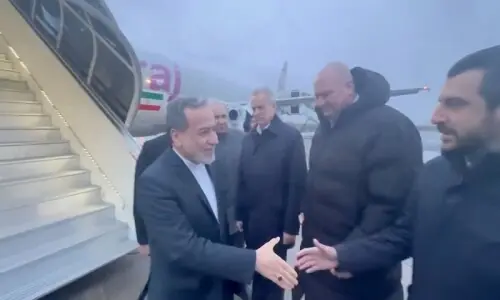
Moscow: Iran’s foreign minister arrived in Russia on Monday as peace efforts between Tehran and Washington hung in the balance, following a flurry of regional diplomacy and the collapse of planned talks in Pakistan.
Abbas Araghchi arrived in Saint Petersburg, according to the Iranian Foreign Ministry on Telegram, where he is expected to meet Vladimir Putin.
The visit comes after Araghchi travelled to Oman between stops in Islamabad, as regional mediators attempt to keep US–Iran peace talks from collapsing entirely.
On Saturday, Donald Trump cancelled a planned trip to Islamabad by his envoys Steve Witkoff and Jared Kushner, amid growing uncertainty over the negotiations.
Reports suggest that despite the breakdown in formal engagement, diplomatic communication is continuing. The Fars news agency said Iran sent “written messages” to the United States via Pakistan, outlining key red lines, including nuclear issues and the Strait of Hormuz. However, it clarified that these were not part of official negotiations.
US outlet Axios reported that Iran had proposed reopening the Strait of Hormuz and ending the war, while postponing nuclear talks to a later stage, citing US officials and other sources.
Iran’s state media IRNA cited the report without denying it, keeping speculation alive over possible backchannel diplomacy.
A ceasefire in the US–Israeli war with Iran has so far held, but its economic impact continues to ripple across global markets.
Iran has sealed off the Strait of Hormuz, disrupting the flow of oil, gas, and fertiliser, pushing prices higher and raising concerns about food security in developing countries. Meanwhile, the United States has imposed a blockade on the strait.
Hopes for renewed talks in Pakistan were linked to the planned visit of Witkoff and Kushner, but Trump cancelled the trip after Iranian media reported that Araghchi would not meet US officials there.
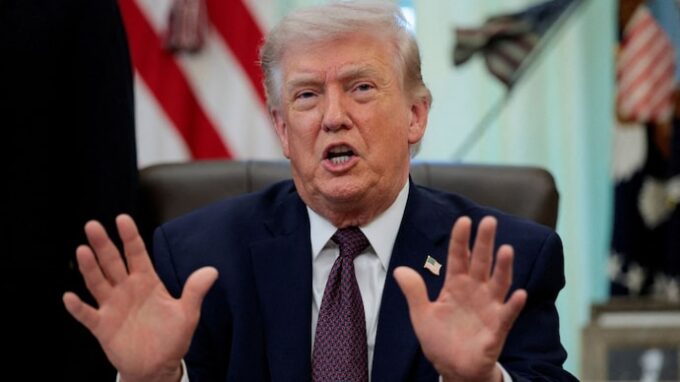
On Sunday, Trump told Fox News that if Iran wanted talks, “they can come to us, or they can call us.”
He also faces domestic pressure as rising fuel prices affect American consumers, ahead of the November midterm elections, with polls indicating the war remains unpopular among voters.
Safe Transit
When asked whether the cancellation signalled renewed conflict, Trump said: “No, it doesn’t mean that.”
On Saturday, Araghchi met Asim Munir, Shehbaz Sharif, and Ishaq Dar, before travelling to Oman and returning to Islamabad.
He later departed for Russia, where his ministry confirmed meetings with senior officials. Russian and Iranian state media also confirmed talks between Araghchi and Putin, citing official sources.
Araghchi posted on X that discussions in Oman focused on ensuring safe transit through the Strait of Hormuz, stating it was “to the benefit of all dear neighbours and the world.” He added: “Our neighbours are our priority.”
Iran’s Islamic Revolutionary Guard Corps (IRGC) said it had no intention of lifting its blockade, which has disrupted global energy markets.
It declared: “Controlling the Strait of Hormuz and maintaining the shadow of its deterrent effects over America and the White House’s supporters in the region is the definitive strategy of Islamic Iran.”
The United States has also imposed a blockade on Iranian ports in response.
Israel Strikes Lebanon
Israel and Hezbollah exchanged blame over violations of a fragile ceasefire in Lebanon, with Israeli Prime Minister Benjamin Netanyahu saying the military is “vigorously” targeting the Iran-backed group.
Hezbollah entered the conflict on March 2 by firing rockets at Israel, claiming retaliation for the killing of Ali Khamenei, prompting Israeli airstrikes and a ground offensive.
Despite a 10-day ceasefire agreement reached earlier this month, both sides continue to accuse each other of violations.
Netanyahu told a cabinet meeting that Hezbollah’s actions were “dismantling the ceasefire”, while Hezbollah said it would respond to Israeli attacks and what it called continued “occupation.”
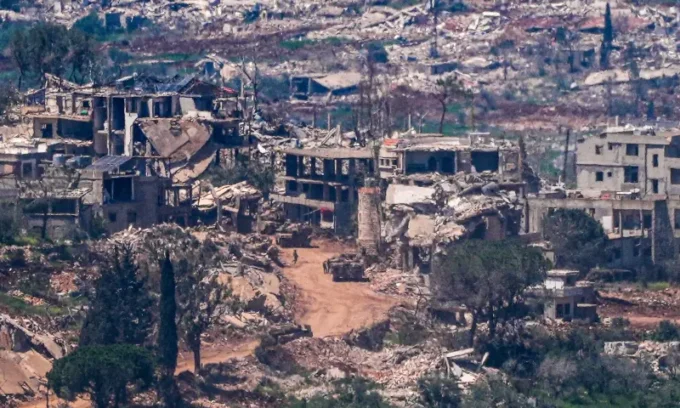
Lebanon’s health ministry said Israeli strikes in southern Lebanon killed 14 people, including two women and two children, and injured 37 others.
The National News Agency reported that Israeli airstrikes followed evacuation warnings in Kfar Tibnit, while another strike on Zawtar al-Sharqiyah destroyed a mosque and another religious building.
Israel, which also reported one soldier killed in southern Lebanon combat, said it reserves the right to act against “planned, imminent or ongoing attacks.”
Netanyahu stated: “This means freedom of action not only to respond to attacks, but also to pre-empt immediate threats and even emerging threats.”





Leave a comment